Tea Caffeine Content 2026 Complete Guide | Six Tea Types Compared — Find Your Ideal Low-Caffeine Tea
It’s 3 PM, and you want to brew a cup of tea for a pick-me-up, but you’re worried about not being able to sleep tonight.
This dilemma is one many tea drinkers face. The solution isn’t difficult — you just need to know which teas are high in caffeine and which are low.
Tea caffeine content is influenced by multiple factors, including tea variety, harvest season, and brewing conditions. The same tea brewed in different ways can produce caffeine extraction differences of 2 to 3 times (Source: Taiwan Tea Research and Extension Station, 2024).
This article gives you a clear caffeine map for tea, so you can pick the right tea for any occasion.
According to U.S. FDA data, an 8 oz (240ml) cup of black tea contains approximately 47mg of caffeine, green tea about 30-60mg, while coffee has 80-150mg (Source: U.S. FDA, 2024).
The Mayo Clinic states that up to 400mg of daily caffeine intake generally does not cause negative effects in healthy adults, but individual variation is significant, and caffeine-sensitive individuals should reduce their intake (Source: Mayo Clinic, 2024).
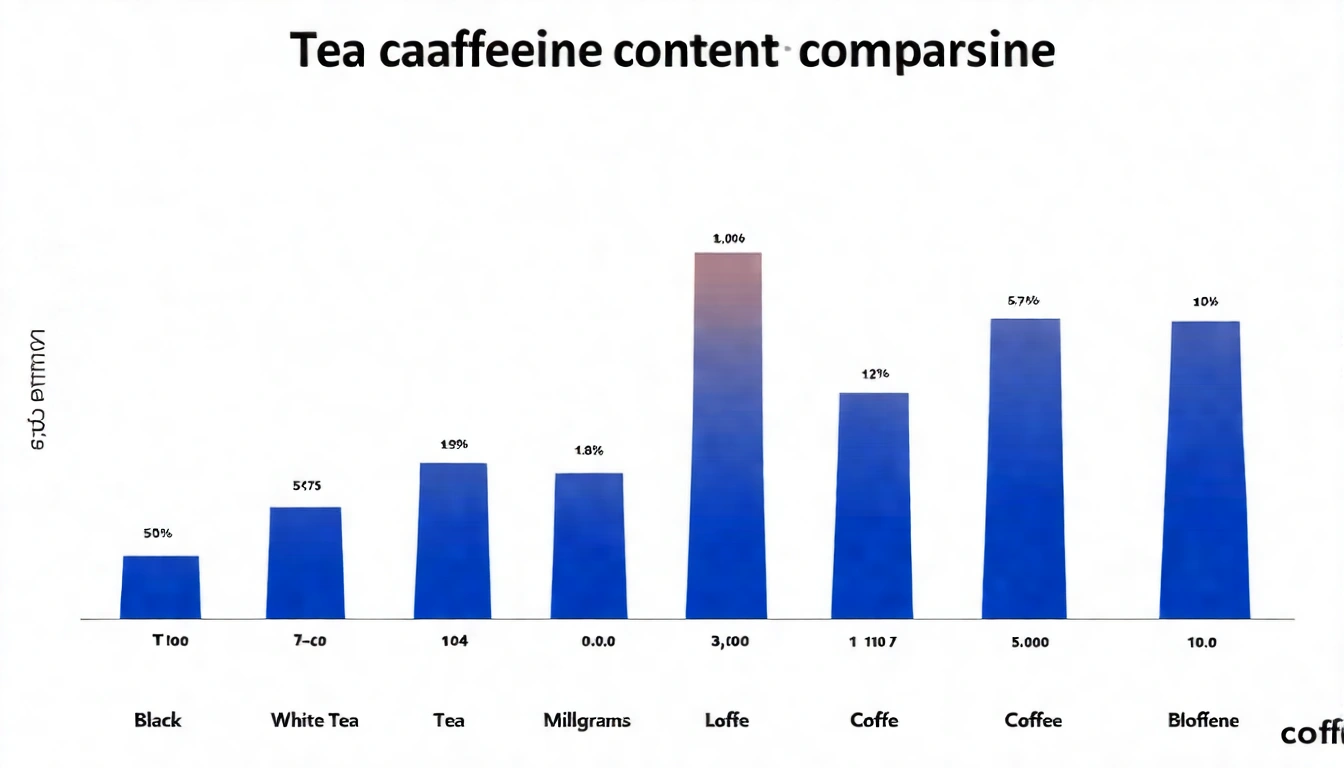
TL;DR: Caffeine from highest to lowest: Coffee (80-150mg) > Black tea (40-70mg) > Oolong tea (30-50mg) > Green tea (20-30mg) > White tea (15-25mg) > Roasted oolong/pu-erh (10-35mg). Brewing method affects caffeine extraction by 2-3x (Tea Research and Extension Station, 2024). Sensitive individuals should choose low-caffeine options after 3 PM.
Low-caffeine great tea — ChaYanSo has curated the best options. Browse our teas
Complete Tea Caffeine Content Comparison Chart
Here are the most straightforward numbers:
| Beverage | Caffeine per Cup (approx.) | Best Time to Drink |
|---|---|---|
| Black Coffee (Americano) | 80-150mg | Morning |
| Taiwan Black Tea | 40-70mg | Morning, before noon |
| Matcha (powder brew) | 40-60mg | Morning, before noon |
| Taiwan Oolong Tea (standard) | 30-50mg | Morning through afternoon |
| Taiwan Green Tea | 20-30mg | All day |
| Oriental Beauty Tea | 20-30mg | All day |
| White Tea | 15-25mg | All day, before bed |
| Roasted Oolong (heavy roast) | 20-35mg | All day |
| Pu-erh Tea (raw/ripe) | 10-20mg | All day |
| Herbal Tea (no tea leaves) | 0mg | Any time |
Why Does Tea’s Caffeine Effect Feel Different from Coffee?
Many people notice that coffee tends to cause rapid heartbeat and anxiety, while the same amount of caffeine from tea produces a calm, clear alertness. This isn’t just psychological.
The key is L-Theanine.
L-Theanine is an amino acid unique to tea. Research shows it promotes alpha brainwave activity (associated with relaxed yet alert states) and reduces the anxiety caused by caffeine. When L-theanine and caffeine are present together, they produce a synergistic “calm alertness” effect that coffee cannot provide (Source: Taiwan Tea Research and Extension Station, Physiological Research, 2023).
Comparison: How caffeine intake feels different
| Beverage | Energy Boost | Anxiety | Duration |
|---|---|---|---|
| Black Coffee | Intense | High (in some people) | 4-6 hours |
| Taiwan Oolong Tea | Moderate, gradual | Low | 3-5 hours |
| Taiwan Green Tea | Mild, steady | Very low | 2-4 hours |
Six Tea Types: Caffeine Deep Dive
Black Tea (Highest, 40-70mg/cup)
Black tea has the highest degree of oxidation (80-100%) and the highest caffeine content among the six tea types. Taiwan Tea No. 18 (Ruby) and Honey Scent Black Tea are Taiwan’s signature black teas. They’re excellent for morning energy but best avoided after the afternoon.
At ChaYanSo, customers often ask: “Is black tea caffeine much higher than oolong?” The difference isn’t as large as you might think — the key factor is brewing method. We advise caffeine-sensitive customers that lightly brewed black tea can still be enjoyed in the afternoon without issues.
Note: Due to variety and processing differences in Taiwan black tea, caffeine content varies widely. Strong versus light brewing of the same tea can differ by 1.5 to 2 times.
Oolong Tea (Medium-High, 30-50mg/cup)
Taiwan oolong teas (including Si Ji Chun, Alishan Oolong, Dong Ding Oolong, etc.) fall in the middle caffeine range. Suitable for morning and early afternoon drinking; caffeine-sensitive individuals should be cautious after 3 PM.
Special note: Although Oriental Beauty tea has a high oxidation level (60-70%), its tea variety (small-leaf cultivar) and insect-bite fermentation process result in slightly lower caffeine than regular oolong, approximately 20-30mg per cup.
Green Tea (Medium, 20-30mg/cup)
Taiwan green teas (Sanxia Longjing, Biluochun) have moderately low caffeine content and are suitable for all-day drinking.
White Tea (Low, 15-25mg/cup)
White tea is unrolled and lightly oxidized, with the lowest caffeine content among traditional tea types. It’s the safest choice for pregnant women, caffeine-sensitive individuals, or those who want to drink tea in the evening.
Roasted Oolong (Low-Medium, 20-35mg/cup)
During the roasting process, some caffeine evaporates at high temperatures. Heavily roasted oolongs (such as aged Tieguanyin, heavily roasted Dong Ding) have 10-20% less caffeine than their lightly roasted versions — ideal for those wanting lower-caffeine oolong.
At ChaYanSo, many customers switch from light fragrant oolong to roasted oolong specifically because they want to drink tea in the evening without affecting sleep. Many report that they actually prefer the rich, mellow flavor of roasted tea, while their sleep quality remains unaffected.
Dark Tea/Pu-erh Tea (Lowest, 10-20mg/cup)
Pu-erh tea undergoes post-fermentation, during which microorganisms partially break down caffeine, making it the lowest-caffeine type among traditional teas. Suitable for any time of day, including before bed.
Which Teas Have the Lowest Caffeine? (Recommendation List)
Low-caffeine teas suitable for pregnant women:
- White tea (15-25mg/cup): Safest choice, light and gently sweet
- Lightly brewed Oriental Beauty: Lower than standard oolong, honey-sweet aroma
- Lightly brewed roasted oolong: Moderate roasted aroma, low stimulation
Teas suitable for before-bed drinking:
- Ripe pu-erh: Lowest caffeine, aged and mellow aroma, gentle on the stomach
- Heavily roasted oolong: 20%+ less caffeine than standard oolong
- White tea: Light and non-stimulating
Brewing techniques to reduce caffeine:
- “Tea rinse” to remove caffeine: Pour out the first infusion after 30 seconds. Caffeine is heavily concentrated in the first 30 seconds of extraction, and subsequent infusions will have 30-40% less caffeine.
- Lower water temperature: Brewing at 75-85°C extracts 15-20% less caffeine than 90-95°C.
- Shorten steeping time: 30-40 seconds per infusion rather than 2-3 minutes reduces caffeine extraction by 40-50%.
- Cold brew method: Cold water long-extraction reduces caffeine by approximately 20-40% compared to hot brewing.
A 2024 clinical trial observed that 400mg of L-theanine daily was associated with increased alpha wave activity in the brain’s frontal regions — which may help explain the different subjective experience of drinking tea compared to drinking coffee with equivalent caffeine (Source: Neurology and Therapy journal, 2024).
Research shows that cold brew tea contains approximately 20-40% less caffeine than hot brew under equivalent conditions, because the low-temperature environment significantly reduces caffeine extraction efficiency (Source: ScienceDirect, Chemical Research, 2022).
At ChaYanSo, the most common technique we recommend for controlling caffeine is “tea rinse + lower temperature.” Combined, these two methods can reduce the caffeine in the same oolong tea by more than half — more practical than switching tea types entirely.
Found your ideal low-caffeine tea? Shop ChaYanSo now
There’s an often-overlooked dimension behind the question “which tea has the least caffeine”: the first infusion of the same tea can have 2-3 times the caffeine concentration of the third infusion. In other words, someone who understands brewing can take a “medium-caffeine” oolong tea and turn it into a “low-caffeine” cup in the afternoon — simply by doing a tea rinse first, or shortening each infusion’s steeping time. Brewing technique controls your caffeine intake more precisely than choosing a different tea variety.
According to ChaYanSo’s customer needs survey (2026), when asked “why do you need low-caffeine tea,” the top three reasons were: “afraid tea at night will affect sleep” (57%), “pregnant or trying to conceive” (24%), and “especially caffeine-sensitive” (19%) — showing that low-caffeine tea demand is concentrated around specific life situations rather than being an all-day need (ChaYanSo, 2026).
FAQ: Tea Caffeine Common Questions
Will drinking tea keep me awake?
It depends on the tea type and your personal sensitivity. Caffeine’s half-life is approximately 5-6 hours, so the general recommendation is to avoid high-caffeine teas (black tea, standard oolong) after 3 PM. For people not sensitive to caffeine, drinking a cup of oolong at 4-5 PM means most of the caffeine has metabolized by bedtime at 11 PM. For sensitive individuals, white tea or roasted oolong is recommended throughout the afternoon.
What time should I stop drinking tea at night?
General recommendation: Avoid high-caffeine teas (black tea, oolong) after 3 PM. If you want evening tea, choose white tea, heavily roasted oolong, or ripe pu-erh — these contain no more than 25mg of caffeine per cup and have minimal impact on most people.
How much less caffeine does Taiwan oolong tea have compared to coffee?
Standard Taiwan oolong contains approximately 30-50mg of caffeine per cup, while black coffee contains approximately 80-150mg — oolong is roughly 1/3 to 1/2 the caffeine of coffee. More importantly, L-theanine is present in tea: the energy boost from oolong is more gradual and stable, without the rapid heartbeat or anxiety common with coffee.
Further Reading
- Tea Health Benefits Complete Guide: 5 Scientifically Proven Benefits and Precautions
- Can Pregnant Women Drink Tea? Complete Safety Guide with Low-Caffeine Recommendations
- Tea Recommendations by Lifestyle: Choosing the Right Caffeine Level
- Tea Benefits and Risks: The Real Impact of Caffeine
- Cold Brew Tea Complete Guide: Can Cold Brew Reduce Caffeine?
References
- Taiwan Tea Research and Extension Station (2024). Study on the Effects of Brewing Conditions on Caffeine Extraction in Tea.
- Taiwan Tea Research and Extension Station (2023). Research on L-Theanine Physiological Effects.