
Taiwan Tea Composition & Brewing Complete Guide 2026 | Catechins, L-Theanine, Caffeine Content, and Brewing Parameters by Category
Many people treat tea as a habit without being able to describe what is actually in the cup. The flavor of Taiwan oolong comes from the astringency of catechins, the sweetness of L-theanine, the bitterness of caffeine, and aroma compounds shaped by fermentation and roasting — each measurable and describable.
This article focuses on the leaf itself: fermentation levels across the six tea categories, main compound profiles, origins and cultivars, process differences, and matching brewing parameters. By the end, you will be able to answer three questions about any cup: which process does it belong to, what is its composition, and what water temperature, leaf ratio, and steep time should you use.
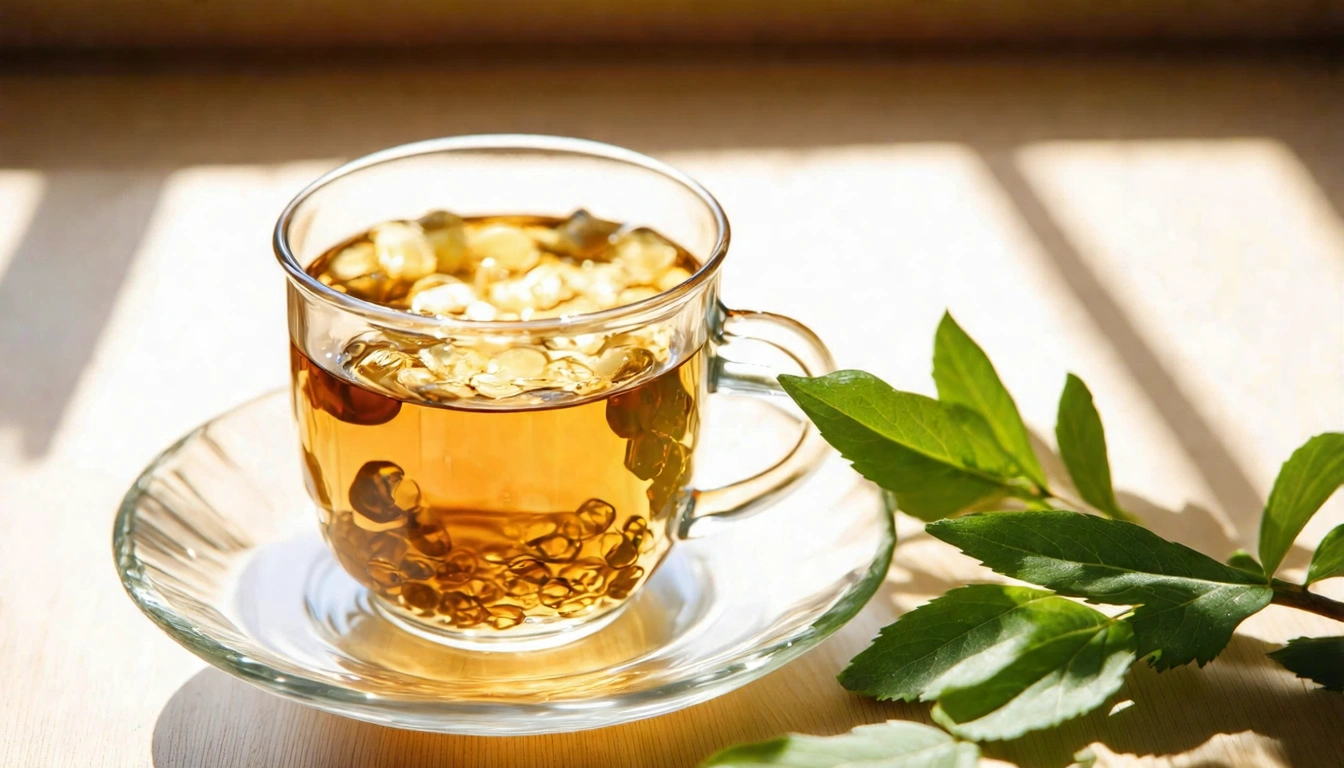
TL;DR: Three main compounds in Taiwan tea: catechins (EGCG makes up 50-60% of total catechins), L-theanine (6-20mg/g dry leaf), and caffeine (10-70mg per cup). Six-category fermentation levels: green 0%, white 5-10%, yellow 10-20%, oolong 15-70%, black 80-95%, dark (pu-erh) post-fermented. Brewing parameters by category: green/white 70-85°C, oolong 90-95°C, black/dark 95-100°C.
Want to choose Taiwan tea by origin and process? Browse ChaYanSo Teas
Five Main Compounds in Taiwan Tea: Content and Composition
Taiwan teas (especially oolong and green tea) are rich in water-soluble compounds. The main groups are catechins, L-theanine, caffeine, aroma compounds, and minerals. The ratio of these compounds determines a cup’s flavor, aroma, and mouthfeel.
Compound 1: Catechins
Catechins make up the bulk of tea polyphenols, accounting for roughly 8-15% of dry leaf weight. EGCG (epigallocatechin gallate) represents 50-60% of total catechins. It is the dominant catechin in green tea and produces the characteristic astringency and grip on the palate (Source: Taiwan Tea Research and Extension Station composition analysis report, 2023).
Catechin levels by category, roughly high to low: green > white > oolong > black. Higher fermentation oxidizes catechins into theaflavins and thearubigins, shifting liquor color from yellow-green to amber-red.
Compound 2: L-Theanine
L-theanine is an amino acid unique to Camellia sinensis, accounting for about 50% of the total free amino acids in tea leaves. Taiwan high-mountain oolong contains roughly 6-20mg of L-theanine per gram of dry leaf, with higher elevations and shaded cultivation producing greater concentrations (Source: Taiwan Tea Research and Extension Station, 2023).
On the palate, L-theanine contributes sweetness and umami — the chemical basis for the hui-gan (returning sweetness) signature of high-mountain tea. Spring harvests typically carry more L-theanine than summer or autumn harvests.
Compound 3: Caffeine
Caffeine makes up about 2-4% of dry leaf weight. Extraction depends on three variables: water temperature, leaf-to-water ratio, and steep time. The first infusion extracts the most caffeine, often accounting for 60-70% of total content. A 30-second rinse (rinse-and-discard) therefore reduces caffeine in subsequent pours.
Compound 4: Aroma Compounds
Oolong aroma arises from nearly 300 volatile compounds, including linalool (floral), nerolidol (woody), jasmone (honey), and many others. Roasting generates Maillard-reaction products such as pyrazines and pyrroles, contributing roast, nut, and caramel notes.
Compound 5: Minerals and Polysaccharides
Taiwan tea leaves contain potassium, magnesium, manganese, fluoride, and selenium. Water-soluble polysaccharides account for 3-5% of dry weight and contribute to liquor viscosity and the returning sweetness experience.
Six Tea Categories: Fermentation and Caffeine Reference Table
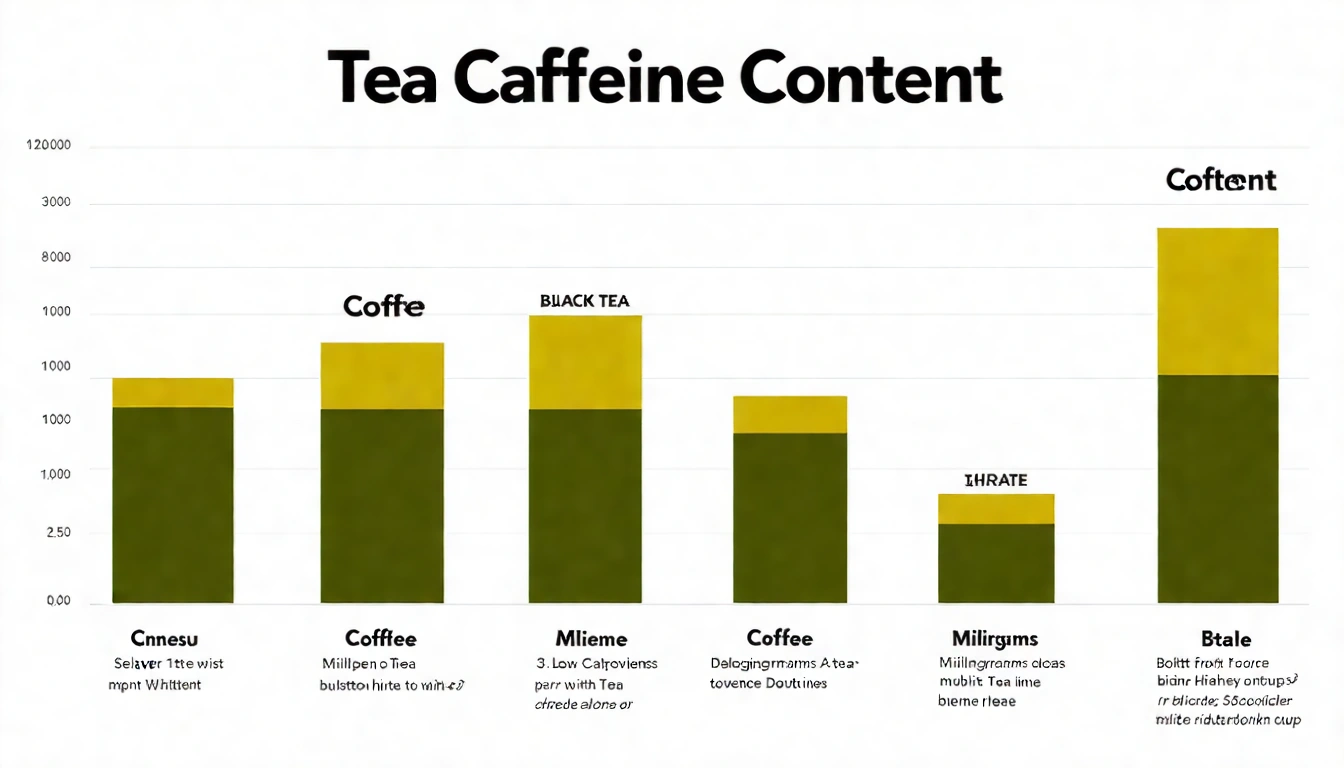
| Category | Fermentation | Caffeine/Cup | Catechin % | Representative Taiwan Tea |
|---|---|---|---|---|
| Green | 0% (non-fermented) | 20-30mg | Highest 12-15% | Sanxia Bi Luo Chun, Long Jing |
| White | 5-10% (lightly withered) | 15-25mg | High 10-13% | Silver Needle, White Peony |
| Yellow | 10-20% (mengyellow) | 20-35mg | Medium-high 9-12% | Junshan Silver Needle (not Taiwan) |
| Oolong (Qingcha) | 15-70% (partial) | 30-50mg | Medium 8-11% | High-mountain oolong, Dongding, Oriental Beauty |
| Black (Hongcha) | 80-95% (fully fermented) | 40-70mg | Low 3-6% | Sun Moon Lake Ruby, Honey-Aroma Black |
| Dark (Pu-erh) | Post-fermented | 10-20mg | Transformed | Pu-erh raw/ripe (not Taiwan) |
| Reference: Americano coffee | — | 80-150mg | — | — |
Three brewing variables determine caffeine extraction: for the same tea, higher temperature, more leaves, and longer steep time all increase caffeine in the cup. The first infusion extracts the most. To reduce the caffeine in a session, rinse for 30 seconds and discard that water before the first real pour.
For a complete caffeine breakdown by category, see Complete Guide to Tea Caffeine Content.
According to ChaYanSo’s 2026 customer purchase survey, when asked “What is your top priority when buying tea?”, “Aroma and taste” ranked first (61%), “Origin and quality” second (52%), and “Composition and process information” third (38%). Among repeat customers, “Origin and process” rose to 51% — indicating that the deeper the understanding of tea, the more buyers value transparency on origin and method (ChaYanSo, 2026).
Four Major Taiwan Tea Regions: Cultivars and Characteristics
Elevation, soil, and climate across different producing regions shape Taiwan tea’s flavor map. Here are the cultivars and signature characteristics by region:
Nantou Lugu — Dongding Oolong (600-1200m elevation)
Main cultivar: Qing Xin Oolong. Fermentation 25-30%, hemispherical rolled via cloth-ball shaping, roasted 3-5 hours at medium heat. Flavor: osmanthus floral and ripe-fruit notes with a pronounced throat finish. Harvested across four seasons, with spring and winter producing the highest quality. Origin price range: NT$1,500-4,500 per jin (ChaYanSo March 2026 retail).
Nantou/Chiayi — High-Mountain Region (1000-2400m elevation)
Main sub-regions: Shan Lin Xi, Alishan, Lishan, Da Yu Ling. The dominant cultivar is Qing Xin Oolong. Fermentation 15-25% (light), with L-theanine levels 1.5-2x that of lowland tea. Flavor: bright floral aroma, clear liquor, notable cooling aftertaste. Every 100m of additional elevation lowers average temperature by roughly 0.6°C, slowing leaf growth and concentrating extractable compounds.
At ChaYanSo, many customers entering Taiwan tea start with Dongding oolong and move upward toward high-mountain. From 800m Dongding to 2400m Da Yu Ling — same cultivar Qing Xin Oolong — the differences in L-theanine and aroma compound composition show up directly as sweetness and cool aftertaste in the cup.
Hsinchu Emei/Miaoli — Oriental Beauty Region (300-800m elevation)
Main cultivar: Qing Xin Da Mao. Fermentation 50-70% (heavy), with summer Jacobiasca formosana (small green leafhopper) bite events producing a distinctive honey aroma. Process: no roast or light roast only. Flavor: honey notes, ripe fruit, amber liquor. Only one harvest per year around the Grain-in-Ear solar term (June), with very limited yield.
Nantou Yuchi — Sun Moon Lake Black Tea Region (700-900m elevation)
Main cultivars: TTES No. 18 (Ruby, a hybrid of Assam and native Taiwan wild tea) and TTES No. 8 (Assam variety). Fermentation 80-95% (fully fermented), rolled then fermented 3-4 hours, then dried at 90-100°C. Flavor: natural mint and cinnamon notes (characteristic of Ruby), bright red liquor.
For a detailed origin guide, see Taiwan Tea Regions Complete Guide.
Want to explore teas by region? Start with ChaYanSo. Browse Teas
Taiwan Tea Processing and Brewing Parameters
Eight steps in Taiwan oolong processing
- Plucking (one bud with two leaves, mostly)
- Outdoor withering under sunlight (2-3 hours, moisture release)
- Indoor resting and tossing (6-12 hours alternating, controlling fermentation)
- Fixation (kill-green at 280-300°C, deactivating enzymes)
- Rolling (hemispherical oolong uses cloth-ball rolling)
- Primary drying (100-110°C)
- Roasting (60-140°C, level varies by tea)
- Stem picking and grading
Brewing parameters across six categories:
| Category | Water Temp | Leaf:Water | 1st Infusion | 2nd Infusion | 3rd Infusion |
|---|---|---|---|---|---|
| Green tea | 70-80°C | 1:50 | 60 sec | 45 sec | 60 sec |
| White tea | 80-85°C | 1:50 | 60 sec | 50 sec | 70 sec |
| Light oolong | 90-95°C | 1:30 (gaiwan) | 45 sec | 40 sec | 55 sec |
| Roasted oolong | 95-100°C | 1:30 | 40 sec | 35 sec | 50 sec |
| Oriental Beauty | 85-90°C | 1:40 | 50 sec | 45 sec | 60 sec |
| Black tea | 95-100°C | 1:50 | 40 sec | 50 sec | 70 sec |
| Pu-erh (ripe) | 100°C | 1:40 | 30 sec (rinse & discard) | 30 sec | 40 sec |
Three-variable rule: hotter water, more leaf, longer steep → more extraction (caffeine, astringency, and bitterness all rise together). Adjusting any one shifts the flavor balance.
Flavor Profiles by Tea
Objective comparison of main Taiwan tea profiles:
Profile 1: High-Mountain Oolong (light roast)
Elevation 1000m+, Qing Xin Oolong cultivar, fermentation 20-25%, light roast. Composition: bright floral aroma (linalool dominant), sweetness (L-theanine 15-20mg/g), clear returning sweetness. Liquor color: honey-yellow. Brewing temp: 90-95°C.
Profile 2: Roasted Oolong (medium to heavy roast)
Dongding or high-mountain tea roasted 3-6 hours at 80-110°C. Composition: roast aroma, ripe fruit, nut notes (pyrazine compounds dominant). Caffeine partially volatilized, averaging 20-35mg per cup. Liquor: amber. Brewing temp: 95-100°C.
Profile 3: Oriental Beauty
Fermentation 50-70%, leaves bitten by small green leafhopper, hand-plucked as one bud with one leaf. Composition: honey aroma (β-glucosidase hydrolysis products), ripe fruit, hint of cinnamon. Liquor: amber-red. Brewing temp: 85-90°C.
Profile 4: TTES No. 18 (Ruby / Hong Yu)
Native Taiwan wild tea crossed with Burmese large-leaf Assam, fully fermented. Composition: natural cooling mint sensation, subtle cinnamon. Liquor: bright amber-red. Brewing temp: 95-100°C.
Taiwan Tea Harvest Seasons and Price Ranges 2026
| Tea | Main Harvest | Elevation | Origin Price (per jin) |
|---|---|---|---|
| High-Mountain Oolong (Shan Lin Xi) | Spring (May), Winter (Nov) | 1600-1800m | NT$3,000-6,000 |
| High-Mountain Oolong (Lishan/Da Yu Ling) | Spring (May-Jun), Winter (Oct) | 2000-2400m | NT$6,000-15,000 |
| Dongding Oolong | Spring, Winter | 600-1200m | NT$1,500-4,500 |
| Oriental Beauty | Summer (Jun-Jul) | 300-800m | NT$3,000-12,000 |
| Sun Moon Lake Ruby Black | Summer (May-Aug) | 700-900m | NT$2,000-5,000 |
(Source: ChaYanSo retail price ranges, March 2026)
Pick your Taiwan tea by origin and cultivar. Shop Now
Understanding Taiwan tea ultimately comes down to five axes: category × cultivar × origin × process × brewing. The same Qing Xin Oolong grown at 800m and 2200m will have different composition. The same light-fermented oolong given a light or heavy roast will take on different aromatics. Learning to decode these axes from the cup — working backwards from liquor to process and origin — is the core skill of advanced Taiwan tea appreciation.
FAQ: Taiwan Tea Composition and Brewing
Which tea category has the lowest caffeine?
Pu-erh (post-fermented) has the lowest caffeine at 10-20mg per cup, followed by white tea (15-25mg/cup) and roasted oolong (20-35mg/cup, since some caffeine volatilizes during roasting). Americano coffee, for comparison, runs 80-150mg per cup — roughly 2-3x oolong tea.
What is the main compositional difference between oolong and green tea?
Fermentation level. Green tea is 0% fermented, retaining the most catechins (12-15%). Taiwan oolong is 15-70% partially fermented, with a portion of catechins oxidized into theaflavins and thearubigins (catechins drop to 8-11%). This is why green tea liquor looks yellow-green with stronger astringency, and oolong liquor runs honey-gold to amber with a rounder mouthfeel.
What water temperature is ideal for Taiwan high-mountain oolong?
90-95°C is recommended. Below 85°C, floral aromatics and L-theanine sweetness underextract. At 100°C, astringent compounds extract too quickly. A 1:30 leaf-to-water ratio (about 6g in a 180ml gaiwan) with a 40-45 second first infusion is a solid starting point.
Where does Oriental Beauty’s honey aroma come from?
From the small green leafhopper (Jacobiasca formosana). When the insect bites young leaves, the plant activates β-glucosidase enzymes that generate honey-aroma precursors. After 50-70% fermentation, these precursors transform into the honey and ripe-fruit signature of the finished tea. This is why Oriental Beauty must be summer-harvested, pesticide-free, and produced in very limited quantities.
Why is high-mountain tea more expensive?
Three reasons: (1) at higher elevations, lower temperatures limit leaves to 2-3 harvests per year, keeping yields small; (2) high-mountain tea accumulates more L-theanine and aroma compounds, concentrating flavor; (3) steep terrain requires entirely manual plucking, raising labor cost. Spring tea from 2000m+ regions like Lishan and Da Yu Ling commands NT$6,000-15,000 per jin — a reasonable range given these factors.
What is TTES No. 18 (Ruby black tea)?
TTES No. 18 is a cultivar released by Taiwan’s Tea Research and Extension Station in 1999, bred by crossing native Taiwan wild tea (maternal) with Burmese large-leaf Assam (paternal). Grown in Yuchi near Sun Moon Lake, fully fermented, with natural mint and cinnamon notes that come from the cultivar itself — not from flavoring.
Why does roasted oolong contain less caffeine?
Caffeine sublimates around 178°C. When roasting runs at 100-140°C for several hours, caffeine gradually volatilizes along with moisture. Heavily roasted oolong can drop to 20-35mg of caffeine per cup, roughly 70% of light-fermented oolong (30-50mg). This is why roasted oolong is a common afternoon or evening choice.
Further Reading
- Complete Guide to Tea Caffeine Content: Data by Category
- Taiwan Tea Regions Complete Guide: Lugu, Alishan, Lishan, Sun Moon Lake
- Six Tea Categories: Fermentation and Processing Explained
- Taiwan Tea Cultivars and Flavor Map: Qing Xin Oolong, TTES No. 18, Qing Xin Da Mao
- Complete Guide to Taiwanese Tea Knowledge: Tea Polyphenols and Compounds
References
- Taiwan Tea Research and Extension Station (2023). Composition analysis and L-theanine content report for Taiwan teas.
- Council of Agriculture (2023). Taiwan specialty tea classification system and processing standards.
- Tea Research and Extension Station (2024). TTES No. 18 Ruby cultivar characteristics and cultivation guide.
- ChaYanSo (March 2026). 2026 customer purchase survey and retail price ranges.