
Complete Guide to TTES No. 18 Ruby Black Tea 2026 | The Science Behind Its Cinnamon-Mint Aroma & Buying Guide
Brew a cup of Ruby, and what will you smell? Many people are stunned the first time — it’s clearly a Taiwan tea, yet there’s a subtle cinnamon fragrance, mixed with a hint of cool mint. This isn’t flavoring; this is the natural aroma of TTES No. 18. This native cultivar, officially named in 1999, took half a century to be recognized by the world, but it made an instant impression.
TTES No. 18 (Ruby) was bred by crossing Taiwan’s native wild tea tree with the Burmese large-leaf Assam variety, making it one of the few black tea cultivars that combines the wildness of native Taiwan tea with the body of Southeast Asian Assam. According to ChaYanSo’s 2026 market survey, authentic Ruby products from the Sun Moon Lake tea region range from NT$600 to NT$2,000 per jin (600g), but the proportion of counterfeits on the market remains high, making consumer identification difficult. Taiwan’s tea garden area spans approximately 12,000 hectares with an annual production of about 14,000 metric tons (Ministry of Agriculture Tea Research and Extension Station), of which Sun Moon Lake Ruby accounts for approximately 50 metric tons annually — this scarcity defines its artisan positioning. This guide covers everything from aroma science and cultivation history to purchasing methods.
At ChaYanSo, we established partnerships with Ruby tea farmers in Yuchi Township from our earliest days, personally visiting the tea region every spring season to select teas. Our years of experience tell us: even among products labeled “TTES No. 18,” quality differences can be enormous. A truly excellent Ruby will have a subtle cinnamon note detectable from the dry leaves alone — this is the simplest way to judge authenticity.
TL;DR: TTES No. 18 Ruby is a native cultivar bred from Taiwan wild tea and Assam, renowned for its natural cinnamon-mint aroma. Authentically produced in the Sun Moon Lake tea region of Yuchi Township, Nantou, with an annual production of approximately 50 metric tons (Source: Ministry of Agriculture Tea Research and Extension Station, 2024). When buying, focus on “origin labeling” and “cultivar tags.” Authentic Ruby has deep amber liquor with long-lasting aroma, clearly distinguishable from cheap counterfeits.
Where Did TTES No. 18 Come From? A Breeding Journey Spanning Half a Century
The birth of TTES No. 18 was a 50-year exercise in patience.
In the 1940s, during the Japanese colonial period, the Taiwan Governor-General’s Agricultural Experiment Station began introducing Burmese large-leaf Assam tea (Camellia sinensis var. assamica) for trial planting in the Sun Moon Lake area, aiming to replicate the Assam black tea of British colonies. After the war, these tea trees were taken over by the Taiwan Provincial Tea Research and Extension Station, which continued crossbreeding programs (Source: Taiwan Tea Research and Extension Station Historical Records, 2023).
Researchers crossed the Assam large-leaf variety with Taiwan’s native wild tea (Camellia formosensis), combining the wild fragrance of the native tea with the full body of Assam. This breeding program began in 1947, progressing through rounds of selection, testing, and elimination, until it was officially named “TTES No. 18” in 1999, given the name “Ruby” (Hong Yu), meaning “red jade.”
Why did it take 50 years?
Tea tree breeding isn’t like crop breeding, where results can be seen in one year. Tea trees require 3 to 5 years of growth before they can be harvested, making each round of trials a long wait. The selection process needed to confirm:
- Aroma stability (consistency between batches)
- Yield viability (whether farmers can sustain their livelihood)
- Processing characteristics (stability during fermentation and drying)
- Market acceptance (consumer preferences)
Taking 50 years to develop a cultivar is actually not long in the tea world. This is also why authentic TTES No. 18 remains primarily produced in Yuchi Township, Nantou, with limited output — its scarcity forms the foundation of its value.
For more on Taiwan black tea’s production regions, see Complete Guide to Taiwan Black Tea: Three Major Cultivar Comparison & Buying Guide, and Sun Moon Lake Black Tea Region Complete Guide.
Where Does the Cinnamon-Mint Aroma Come From? The Science of Aroma Compounds
This is Ruby’s most magical quality, and the reason many people never forget their first sip.
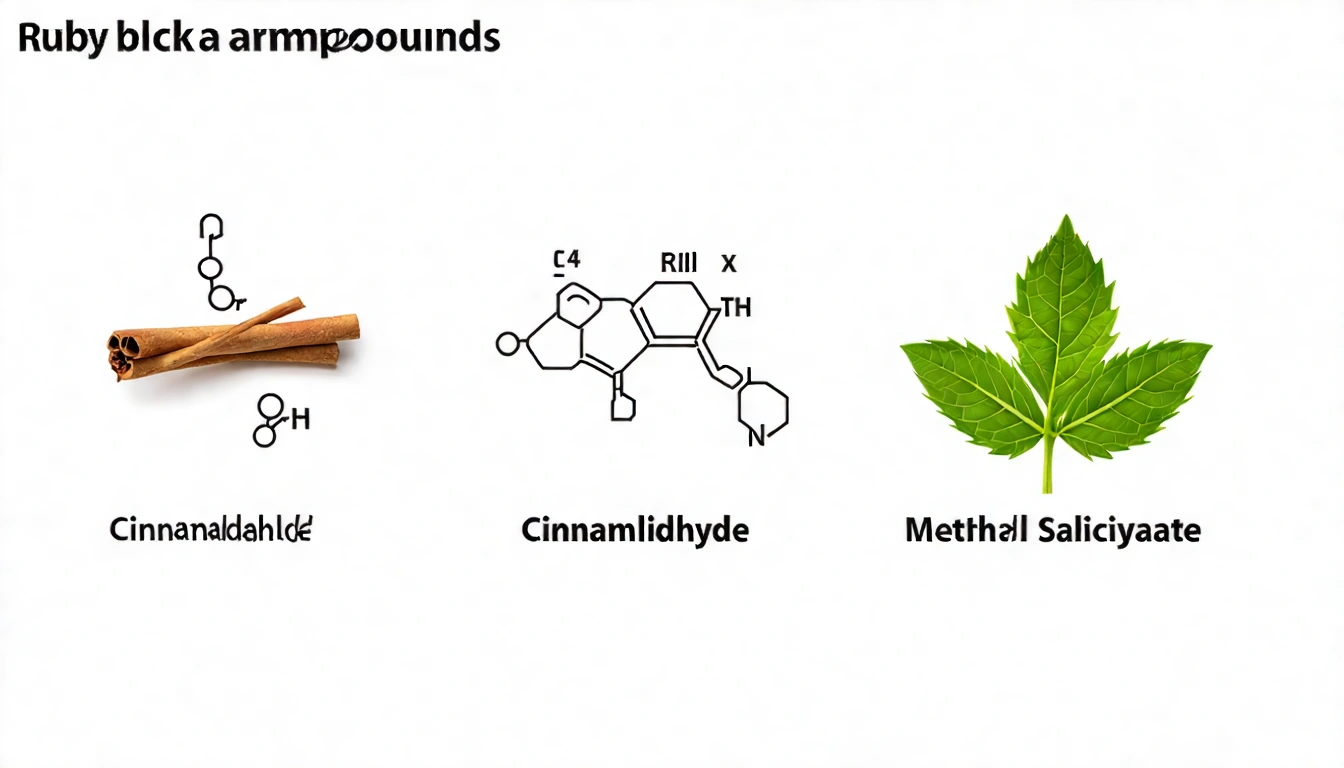
According to aroma compound analysis research from Taiwan’s Tea Research and Extension Station, the signature aroma of TTES No. 18 comes from two key compounds (Source: Tea Research and Extension Station Technical Report, 2022):
1. Cinnamaldehyde
This is the primary aroma compound of cinnamon (cassia bark). TTES No. 18 contains particularly high levels, inherited from Taiwan wild tea genetics. Taiwan wild tea (the wild species) naturally carries higher concentrations of terpene compounds, and this trait was preserved through crossbreeding.
2. Methyl Salicylate
This is the source of the mint aroma — more precisely, it’s the scent of wintergreen oil. Methyl salicylate is present in higher concentrations in the Assam large-leaf variety, and during black tea processing, it transforms during fermentation into a pleasant cooling sensation.
How does fermentation level affect aroma?
TTES No. 18 is typically processed as a fully fermented black tea (fermentation level 80%+). During this process:
- Catechins are oxidized into theaflavins and thearubigins (creating the dark liquor color)
- Grassy notes dissipate, floral and fruity aromas emerge
- Cinnamaldehyde’s volatility increases during high-temperature withering
Understanding this mechanism, you can appreciate: why Ruby’s aroma is most pronounced when hot-brewed and slightly diminishes as it cools; why aged Ruby undergoes aroma transformation, with cinnamon notes decreasing and woody notes increasing.
At ChaYanSo, we conducted an interesting comparison: brewing the same batch of Ruby at both 95°C and 100°C. The 95°C cup had more lingering cinnamon aroma and more pronounced mint coolness, while the 100°C cup had stronger initial aroma burst but faster dissipation. We therefore recommend customers brew at 95-100°C, but for more nuanced aroma appreciation, 95°C is the better choice. Taiwan tea’s export unit price is approximately 6.5 times that of imported tea (Ministry of Agriculture), and Ruby’s artisan positioning is already recognized in international markets.
The Five Flavor Layers of TTES No. 18
Compared to other black teas, Ruby’s mouthfeel is remarkably layered, inviting slow, appreciative sipping.
| Tasting Stage | Sensation | Key Compounds |
|---|---|---|
| Entry (opening) | Round sweetness, almost no astringency | Thearubigins, amino acids |
| Mid-palate | Fruit notes emerge, reminiscent of lychee and peach | Terpene volatiles |
| Finish | Subtle cinnamon spice surfaces | Cinnamaldehyde |
| Aftertaste | Mint coolness, lasting several minutes | Methyl salicylate |
| Cup bottom | Deep amber liquor, clear without cloudiness | Theaflavin complexes |
This four-phase experience of “opening sweetness, mid-palate fruit, finishing spice, lingering coolness” is one of the key indicators professional tasters use to authenticate genuine TTES No. 18.
Comparison with Assam No. 8: Assam No. 8 (TTES No. 8) has a heavier body, is suitable for adding milk, and has more pronounced bitterness and astringency. Ruby is more refined, excellent for drinking straight, with complex aroma but low astringency. Though both are produced in the Sun Moon Lake region, they occupy different market positions.
Authentic Origin: The Geographic Advantages of the Sun Moon Lake Tea Region
The unique aroma of TTES No. 18 is inseparable from its geographic environment.
The Sun Moon Lake tea region in Yuchi Township, Nantou County, sits at approximately 750 to 900 meters elevation, with average annual temperatures of 20-22°C, annual rainfall of 2,000-2,500mm, and ample but not excessive sunlight (Source: Ministry of Agriculture Tea Research and Extension Station tea region climate data, 2024). These conditions allow tea leaves to grow slowly, accumulating rich aromatic compounds.
Historical background of Yuchi Township:
- 1920s: Japanese introduced Assam varieties for trial planting
- Post-1945: Taiwan province took over, continuing the breeding program
- 1999: TTES No. 18 officially released and named
- 2010s: “Sun Moon Lake Black Tea” received geographical indication protection
- 2020s: Annual production stabilized at approximately 50 metric tons, Taiwan’s largest Ruby producing area
It’s worth noting that while other counties (such as Hualien and Taitung) have also begun cultivating TTES No. 18, the most complete aroma and most consistent quality is still widely recognized as coming from the Sun Moon Lake tea region in Yuchi Township. The combination of elevation, temperature, and soil is difficult to replicate.
Interested in Taiwan black tea and want to purchase authentic Sun Moon Lake Ruby? ChaYanSo partners directly with Yuchi Township tea farmers, carefully selecting TTES No. 18 with full traceability information. Shop Now at ChaYanSo
How to Identify Authenticity: Five Methods for Verifying Genuine Ruby
The Ruby market is chaotic, with prices ranging from NT$200 to NT$2,000 per jin — a tenfold difference. Here is a practical identification guide:
Method 1: Smell the dry leaf aroma
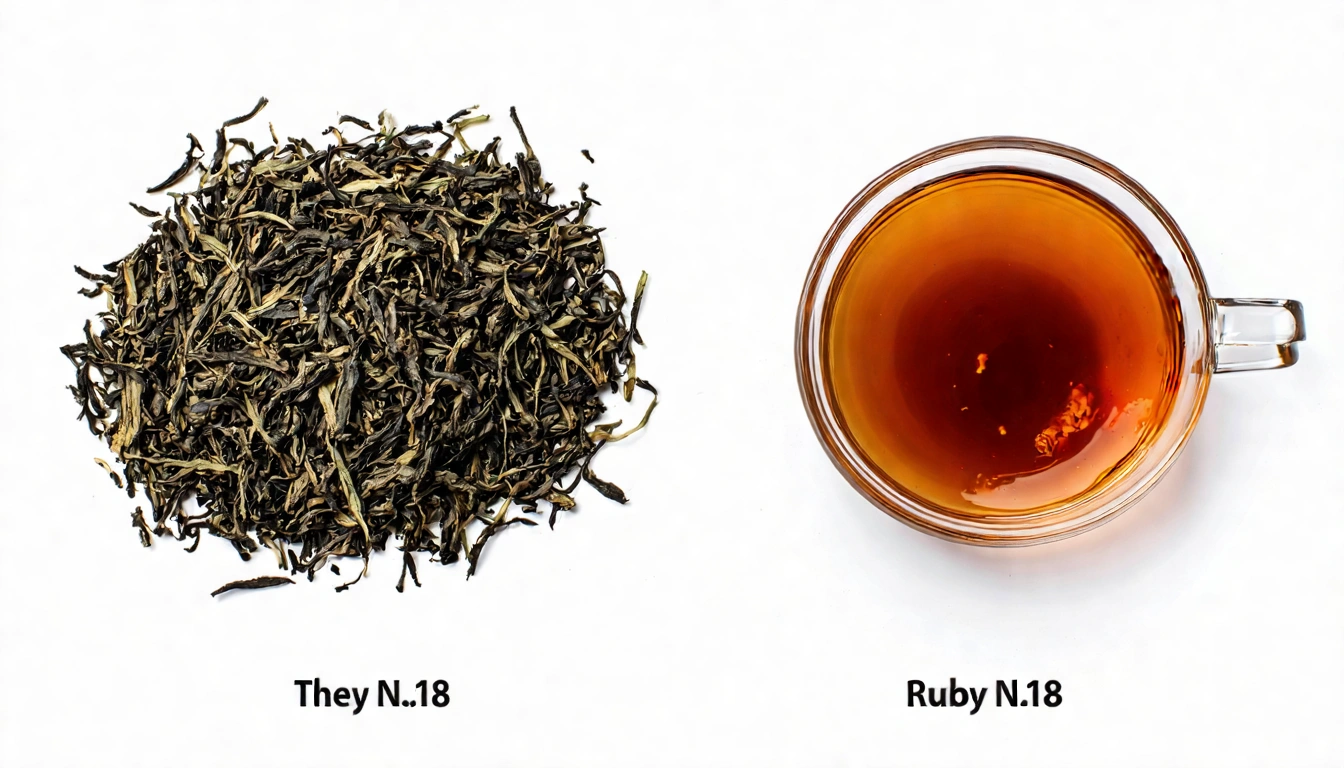
Authentic Ruby will have a subtle cinnamon note detectable from the dry leaves. If there is no cinnamon note at all, or only a caramel scent, proceed with caution.
Method 2: Examine the leaf appearance
- Authentic: Tightly twisted strips, uniform leaves, dark glossy color with golden tips
- Counterfeit: Loosely twisted, uneven color tending too black or too red, few golden tips
Method 3: Observe the tea liquor color
- Authentic: Deep amber, clear and bright, with a visible golden ring (cream effect) when held to light
- Counterfeit: Tends too red or too black, cloudy, no golden ring
Method 4: Taste the aftertaste
Authentic Ruby should produce a noticeable sweet aftertaste at the back of the tongue 30-60 seconds after drinking, with a lingering mint coolness. Cheap counterfeits typically have bitter astringency that fades quickly with no lasting finish.
Method 5: Confirm origin labeling
Legally sold Sun Moon Lake Ruby should have packaging that states:
- Cultivar: TTES No. 18 (Ruby / Hong Yu)
- Origin: Yuchi Township, Nantou County (or Sun Moon Lake tea region)
- Tea factory or farmer name and contact information
If any of these are missing, further inquiry is warranted.
TTES No. 18 Buying Guide 2026
| Quality Grade | Characteristics | Market Price (per jin) | Suitable Use |
|---|---|---|---|
| Top spring tea | Tender buds with golden tips, richest aroma | NT$1,500-2,000 | Solo tasting, gift-giving |
| Regular spring/summer tea | Normal leaves, stable quality | NT$800-1,500 | Daily drinking, cold brewing |
| Autumn/summer tea | Slightly lighter aroma, thinner body | NT$600-900 | Milk tea base, cooking |
| Mixed-cultivar low-price products | Not TTES No. 18 or blended | NT$200-500 | Not recommended |
Buying advice:
For first-time buyers, we recommend products with “cultivar verification” or “farm-direct” labeling, with NT$800-1,200 per jin being a reasonable entry price. Products below NT$400 can almost certainly be confirmed as not genuine Yuchi Township TTES No. 18.
The most common complaint we receive at ChaYanSo is: “The TTES No. 18 I previously bought online had zero cinnamon flavor.” Upon investigation, most turned out to be low-price products with unclear origins. Our advice is simple: when buying, confirm the packaging clearly states “Yuchi Township, Nantou County,” and the seller can provide tea farmer or factory information. Authentic Ruby’s price reflects the real costs of cultivation and processing — you get what you pay for.
Best Brewing Methods for TTES No. 18
Hot Brewing (Best for showcasing aroma):
| Parameter | Recommendation |
|---|---|
| Water temperature | 95-100°C |
| Tea-to-water ratio | 1g : 60ml |
| Steeping time | First infusion 30 seconds, second infusion 45 seconds |
| Tea ware | White porcelain gaiwan or glass pot (easy to observe color) |
| Best number of infusions | 3-4 infusions |
Cold Brewing (More elegant aroma):
- Ratio: 1g : 100ml cold water
- Time: 6-8 hours in refrigerator
- Characteristics: Bitterness and astringency virtually disappear, cinnamon aroma transforms into elegant floral notes
Milk Tea (Taiwan-style afternoon tea):
Ruby is excellent for milk tea. Recommended ratio — tea liquor : whole milk = 1:1, sweetness to personal preference. Ruby’s cinnamon aroma gains additional dimension when milk is added, making it the signature recipe of many artisan tea houses today.
For more detailed Taiwan black tea brewing techniques, see Taiwan Black Tea Brewing Guide: Hot Brew, Cold Brew & Milk Tea — Three Methods.
Want to experience the rich aroma layers of authentic TTES No. 18 Ruby? ChaYanSo carefully selects from Sun Moon Lake Yuchi Township farmers with full cultivar traceability — best enjoyed straight, ideal for gifts. Shop at ChaYanSo
FAQ: Common Questions About TTES No. 18
What’s the difference between TTES No. 18 and regular black tea?
TTES No. 18 is a Taiwan-bred native cultivar, distinguished primarily by its natural cinnamon-mint aroma, which comes from its unique genetic makeup (Taiwan wild tea × Assam crossbreed). Compared to Ceylon or Darjeeling black teas, TTES No. 18 has higher theaflavin content, lower astringency, and greater aroma complexity (Source: Tea Research and Extension Station cultivar comparison report, 2023).
Is TTES No. 18 suitable for adding sugar or milk?
Yes, but we recommend taking a sip straight first to experience the original aroma before deciding whether to add anything. For milk tea, TTES No. 18’s cinnamon aroma pairs beautifully with fresh milk, and its body is substantial enough that the tea flavor won’t be overwhelmed by the milk.
Where can I buy authentic TTES No. 18?
The most reliable channels are: (1) purchasing directly from Yuchi Township tea farmers, (2) brand tea merchants with cultivar traceability, and (3) tea brands certified by the Ministry of Agriculture. Exercise caution on online platforms — confirm the seller provides origin and cultivar information.
How long can TTES No. 18 be stored?
Sealed, away from light, and stored at cool temperatures, regular-quality Ruby can be preserved for 1 to 2 years. Top-quality spring tea, properly stored, will retain its aroma for up to 3 years, though the cinnamon notes will gradually transform into woody notes.
Is the caffeine content of TTES No. 18 high?
A typical cup (200ml) of black tea contains approximately 40-70mg of caffeine. TTES No. 18, as a fully fermented black tea, falls in the medium-high range among its category (Source: Ministry of Health and Welfare food safety database, 2024). Those sensitive to caffeine should avoid drinking after 3 PM.
Further Reading
- Complete Taiwan Black Tea Guide: Sun Moon Lake Ruby, Honey-Scented — Three Major Cultivar Comparison
- Sun Moon Lake Black Tea Region Guide: Yuchi Township Buying & Travel Complete Guide
- Honey-Scented Black Tea Guide: The Unique Natural Honey Fragrance from Hualien and Taitung
- Black Tea Health Benefits Complete Analysis: Theaflavins, Cardiovascular & Gut Health
- Complete Guide to Taiwan High-Mountain Tea: Origins, Cultivars & Buying Wisdom
References
- Ministry of Agriculture Tea Research and Extension Station (2024). Taiwan Tea Cultivar Introduction: TTES No. 18 (Ruby). Ministry of Agriculture official website.
- Ministry of Agriculture Tea Research and Extension Station (2022). TTES No. 18 Aroma Compound Analysis Technical Report.
- Ministry of Agriculture Tea Research and Extension Station (2024). Yuchi Tea Region Climate and Soil Survey Report.
- Ministry of Health and Welfare (2024). Food Caffeine Content Database.
- Tea Research and Extension Station (2023). Quality Comparison of Major Taiwan Black Tea Cultivars.