
Black Tea Complete Guide 2026 | Full Oxidation, Theaflavin Composition & Taiwan Cultivars
Black tea is the most widely consumed tea category in the world, and what separates it from green tea and oolong is one thing: oxidation.
Black tea is a fully oxidized tea with fermentation levels of 80% or above (sometimes approaching 100%). During the withering, rolling, oxidation, and drying process, catechins in the leaf are oxidized into theaflavins and thearubigins — the compounds responsible for black tea’s amber-red liquor and rounded body.
Taiwan has three major black tea regions: Sun Moon Lake in Nantou, Ruisui in Hualien, and Luye in Taitung. The main cultivars are TTES No. 18 (Ruby), TTES No. 8 (Assam), and honey-scented black tea made from leaves bitten by tea leafhoppers. This guide walks through processing, composition, Taiwan cultivars, growing regions, and brewing.
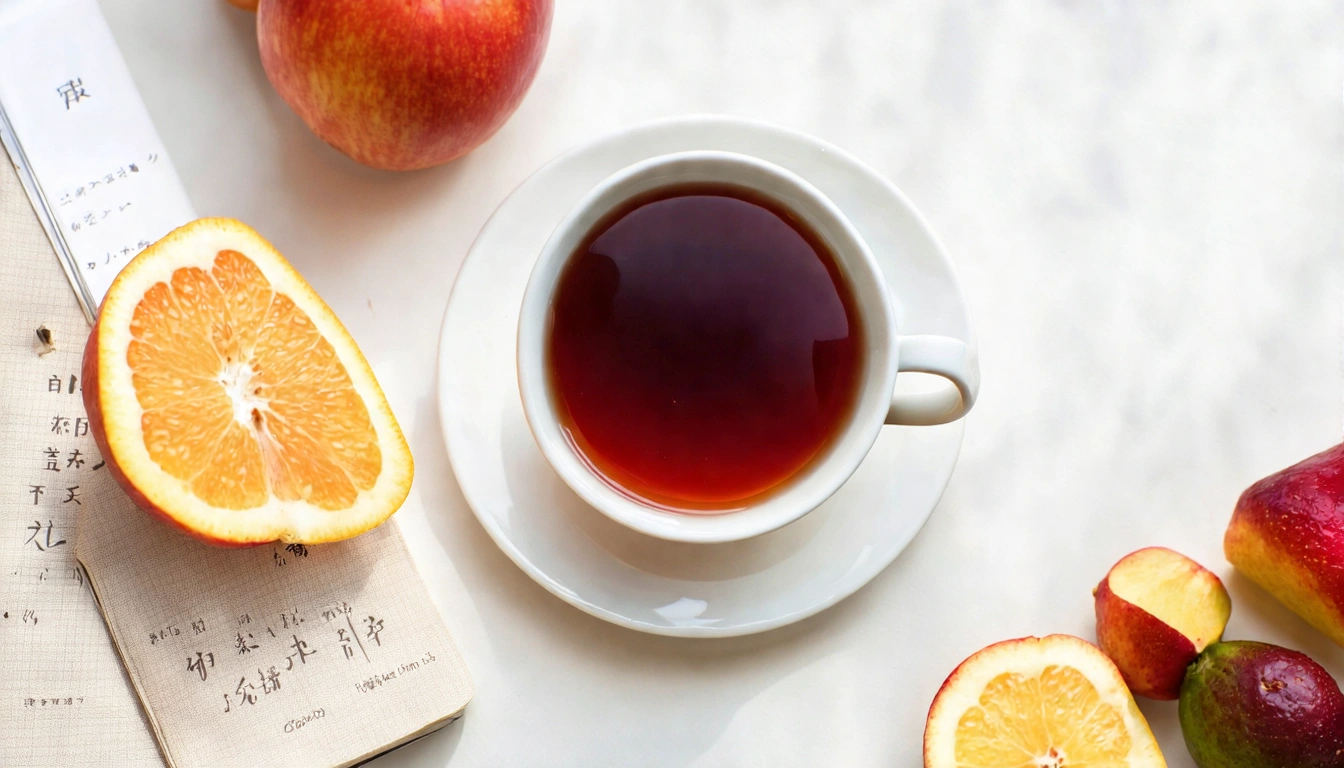
TL;DR: Black tea is a fully oxidized tea (80%+ fermentation) containing theaflavins (20-30 mg/g), thearubigins, L-theanine, and caffeine (40-70 mg per cup). Taiwan’s three main regions are Sun Moon Lake, Hualien Ruisui, and Taitung Luye. The three signature cultivars are TTES No. 18 (Ruby), TTES No. 8 (Assam), and honey-scented black tea. Standard brewing: water 95-100°C, leaf-to-water ratio 1:60, steep 3-5 minutes.
Why Black Tea Is Black Tea: The Full Oxidation Process
Many customers new to tea confuse “oxidation” and “roasting.” They are two different things: oxidation is a chemical change driven by the leaf’s internal enzymes reacting with oxygen, while roasting is the final drying and aroma-fixing step.
What makes black tea “black” is full oxidation:
| Tea Category | Oxidation Level | Key Transformation | Liquor Color |
|---|---|---|---|
| Green tea | 0% (unoxidized) | Catechins preserved | Yellow-green |
| Pouchong | 8-18% (light) | Partial catechin oxidation | Honey yellow |
| Oolong | 20-60% (semi-oxidized) | Partial catechin oxidation | Gold to amber |
| Black tea | 80-100% (fully oxidized) | Catechins oxidized to theaflavins and thearubigins | Amber to deep red |
The standard black tea process: plucking → withering (30-40% moisture loss) → rolling (breaking cell walls to release enzymes) → oxidation (22-28°C, humidity above 90%, 2-4 hours) → drying (high heat halts enzyme activity and fixes aroma).
Core Composition of Black Tea
What sets black tea apart from other beverages is its distinctive polyphenol profile:
| Component | State in Black Tea | Typical Range |
|---|---|---|
| Theaflavin | Formed from catechin oxidation during fermentation | Approx. 20-30 mg/g |
| Thearubigin | Deep oxidation product, deep red pigment | Approx. 100-200 mg/g |
| Catechin | Much reduced after conversion compared to green tea | Approx. 30-50 mg/g |
| L-Theanine | Retained in fully oxidized tea | Approx. 5-20 mg/g |
| Caffeine | 40-70 mg per 200 ml cup (MOHW, 2024) | Approx. 25-40 mg/g dry leaf |
| Minerals (K, Mn, etc.) | Naturally present in leaf | Trace |
Compared to green tea, black tea’s catechins are largely converted to theaflavins and thearubigins during oxidation. Theaflavins exist as four main derivatives: TF1 (simple theaflavin), TF2a, TF2b, and TF3 (TFDG, theaflavin-3,3’-digallate). TFDG has the most complex molecular structure and is central to black tea’s liquor color and flavor.
Three Signature Taiwan Black Tea Cultivars
Cultivar 1: TTES No. 18 (Ruby / 紅玉)
TTES No. 18 was named by the Taiwan Tea Research and Extension Station in 1999. It is a cross between the Burmese large-leaf variety and native Taiwan wild tea.
- Region: Primarily Sun Moon Lake, Nantou
- Leaf type: Large leaf, dark color
- Flavor notes: Natural cinnamon and mint aroma, amber-red liquor
- Composition note: TFDG (theaflavin-3,3’-digallate) content is approximately 15-20% higher than standard Assam, per Taiwan Tea Research and Extension Station analyses
- Harvest seasons: Spring (April-May), summer (June-July), autumn (September-October)
Cultivar 2: TTES No. 8 (Assam)
TTES No. 8 was named in 1973, developed from Indian Assam stock adapted to Taiwan.
- Region: Sun Moon Lake (Nantou), Ruisui (Hualien)
- Leaf type: Large leaf, thick buds
- Flavor notes: Rich malty aroma, full body, pronounced tannins
- Liquor: Deep red with a gold rim
- Main use: Traditional milk tea base, blending
Cultivar 3: Honey-Scented Black Tea (蜜香紅茶)
Honey-scented black tea is not a single cultivar but a style defined by the leafhopper-bitten condition. It is commonly made from Qing Xin Da Mao and TTES No. 17 (Bai Lu).
- Region: Ruisui (Hualien), Luye (Taitung), Pinglin (New Taipei)
- Key condition: Tea buds bitten by the small green leafhopper produce natural honey-aroma precursors (such as 2,6-dimethyl-3,7-octadien-2,6-diol)
- Flavor notes: Natural honey aroma, ripe fruit notes
- Harvest: Summer (June-August, when leafhoppers are active)
- Output: Highly variable, depending on insect activity
Main Black Tea Regions in Taiwan
| Region | Elevation | Main Cultivars | Flavor Profile |
|---|---|---|---|
| Yuchi / Sun Moon Lake (Nantou) | 600-1000 m | TTES No. 18, No. 8, No. 21 | Cinnamon-mint, malty |
| Ruisui / Wuhe Plateau (Hualien) | 200-400 m | TTES No. 8, honey-scented | Honey, ripe fruit |
| Luye / Gaotai (Taitung) | 300-400 m | Honey-scented, TTES No. 18 | Natural honey, floral |
| Pinglin (New Taipei) | 400-800 m | Qing Xin Da Mao honey-scented | Fruity-floral, light |
| Meishan (Chiayi) | 500-1000 m | TTES No. 18, small-leaf black tea | Fruity, sweet finish |
Taiwan’s total tea garden area is about 12,000 hectares with annual output around 14,000 metric tons (MOA statistics). Black tea production is concentrated in Sun Moon Lake and Hualien Ruisui. Export unit prices run roughly 6.5x those of imported tea, reflecting the positioning of Taiwan-grown leaf.
Standard Black Tea Brewing
| Parameter | Hot Brew | Cold Brew |
|---|---|---|
| Water temperature | 95-100°C | Filtered water at room temperature |
| Leaf-to-water ratio | 1:60 (about 3 g leaf / 180 ml water) | 1:100 (about 5 g / 500 ml) |
| Steep time | 1st infusion 3-5 min, 2nd 4-6 min | 6-8 hours refrigerated |
| Vessel | White porcelain pot, gaiwan | Glass carafe |
| Infusions | Typically 3-4 infusions | Single steep |
Milk tea brewing: Raise the leaf-to-water ratio to 1:30 (about 6 g leaf / 180 ml water), steep 5 minutes, then add an equal volume of milk. TTES No. 8 Assam, with its pronounced tannins, is a strong milk tea base.
Daily Intake Recommendations
| Item | Recommendation |
|---|---|
| Daily recommended amount | 3-4 cups (600-800 ml) |
| Total caffeine | No more than 400 mg/day (including all caffeine sources) |
| Best timing | 30-60 minutes after meals |
| Times to avoid | On an empty stomach (tannins irritate the stomach lining), within 3 hours of bedtime (caffeine half-life about 5-6 hours) |
| Adding milk | Casein binds theaflavins and changes mouthfeel |
| Adding sugar | Increases calorie intake |
Notes for Specific Groups
| Group | Notes |
|---|---|
| Pregnant women | Daily caffeine limit 200 mg, about 2 cups |
| Those with low iron | Tannins affect iron absorption; drink 1 hour after meals |
| Sensitive stomachs | Avoid drinking on an empty stomach |
| On medication | Some drugs interact with tea tannins; check with a pharmacist |
| Caffeine-sensitive | Finish daily intake before 2 PM |
Choose Taiwan-grown black tea and experience the real flavor of full oxidation. ChaYanSo offers TTES No. 18 Ruby, TTES No. 8 Assam, and honey-scented black teas sourced from Taiwan. Shop Taiwan Black Tea at ChaYanSo
Taiwan vs. Imported Black Tea: Key Differences
TTES No. 18 (Ruby), thanks to its genetic heritage — a cross between Burmese large-leaf and native Taiwan wild tea — shows TFDG (theaflavin-3,3’-digallate) content approximately 15-20% higher than standard Assam in analyses by the Taiwan Tea Research and Extension Station. This is a combined result of cultivar genetics and the mid-elevation Taiwan climate.
Honey-scented black tea is a style unique to Taiwan. In pesticide-free gardens, the small green leafhopper bites tea buds and the tree responds by producing natural honey-aroma precursors as a defense. This process cannot be replicated artificially, and yields vary significantly with insect activity and climate.
Many ChaYanSo customers switched from supermarket tea bags to Taiwan-grown black tea, and the feedback we hear most often is: “I thought all black tea tasted the same — then I tried your TTES No. 18 and understood what cinnamon-mint aroma actually means.” Cultivar, region, and process together define what ends up in the cup.
For more on Taiwan black tea cultivars, see the Complete Taiwan Black Tea Guide: Three Major Varieties Compared, TTES No. 18 Ruby Complete Guide, and the Honey-Scented Black Tea Guide.
Start by choosing the right Taiwan-grown black tea and explore the layered flavors of full oxidation. ChaYanSo offers TTES No. 18, TTES No. 8, and honey-scented black teas. Shop at ChaYanSo
FAQ: Black Tea Composition & Brewing
What is the oxidation level of black tea?
Black tea is fully oxidized, with oxidation levels of 80% to 100%. During processing, withering and rolling break the leaf’s cell walls, releasing enzymes that react with oxygen to convert catechins into theaflavins and thearubigins. Oxidation typically runs at 22-28°C, humidity above 90%, for 2-4 hours.
What are theaflavins and thearubigins?
Theaflavins and thearubigins are polyphenolic compounds formed when catechins oxidize during black tea fermentation. Theaflavins are orange-yellow pigments at about 20-30 mg/g, while thearubigins are deep-red pigments at about 100-200 mg/g. Together they define black tea’s liquor color and rounded body.
What is the difference between TTES No. 18 and Assam black tea?
TTES No. 18 (Ruby) is a cross between the Burmese large-leaf variety and native Taiwan wild tea, with a natural cinnamon-mint aroma. TTES No. 8 Assam is an Indian Assam cultivar adapted to Taiwan, with a rich malty profile. Both are grown primarily in Sun Moon Lake, but their flavor signatures are distinctly different.
What is the best way to brew black tea?
Standard hot brewing: water 95-100°C, leaf-to-water ratio 1:60 (about 3 g leaf / 180 ml water), steep 3-5 minutes. Cold brew: ratio 1:100, refrigerate 6-8 hours. For milk tea, raise the ratio to 1:30.
Where does the honey aroma in honey-scented black tea come from?
The natural honey aroma comes from defensive compounds (such as 2,6-dimethyl-3,7-octadien-2,6-diol) produced by tea trees after their buds are bitten by the small green leafhopper. These precursors transform into honey-like aroma during fermentation. This is why honey-scented black tea must be grown in pesticide-free gardens, and why yields are highly dependent on insect activity.
Further Reading
- Complete Taiwan Black Tea Guide: Sun Moon Lake Ruby, Honey-Scented & Three Major Varieties Compared
- TTES No. 18 Ruby Complete Guide: The World’s Only Cinnamon-Mint Black Tea
- Honey-Scented Black Tea Guide: The Natural Honey Aroma from Leafhopper Bites
- Oolong Tea Complete Guide: Semi-Oxidation Process and Taiwan Cultivars
- Complete Taiwan Tea Guide: Processing and Cultivars of the Six Tea Categories
References
- Ministry of Agriculture, Taiwan (2024). Annual Statistics of Taiwan Tea Production.
- Taiwan Tea Research and Extension Station (2023). TTES No. 18 Cultivar Characteristics and Processing Techniques.
- Taiwan Tea Research and Extension Station (2022). Honey-Scented Black Tea Processing and the Role of Small Green Leafhopper.
- Ministry of Health and Welfare, Taiwan (2024). Food Caffeine Content Database.
- Taiwan Tea Association (2023). Taiwan Black Tea Regions and Cultivars.