
Honey Black Tea Complete Guide 2026 | The Science of Leafhopper-Bitten Honey Fragrance & Origin Buying Guide
There is a tea that becomes sweeter and more fragrant the more it is bitten by insects. This sounds paradoxical, yet it is the truest essence of Honey Black Tea.
Honey Black Tea contains no added sugar, no flavorings whatsoever, yet it naturally carries a rich honey fragrance. The “honey” in its name comes from terpenoid compounds that tea leaves produce through their self-defense mechanism after being bitten by small green leafhoppers. Those who appreciate this logic are the ones who truly fall in love with the wonder of Taiwan tea.
According to ChaYanSo’s 2026 origin survey, Hualien’s Ruisui Township and Taitung’s Luye Township are Taiwan’s two core Honey Black Tea production areas. Among products marketed as “honey fragrance” on the market, those with genuinely pronounced honey characteristics make up no more than 60%, making it challenging for consumers to buy with confidence. Taiwan’s tea plantation area covers approximately 12,000 hectares with annual production of about 14,000 metric tons (MODA Tea Research and Extension Station), of which Honey Black Tea’s annual production is estimated at only 30–50 metric tons — a small-batch artisan tea category. This guide covers everything from the scientific mechanism to practical buying tips, answering all your questions about Honey Black Tea.
At ChaYanSo, we have been working directly with organic tea farmers in Hualien’s Ruisui since 2023, visiting the tea gardens every summer to select teas in person. The first time we saw a farmer proudly holding up tea leaves covered in leafhopper bite marks, beaming as he said “This batch has an incredibly high bite rate — the honey fragrance is going to be amazing” — this counterintuitive agricultural wisdom gave us a profound appreciation for the unique charm of Taiwan tea culture.
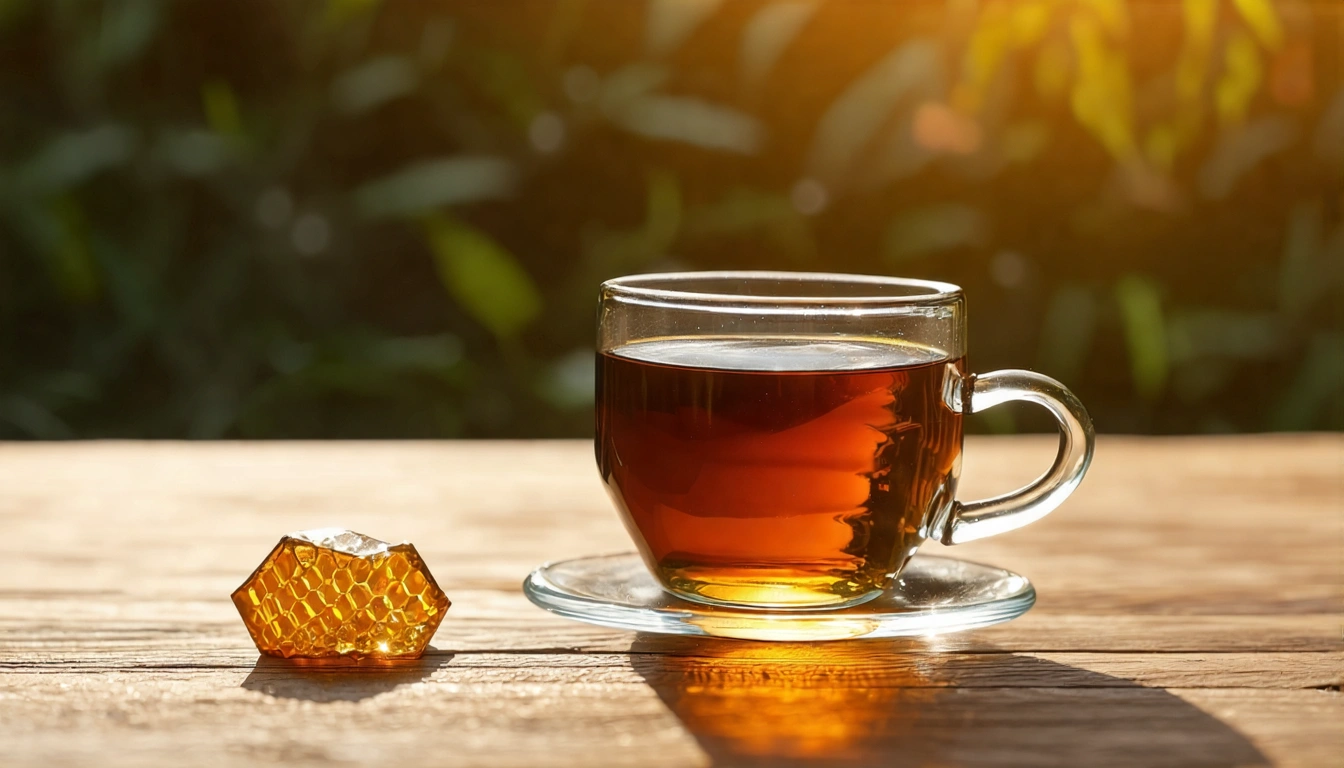
TL;DR: Honey Black Tea’s honey fragrance comes from terpenoid compounds (geraniol, benzyl alcohol) triggered by leafhopper (Jacobiasca formosana) bites — a natural phenomenon unique to Taiwan. Taiwan’s Honey Black Tea is primarily produced in Hualien Ruisui and Taitung Luye, with estimated annual production of 30–50 metric tons (Source: MODA Tea Research and Extension Station, 2024). Key buying tip: smell the dry tea for natural honey fragrance; check that the liquor color is clear orange-red.
Where Does Honey Black Tea’s Honey Fragrance Come From? The Biochemical Miracle of Insect Bites
This is Honey Black Tea’s most fascinating story and one of the proudest chapters in Taiwan tea science.
According to research from Taiwan’s Tea Research and Extension Station and National Chung Hsing University, the aroma formation mechanism of Honey Black Tea works as follows (Source: Tea Research and Extension Station Research Report, 2023):
Step 1: Leafhopper Bites
The small green leafhopper (Jacobiasca formosana) is an extremely tiny insect (approximately 2–3mm) that prefers to feed on tender buds. It uses piercing-sucking mouthparts to puncture tea leaves and extract juices.
Step 2: Tea Plant Defense Response
The wounded tea leaf activates its defense mechanism, synthesizing large quantities of terpenoid compounds, particularly:
- Geraniol: The primary component of rose and honey fragrances
- Benzyl alcohol: Sweet notes of jasmine and almond
- Linalool: Lily of the valley floral fragrance
Step 3: Tea Processing Locks in the Aroma
These volatile compounds further transform during withering and fermentation, combining with polyphenols and amino acids in the tea leaves to form stable honey fragrance characteristics.
This mechanism is identical to the “insect-bite” principle of Oriental Beauty tea — in fact, Honey Black Tea and Oriental Beauty have very close kinship, both being representatives of insect-bitten teas. The difference lies in processing: Oriental Beauty is made into a heavily fermented oolong, while Honey Black Tea is fully fermented into black tea, producing a richer, more full-bodied mouthfeel.
Why Does This Require “No Pesticides”?
This is both the core contradiction and core value of Honey Black Tea: leafhoppers only appear in environments without pesticide residue. Pesticides kill not only harmful insects but leafhoppers as well. No bites, no honey fragrance.
This is why authentic Honey Black Tea typically comes from organic or reduced-pesticide tea gardens, with higher cultivation costs and correspondingly higher market prices (Source: Council of Agriculture Organic Agriculture Promotion Materials, 2023).
Taiwan’s Two Core Honey Black Tea Regions Compared
| Characteristic | Hualien Ruisui | Taitung Luye |
|---|---|---|
| Elevation | 200–400 meters | 300–500 meters |
| Climate | Xiuguluan River valley, abundant morning mist | Tropical climate, strong sunlight, abundant rainfall |
| Honey Fragrance Intensity | Moderate, delicate aroma | More pronounced, prominent sweetness |
| Body | Medium-light | Full and rich |
| Representative Cultivars | Taiwan Tea No. 8, Jin Xuan | Taiwan Tea No. 8, Qingxin Oolong |
| Organic Certification Rate | Approximately 40% (MODA, 2024) | Approximately 35% (MODA, 2024) |
| Harvesting Season | Primarily spring-summer (April–September) | Primarily spring-summer (April–October) |
| Market Price (per catty) | NT$500–1,200 | NT$400–1,000 |
Differentiated Positioning of the Two Regions:
Hualien Ruisui’s Honey Black Tea is known for “delicacy” — elegant honey fragrance that doesn’t overwhelm, ideal for those who enjoy savoring nuances. Taitung Luye’s honey fragrance is more direct and concentrated — first-time Honey Black Tea drinkers more easily perceive the pronounced sweetness, with higher immediate acceptance.
At ChaYanSo, we offer Honey Black Tea from both the Hualien and Taitung regions. From customer feedback, we’ve observed an interesting pattern: first-time Honey Black Tea drinkers usually prefer the Taitung version (the honey fragrance is immediate and obvious), while returning customers tend to favor the Hualien version (the aroma has more subtle layers). Each has its own merits. We suggest newcomers start with the Taitung version, then gradually explore the Hualien version’s refinement.
Honey Grade Identification: Real Honey vs Fake Honey
The market contains a large volume of products labeled “honey” that lack genuine honey characteristics. Here are professional identification methods:
Method 1: Smell the Dry Tea (Most Direct)
- Real honey: Open the package and you can smell the natural honey fragrance in the very first second, without effort
- Fake honey: Flat or charred/grassy smell, requiring close proximity to detect any faint sweetness
Method 2: Examine the Tea Leaves
Insect-bitten tea leaves show these characteristics in dry form:
- Some leaf edges are slightly curled (shrinkage from insect bites)
- Leaf tips show pale yellow or reddish spots (bite wound marks)
- Overall color is slightly uneven (this is normal, not a defect)
Method 3: Taste the Aftertaste
- Real honey: Sweet on entry, pronounced lingering sweetness, persistent aroma (honey fragrance lingers 5–10 minutes after a sip)
- Fake honey: Sweetness fades quickly, no lingering aftertaste, sometimes with mild bitterness
Method 4: Verify Cultivation Method
Authentic Honey Black Tea almost exclusively comes from organic or reduced-pesticide gardens. If the seller cannot provide cultivation method details, the authenticity of the honey fragrance is questionable.
Honey Black Tea Tasting Flavor Layers
| Tasting Stage | Flavor Description |
|---|---|
| Lid Aroma | Rich honey fragrance, sometimes with rose or lychee notes |
| First Sip | Sweet, smooth, and round, virtually no bitterness |
| Mid-Palate | Fruity notes emerge, similar to ripe peach |
| Finish | Honey fragrance persists, long-lasting mouthfeel |
| Liquor Color | Orange-red to amber, clear and luminous |
Honey Black Tea’s greatest charm lies in its “low barrier to entry”: minimal bitterness, naturally sweet, direct aroma — making it the Taiwan black tea variety that most easily wins over first-time drinkers.
For a complete comparison of other Taiwan black tea varieties, see Taiwan Black Tea Complete Guide: Three Major Variety Comparison, and compare with Taiwan Tea No. 18 Ruby Complete Guide to understand the similarities and differences between Honey Black Tea and Ruby.
Looking for Taiwan Honey Black Tea with genuine honey fragrance? ChaYanSo works directly with organic tea farmers in Hualien and Taitung, curating authentic Honey Black Tea with full cultivation documentation. Shop Honey Black Tea at ChaYanSo
2026 Buying Guide: How to Purchase Authentic Honey Black Tea
| Buying Criteria | What to Verify |
|---|---|
| Cultivation Method | Organic or reduced-pesticide certification |
| Origin Label | Hualien Ruisui or Taitung Luye (or other verifiable origins) |
| Harvest Season | Indicated harvest month (summer tea has peak insect activity, April–September) |
| Ask the Seller | Tea farmer name, garden address (credibility indicator) |
| Reasonable Price | NT$500–1,200 per catty (under NT$400 warrants caution) |
Recommended Buying Channels:
- Direct from Tea Farmers: Eastern Taiwan farmers’ markets, tea farmer LINE groups or websites — most direct
- Organic Certified Brands: Brands certified by Taiwan Organic Agriculture Association
- Trusted Tea Brands: Taiwan tea brands with origin traceability information
Best Brewing Methods for Honey Black Tea
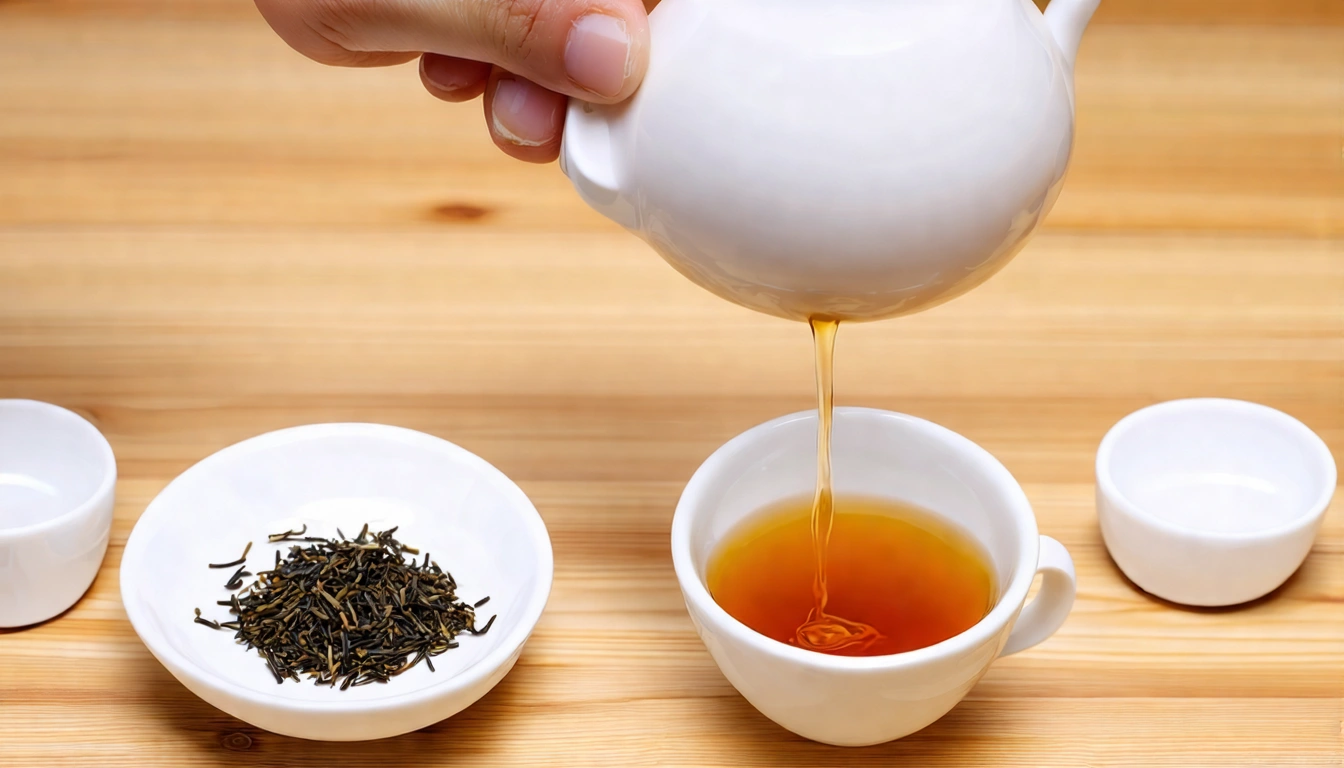
Hot Brew (Best for Showcasing Honey Fragrance):
| Parameter | Recommendation |
|---|---|
| Water Temperature | 90–95°C (100°C not needed — avoid excessive aroma loss) |
| Tea-to-Water Ratio | 1g : 60–80ml |
| Steeping Time | First infusion 20–30 seconds, second infusion 30–45 seconds |
| Teaware | White porcelain gaiwan or glass teapot |
| Number of Infusions | 3–4, with the second infusion at peak aroma |
Cold Brew (Longest-Lasting Honey Fragrance):
- Ratio: 1g : 100–120ml cold water
- Time: Refrigerate 6–10 hours
- Feature: Honey fragrance is better preserved at low temperatures, with more natural sweetness
- Suggestion: Prepare overnight, enjoy in the morning
Special Note: Honey Black Tea’s aroma dissipates too quickly above 95°C. We recommend lowering the temperature 5–10 degrees compared to regular black tea — this preserves the most aroma on the first infusion.
At ChaYanSo, every package of our Honey Black Tea includes a brewing instruction card emphasizing “90–95°C, don’t use boiling water.” Many customers have shared that brewing according to the card produces dramatically better honey fragrance than their previous attempts with boiling water. The right water temperature is the key to making Honey Black Tea taste its best.
For more detailed brewing techniques, see Taiwan Black Tea Complete Brewing Guide.
Looking for Taiwan tea with genuine honey fragrance? Honey Black Tea is also a popular gifting choice. ChaYanSo partners with organic tea farmers in Hualien and Taitung, curating authentic Honey Black Tea. Shop at ChaYanSo
FAQ: Honey Black Tea Common Questions
What’s the difference between Honey Black Tea and Oriental Beauty tea?
Both are insect-bitten teas with identical aroma formation mechanisms — both depend on leafhopper bites. The biggest difference lies in processing: Oriental Beauty is made into a heavily fermented oolong (70–80% fermentation), with floral-fruit fragrance and oolong characteristics; Honey Black Tea is fully fermented (80%+), with a richer, more full-bodied cup and more direct honey fragrance. Oriental Beauty has higher name recognition; Honey Black Tea is relatively more affordable.
Is Honey Black Tea good with milk?
You can add milk, but the honey fragrance will be diluted. We recommend drinking it pure or simply cold-brewed to fully appreciate the natural honey fragrance. If you do want to make milk tea, choose a fuller-bodied Taitung Luye version, which maintains noticeable presence even with milk.
Are there seasonal limitations for Honey Black Tea?
Honey Black Tea made from summer tea (April–September) is most representative, because leafhoppers are most active during warm-weather months with the highest bite rates and most pronounced honey fragrance. Winter tea has weaker honey characteristics due to lower temperatures and reduced insect activity. Pay attention to harvest month labels when purchasing.
What budget gets you good Honey Black Tea?
According to ChaYanSo’s 2026 market survey, NT$600–900 per catty is a reasonable mid-quality price for eastern Taiwan Honey Black Tea. Top-tier organic certified versions can reach NT$1,200–1,500 per catty. Honey Black Tea priced below NT$400 per catty should be viewed with skepticism regarding genuine honey fragrance.
Further Reading
- Taiwan Black Tea Complete Guide: Sun Moon Lake Ruby, Honey Black Tea — Three Major Varieties Compared
- Taiwan Tea No. 18 Ruby Complete Guide: The Global Secret of Cinnamon-Mint Fragrance
- Black Tea Health Benefits Complete Guide: Theaflavins, Cardiovascular & Gut Health
- Taiwan Souvenirs for Foreigners Complete Guide: Tea Selection, Packaging & Tips
- Taiwan Tea Gifting Complete Guide: Holiday, Elder & Business Occasion Tea Selection
References
- Tea Research and Extension Station, Taiwan (2023). Honey Black Tea Aroma Formation Mechanism Research Report.
- MODA (2024). Taiwan Organic Tea Garden Certification Statistics.
- MODA Tea Research and Extension Station (2024). Taiwan Black Tea Region Survey Report.
- Council of Agriculture (2023). Organic Agriculture Promotion & Insect-Bitten Tea Specialty Documentation.