
Tea Pesticide Residue Safety Guide 2026 | How to Choose Safe Taiwanese Tea and Understand Organic Certifications
“Does tea have pesticide residues?” is a question that inevitably comes up once people start taking tea seriously.
This question deserves a thoughtful answer, but there is no need to panic about tea because of it. Here is the bottom line: Taiwan-grown tea has a pesticide residue compliance rate of 97.2% (Taiwan Council of Agriculture, 2024). Taiwan’s pesticide regulations are among the strictest in Asia. By choosing reputable Taiwanese tea merchants, the actual risk of pesticide residue is very low.
Taiwan imports approximately 26,000 tonnes of tea annually, with Vietnam accounting for about 70% and mainland China approximately 10% (Ministry of Agriculture, 2024). The real risk is not in Taiwan-grown tea, but in imported tea of unknown origin or unlabeled bulk tea. This article tells you how to identify and choose wisely.
TL;DR: Taiwan-grown tea pesticide compliance rate: 97.2% (Council of Agriculture, 2024). Choosing reputable Taiwanese brands means extremely low risk. Best protection: brands with pesticide testing reports + MOA/TOPA organic certified teas (Council of Agriculture, 2024). “Rinsing tea removes pesticides” is a myth — pesticides are bound within tea leaf tissue and cannot be washed off.
Drink tea with confidence — ChaYanSo maintains strict quality controls. Browse Teas
Current State of Tea Pesticide Residues in Taiwan
The Taiwan Council of Agriculture conducts pesticide residue inspections on commercially available tea every year.
2024 inspection results: Taiwan-grown tea had a 97.2% pesticide residue compliance rate; imported tea had a lower compliance rate (Taiwan Council of Agriculture, 2024). This figure means that out of every 100 samples of Taiwan-grown tea, more than 97 fully meet pesticide residue standards.
Advantages of Taiwan’s Pesticide Regulations
Taiwan’s tea pesticide regulations have several concrete advantages:
| Regulatory Aspect | Taiwan’s Approach |
|---|---|
| Maximum Residue Limits | Among the strictest in Asia; many limits are lower than the EU |
| Annual Inspections | Council of Agriculture and regional extension stations conduct regular market inspections |
| Non-compliance Penalties | Penalties and product recalls for exceeding pesticide limits |
| Farmer Education | Agricultural extension centers provide safe pesticide use training |
Main Sources of Pesticide Residues
Non-compliant teas primarily come from two sources:
- A small number of farmers who do not follow proper pesticide application guidelines (choosing brands with pesticide testing reports significantly reduces this risk)
- Imported tea of unknown origin or unlabeled bulk tea (avoid these products entirely)
How to Choose Safe Taiwanese Tea (5 Specific Methods)
Method 1: Choose brands with pesticide residue testing reports
Reputable Taiwanese tea merchants typically commission third-party laboratory pesticide testing for each batch, with reports documenting pesticide types and concentration data. This is the most direct quality assurance — having reports shows willingness to submit to data-based verification, while brands without reports cannot confirm their quality.
Method 2: Choose organically certified tea
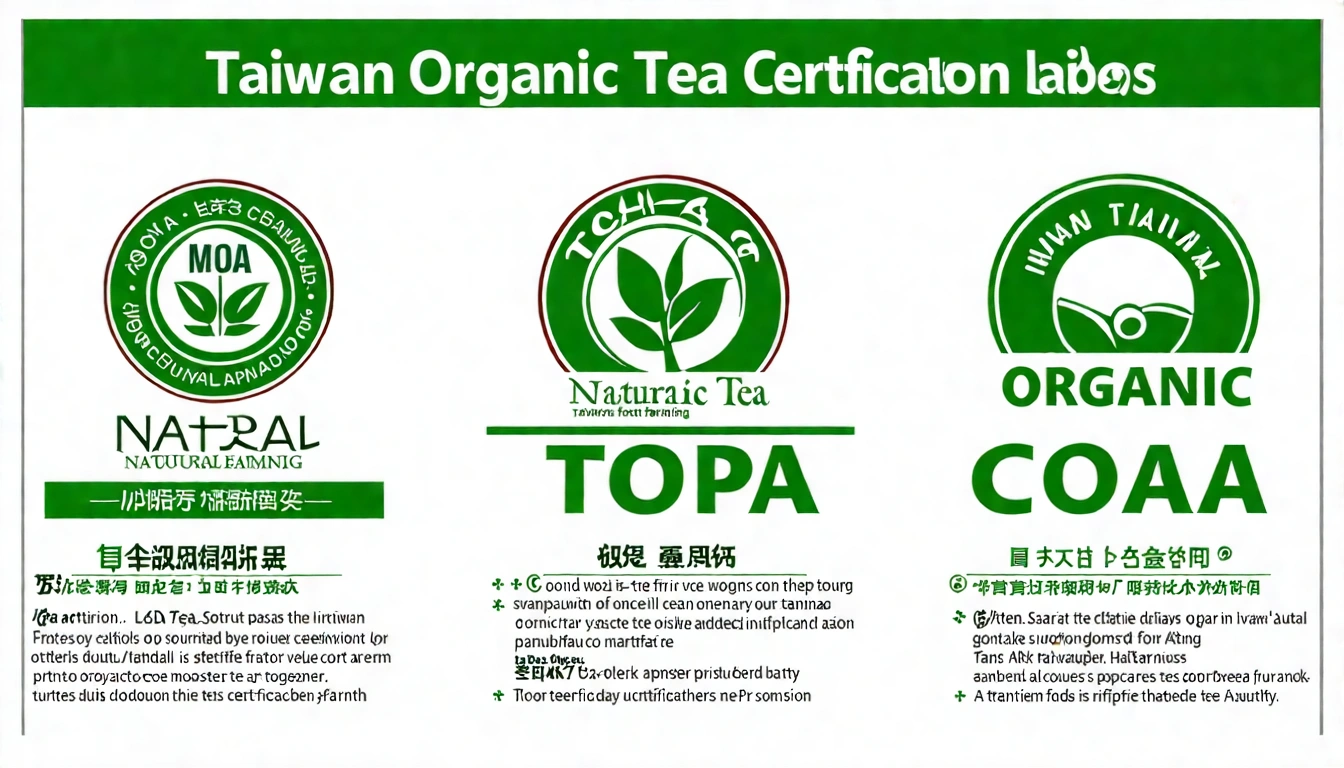
Organic certification bodies recognized by the Taiwan Council of Agriculture include:
- MOA (Mokichi Okada Association Natural Farming)
- TOPA (Taiwan Organic Production Association)
- COAA (Jinan Agricultural Certification)
The core requirement of these certifications is: no use of synthetic pesticides or chemical fertilizers, employing natural or organic farming methods. Certification is renewed annually to ensure continued compliance.
Method 3: Prioritize Taiwan-grown tea
Taiwan-grown tea has stricter pesticide controls than most imported teas, and the specific farm can be traced. Imported teas require verifying the importer’s inspection records and are harder to trace.
Method 4: Read product labels
Legitimate Taiwanese tea product labels should include:
- Origin (specific tea region, such as “Alishan” or “Lishan”)
- Manufacturer name and contact information
- Production date / expiration date
- Pesticide compliance marking (some brands include this)
The more complete the label information, the more willing the brand is to be accountable for quality. Taiwanese tea export unit prices are approximately 6.5 times those of imported tea, and the quality and safety controls of legitimate Taiwanese brand teas are far superior to general imported teas (Ministry of Agriculture).
Method 5: Avoid bulk tea of unknown origin
Bulk tea on the market (unpackaged, unlabeled) carries the highest risk — origin, production date, and pesticide status cannot be confirmed. Be especially cautious with bulk tea from night markets and roadside stalls.
How to Read Organic Tea Certification Labels
Certification Label Authority and Limitations
| Certification | Regulatory Body | Validity | Coverage |
|---|---|---|---|
| MOA | Council of Agriculture-recognized third party | Annual renewal | Pesticide, fertilizer controls |
| TOPA | Council of Agriculture-recognized third party | Annual renewal | Pesticide, fertilizer controls |
| COAA | Council of Agriculture-recognized third party | Annual renewal | Pesticide, fertilizer controls |
Important Note: Organic certification covers only pesticides and fertilizers, not processing and packaging. In other words, organic tea guarantees the farm does not use pesticides, but does not mean the packaging process has zero contamination risk (extremely rare, but theoretically exists).
Organic Tea vs. Conventional Tea Price Differences
| Tea | Conventional | Organic Certified |
|---|---|---|
| Sijichun (100g) | NT$150-500 | NT$300-800+ |
| High Mountain Oolong (100g) | NT$400-1,500 | NT$800-2,000+ |
| Black Tea (100g) | NT$200-600 | NT$400-1,000+ |
Organic certified tea is typically 30 to 80% more expensive — mainly because organic farming yields are lower (no pesticides mean higher pest and disease losses), certification costs, and market premium demand for organic certification. As of 2025, Taiwan’s certified organic tea garden area has reached 555 hectares and continues to grow, indicating increasing consumer demand for organic tea (Ministry of Agriculture Grain Department, 2025).
Common Myths About Pesticide Residues Debunked
Myth 1: “Rinsing tea removes pesticides”
This is the most common misconception. The primary purposes of “rinsing tea” (quickly pouring water over the leaves and discarding the first infusion) are: cleaning surface dust and debris from the tea leaves and allowing ball-shaped tea leaves to begin unfurling. Its effect on pesticides is very limited — pesticide residues are primarily bound within the tea leaf’s cellular tissue, not adhered to the surface, so rinsing cannot remove them.
Myth 2: “Longer steeping means more pesticide leaching — more dangerous”
Partially correct — pesticides do leach more with longer steeping times. But the premise is that the tea itself contains pesticide levels exceeding standards. If the tea’s pesticide residues meet standards (97.2% of Taiwan-grown teas do), even with extended steeping, the total pesticide leaching remains within safe limits.
Myth 3: “Taiwanese tea is safer than imported tea”
Generally correct, but not absolute. Taiwan-grown tea’s pesticide controls are indeed stricter than most imported teas, and the 97.2% compliance rate is data-backed. Taiwan has approximately 12,000 hectares of tea gardens producing about 14,000 tonnes annually, but annual imports total 26,000 tonnes — import volume is nearly double domestic production (Ministry of Agriculture Tea Research and Extension Station). However, the “Taiwanese tea” label alone does not guarantee quality — if tea is labeled “Taiwanese tea” without specific origin information, it may actually be imported tea repackaged in Taiwan.
Myth 4: “Organic tea has absolutely no pesticides”
Organic certification allows the use of naturally derived pesticides (such as pyrethrin, copper compounds, etc.); only synthetic pesticides are prohibited. Organic tea typically has much lower pesticide residue levels, but the claim of “absolutely zero pesticides” is not entirely accurate.
ChaYanSo maintains strict pesticide controls so you can drink with confidence. Shop Now
Based on years of sourcing experience at ChaYanSo, the key to tea pesticide risk is not the “Taiwanese tea” vs. “imported tea” label, but rather whether the supply chain is transparent. When evaluating every tea, the first question we ask is “Where is the farm? Can it be traced?” We believe that brands which can clearly name the farm, the tea farmer, and the growing altitude almost always have pesticide risks well within controllable ranges (ChaYanSo, 2025).
FAQ: Common Questions About Tea Pesticide Residues
How can I confirm whether tea has pesticides?
The most reliable method is choosing brands with pesticide residue testing reports — good tea merchants commission third-party testing for each batch, with reports showing specific pesticide types and values. Taiwan-grown tea has a 97.2% pesticide compliance rate (Council of Agriculture, 2024), so choosing well-known Taiwanese brands already carries very low risk. For even higher assurance, purchase MOA or TOPA organic certified teas.
Is tea pesticide residue a serious problem in Taiwan?
Overall, no. The 97.2% compliance rate for Taiwan-grown tea is supported by annual inspection data (Council of Agriculture, 2024). The Council of Agriculture conducts multiple rounds of market inspections on commercially available tea each year, and non-compliant products are publicly announced and required to be pulled from shelves. The risk is concentrated in imported tea of unknown origin or unlabeled bulk tea. By avoiding these products and choosing reputable Taiwanese brands, domestic tea consumption is safe.
Further Reading
- Taiwan Tea Comprehensive Knowledge: Tasting, Selection, and Pesticide Safety in One Guide
- Seasonal Tea Guide: Best Taiwanese Teas for Spring, Summer, Autumn, and Winter
- Taiwan Tea vs. Japanese Tea: Complete Comparison
- Tea Bag Material Safety Guide: How to Identify Harmful Plastic Materials
- Taiwan Tea Recommendations Guide: Essential Starter’s Guide for Choosing Tea
References
- Taiwan Council of Agriculture (2024). Annual Tea Pesticide Residue Inspection Report.
- Taiwan Council of Agriculture (2024). Organic Agriculture Certification Body List and Regulations.