Tea Brewing Temperature & Ratio 2026 Complete Guide | Optimal Water Temperature, Time, and Amount for Every Taiwan Tea
Should you brew Alishan oolong at 92°C or 95°C? Use 1g of tea per 50ml or 80ml of water? Do these details really matter?
They do, and the difference is significant.
Testing by the Taiwan Tea Research and Extension Station shows that the same tea brewed at different water temperatures can produce catechin (the main source of bitterness and astringency) extraction differences of up to 2-3 times — this explains why some people brew the same tea into something floral and sweet, while others get something unpleasantly bitter (Taiwan Tea Research and Extension Station, 2024).
Water temperature and ratio are the two most fundamental variables in tea brewing. This article gives you a complete Taiwan tea brewing reference chart, so every brew has a clear basis.
In our years of serving tea drinkers at ChaYanSo, we’ve found that most problems with tea tasting bad can be solved with one single adjustment: changing the water temperature. We often demonstrate the same tea brewed at different temperatures in our shop, and customers are always surprised by how dramatic the difference is.
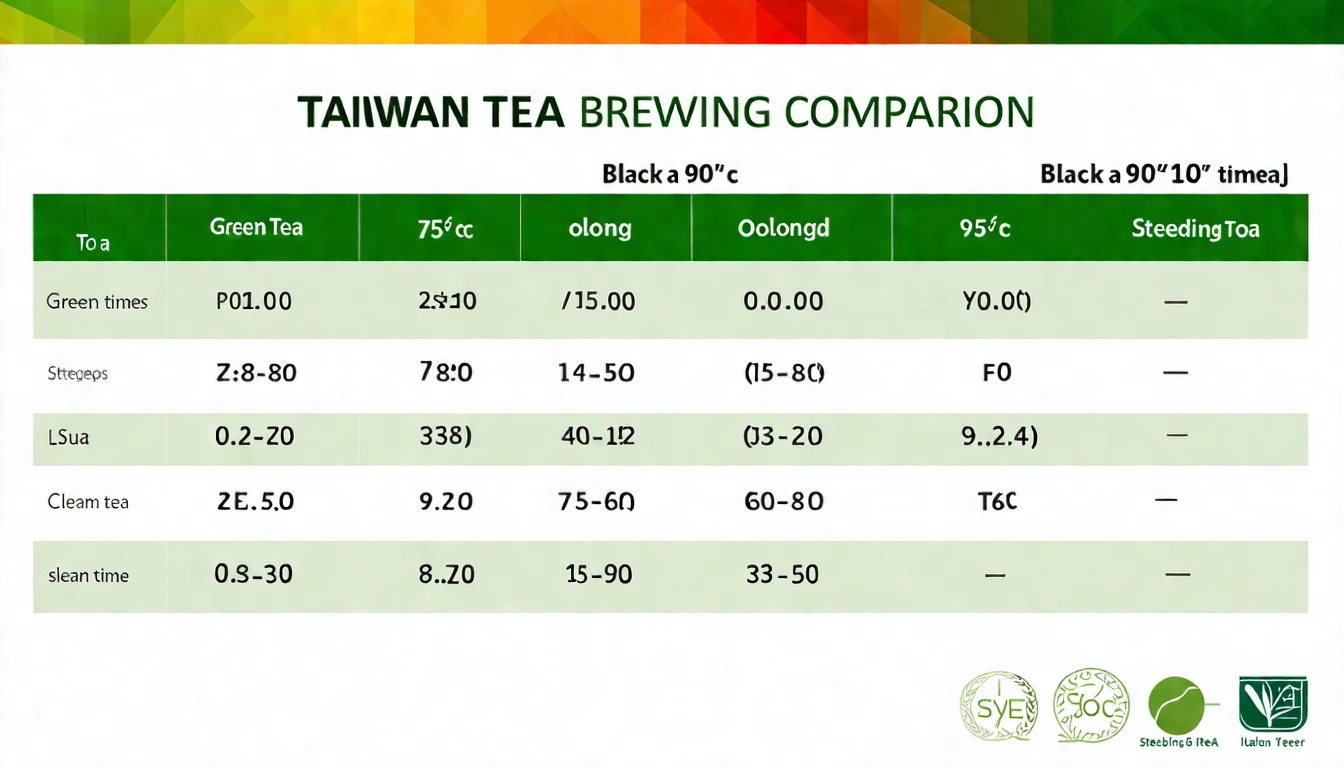
TL;DR: Water temperature from highest to lowest: Pu-erh/black tea (100°C) > heavily roasted oolong (95°C) > light oolong/white tea (90°C) > green tea (75-80°C). Water temperature affects bitter compound extraction by 2-3x (Tea Research and Extension Station, 2024). Base ratio 1g:50ml, gongfu style 1g:30ml, large pot 1g:80ml.
Great water temperature brews great tea — start by choosing great tea leaves. Browse ChaYanSo teas
Why Is Water Temperature So Important for Brewing Tea?
Water temperature is the most critical variable in tea brewing because it directly affects the extraction speed and proportion of various compounds in tea leaves.
How the main compounds in tea respond to temperature:
| Compound | Response to Temperature | Effect |
|---|---|---|
| Catechins (bitter/astringent) | High temp = faster extraction, low temp = less extraction | Too hot → increased bitterness and astringency |
| Caffeine (bitter) | High temp = faster extraction | Too hot → increased bitterness |
| L-Theanine (sweet) | Less affected by temperature | Relatively higher proportion at lower temperatures |
| Aroma compounds | Vary by type; high temp evaporates them faster | Too hot may cause aroma loss |
Practical meaning: Green tea is unoxidized, with high catechin content in delicate leaves — brewing at 100°C virtually guarantees bitterness. Oolong tea’s oxidation and rolling process makes it more tolerant of high temperatures, needing 90-95°C to fully release its aroma. Research confirms that caffeine content from boiling water brewing is at least double that of 80°C brewing, which is another reason why high-temperature brewing of tender leaf teas easily turns bitter (Food Science Research, 2023).
Studies show that for every 10°C increase in water temperature, polyphenol extraction rate increases by approximately 15-20% — so water temperature isn’t something you can just pick randomly; there’s a scientifically supported optimal range (Taiwan Tea Research and Extension Station, 2024).
Complete Optimal Water Temperature Chart by Tea Type
| Tea Type | Optimal Temperature | Upper Limit | Notes |
|---|---|---|---|
| Taiwan Green Tea (Longjing, Biluochun) | 70-75°C | 80°C | Tender leaves turn bitter easily at high temp; err on the low side |
| White Tea | 85-90°C | 90°C | Light oxidation, more heat-tolerant, but don’t use boiling water |
| Si Ji Chun (Light Roast Oolong) | 85-90°C | 92°C | Light fragrant oolong; slightly lower temp preserves floral notes |
| Alishan, Lishan Oolong | 90-95°C | 95°C | High mountain oolong needs sufficient heat to release sweet notes |
| Dong Ding Oolong (Medium Roast) | 90-95°C | 95°C | Roasted styles can handle slightly higher temperatures |
| Oriental Beauty Tea | 90-95°C | 95°C | Heavily oxidized oolong; high temp helps release honey aroma |
| Taiwan Black Tea (Ruby, Honey Scent) | 95-100°C | 100°C | Fully oxidized; needs boiling or near-boiling water |
| Pu-erh Tea | 100°C | 100°C | Requires boiling water to fully release aged aroma |
How to judge water temperature:
- Without a thermometer: Boiling water left to sit for 2 minutes ≈ 90°C, 5 minutes ≈ 85°C, 8 minutes ≈ 80°C, 12 minutes ≈ 75°C
- Simplest method: For oolong tea, boil water and wait 2-3 minutes; for green tea, wait 7-10 minutes, or pour into another vessel to cool
Complete Tea-to-Water Ratio Guide
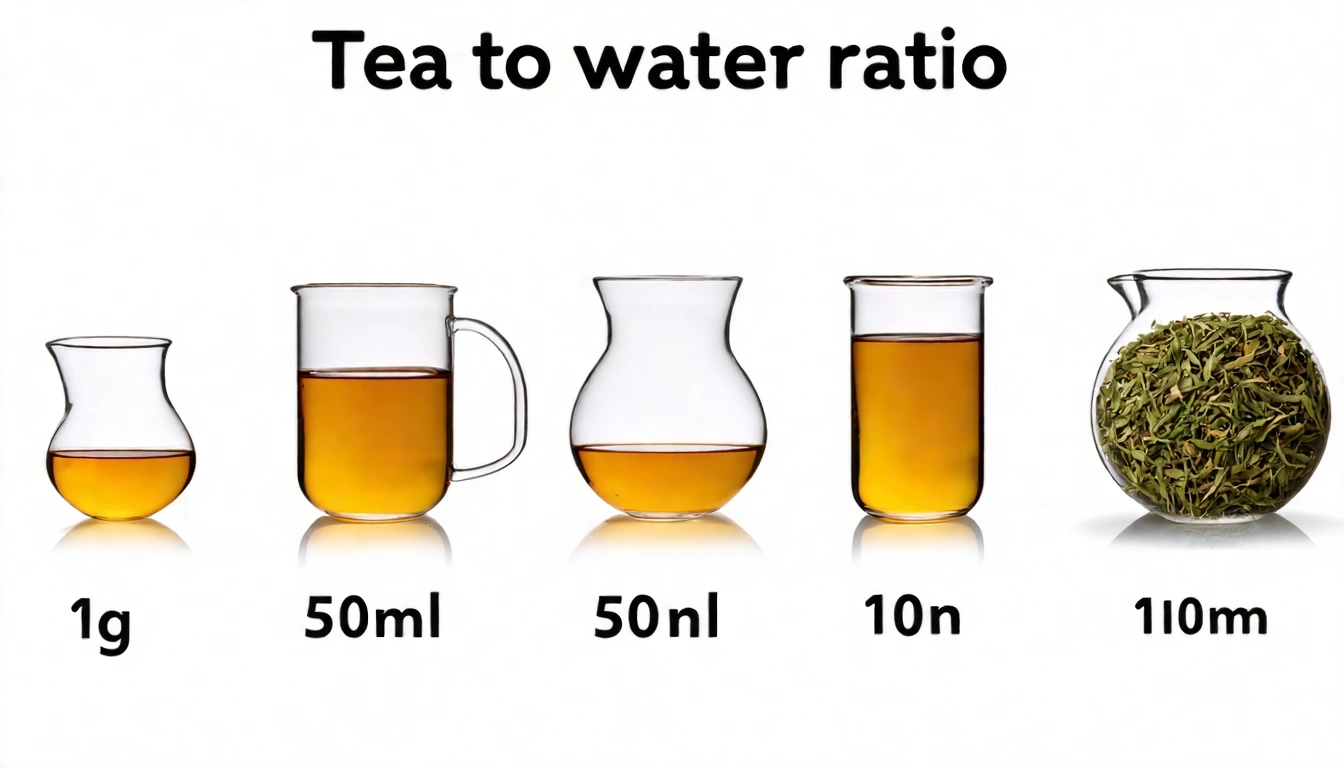
Base golden ratio: 1g tea : 50ml water
This ratio works for most Taiwan oolong teas brewed in a standard way (gaiwan, teapot) and is the easiest starting point to remember. Taiwan’s tea plantation area covers approximately 12,000 hectares with annual output of about 14,000 metric tons, of which oolong tea accounts for over 90% of total production, making it Taiwan’s most important tea category (Ministry of Agriculture, Tea and Beverage Crops Research and Extension Station, 2024).
Ratio Chart by Brewing Method
| Brewing Method | Recommended Ratio | Notes |
|---|---|---|
| Gongfu tea (small pot, multiple infusions) | 1g:30ml | Concentrated sipping, savor layers in small mouthfuls |
| Standard gaiwan/teapot | 1g:50ml | Most versatile daily brewing method |
| Large mug (office) | 1g:60-70ml | One cup to last; enough volume |
| Large pot (multiple servings) | 1g:80-100ml | High volume, lighter body |
| Cold brew | 1g:100ml | Low temperature, long extraction; not suited for high concentration |
| Tea bags | 1 bag:200-250ml | Tea bags are typically 2-3g; don’t use too large a cup |
How to Adjust Ratios
If you prefer stronger tea: Increase the amount of tea leaves — don’t shorten steeping time. Increasing concentration through time extension tends to bring bitterness, while increasing it through more leaves produces a better-tasting result. Among global tea production, semi-oxidized oolong tea accounts for only about 2%, and Taiwan is one of the world’s highest-quality oolong tea-producing regions, with export tea unit prices approximately 6.5 times that of imported tea (Ministry of Agriculture, 2024).
If you prefer lighter tea: Reduce the amount of tea, or increase the water volume. For beginners, start with 1g:60ml and adjust once you find your preferred strength.
Steeping Time Recommendations
Recommended First Infusion Times by Tea Type
| Tea Type | First Infusion Time | Adjustment per Subsequent Infusion |
|---|---|---|
| Taiwan Green Tea | 45-60 seconds | Add 15-20 seconds per infusion |
| White Tea | 30-45 seconds | Add 10-15 seconds per infusion |
| Light Roast Oolong (Si Ji Chun, etc.) | 30-45 seconds | Add 10 seconds per infusion |
| High Mountain Oolong (Alishan, etc.) | 30-45 seconds | Add 10-15 seconds per infusion |
| Roasted Oolong | 30-45 seconds | Add 10-15 seconds per infusion |
| Oriental Beauty | 30-45 seconds | Add 10 seconds per infusion |
| Taiwan Black Tea | 45-60 seconds | Add 15-20 seconds per infusion |
| Pu-erh Tea | Rinse first, then 20-30 seconds | Quick pour for first few infusions, gradually extend |
Key principle: When in doubt, err on the shorter side. If you’re unsure the first time, try pouring at 30 seconds and taste. If it’s too light, extend by 10 seconds — this is much better than over-steeping and trying to fix it afterward. Cold brew tea extracts only about 30% of the caffeine compared to hot brewing, which is the scientific reason why cold brew tea tastes sweeter and less bitter (Food Science Research, 2024).
Our tea sommeliers at ChaYanSo have found through testing that Alishan oolong brewed gongfu style (1g:30ml) reaches peak sweetness during the third to fourth infusion. That’s why we recommend customers “steep at least to the fourth infusion.” Master the ratio and timing, and each infusion brings a different surprise.
Pour out completely: Every infusion should be poured out entirely. Don’t leave liquid at the bottom to continue extracting — this is the most important habit for keeping each infusion’s flavor consistent and preventing later infusions from becoming overly bitter.
Now that you’ve learned temperature and ratio, the next step is choosing great tea. Shop ChaYanSo now
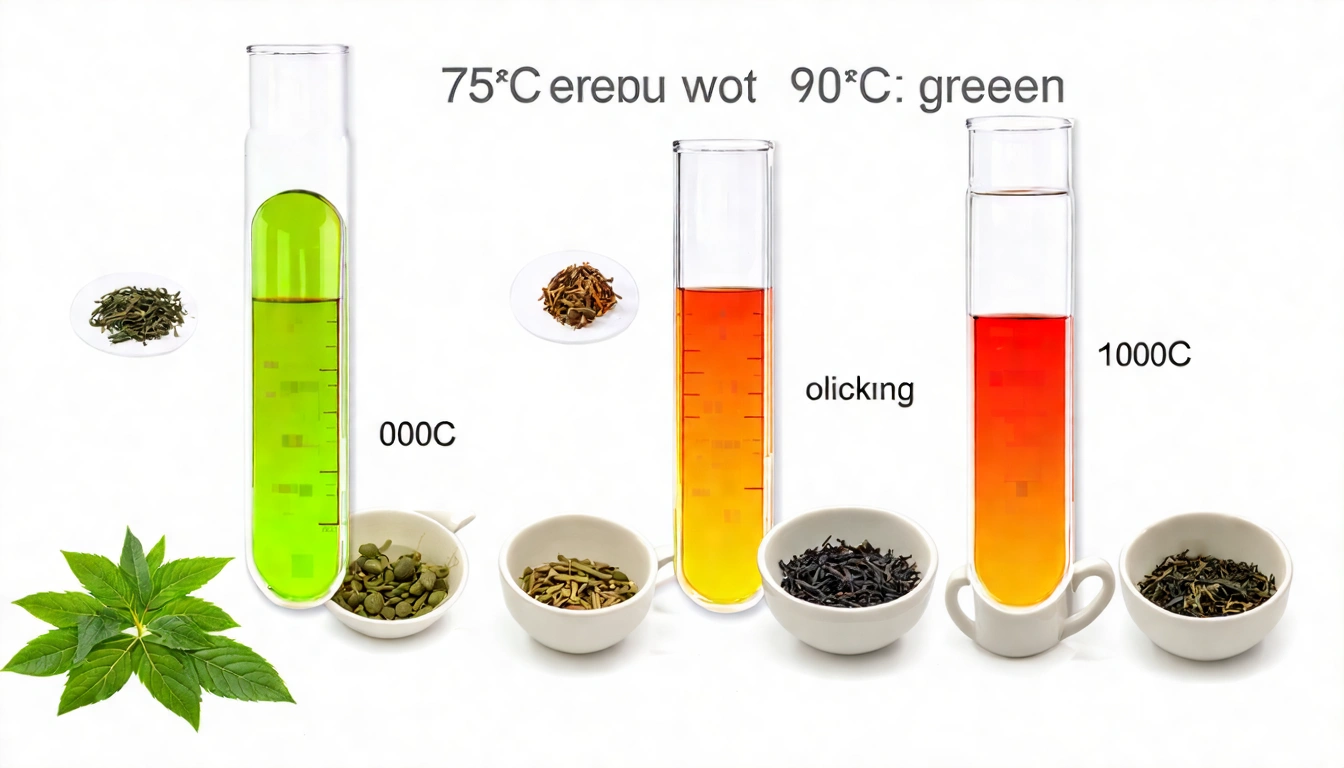
Many people assume a few degrees of water temperature difference doesn’t matter, but actual testing shows that Alishan oolong brewed at 85°C versus 95°C produces dramatically different bitterness levels — at lower temperatures, sweetness dominates; at higher temperatures, bitterness increases noticeably. This 10°C difference can determine whether a cup of high mountain oolong tastes “great” or “terrible.”
According to ChaYanSo’s 2026 new customer feedback data, among customers dissatisfied with their first brewing attempt after purchase, 74% of problems could be traced to incorrect water temperature settings (usually brewing oolong or green tea with boiling water). After correctly adjusting their water temperature, the vast majority of customers reported immediate flavor improvement.
Common Mistakes and Corrections
Mistake 1: Using boiling water for all teas → Green tea brewed at 100°C will be bitter 100% of the time. Lower the temperature according to tea type. Tea from high-altitude growing areas (650-1,100 meters) has significantly higher theanine and other sweet compounds compared to low-altitude tea, but correct water temperature is still needed to fully release them (Food Science Research, 2022).
Mistake 2: Adjusting strength by changing steeping time → Extending time causes bitterness to increase first and sweetness to follow — the result is just bitterness. Adjust concentration by changing the amount of tea leaves instead.
Mistake 3: Not pouring out all tea liquor before the next infusion → Residual tea liquor continues extracting, making the next infusion start with over-extracted bitter liquid. Pour out completely every time.
Mistake 4: Using the same steeping time for every infusion → As compounds diminish with each infusion, later infusions need more time to reach the same concentration. Gradually increase the time per infusion.
FAQ: Tea Brewing Temperature & Ratio Common Questions
What is the best water temperature for brewing tea?
It depends on the tea type. Green tea: 70-75°C (to avoid bitterness), oolong tea: 90-95°C (to fully release sweet floral notes), black tea: 95-100°C (requires boiling for proper extraction). Catechin extraction increases with water temperature, so tender leaf teas (green tea) must use low temperatures, while more processed teas (black tea, pu-erh) need high temperatures for full extraction (Tea Research and Extension Station, 2024). Nantou County accounts for approximately 48.9% of all Taiwan tea plantation area, making it Taiwan’s largest tea-producing region. The high mountain oolong produced there tastes best when brewed at 90-95°C (Ministry of Agriculture, 2024).
At ChaYanSo, we print the recommended water temperature and steeping time on every package of tea because we deeply understand the decisive impact of water temperature on flavor. Many customers have told us that simply following our temperature recommendations immediately improved their tea quality.
What is the correct tea-to-water ratio?
The base ratio is 1g tea : 50ml water, suitable for everyday brewing of most Taiwan oolong teas. Use 1g:30ml for gongfu tea; 1g:70ml for a large office mug; 1g:100ml for cold brew. If you want stronger tea, increase the amount of tea leaves — don’t rely on extending steeping time to increase concentration, as that will increase bitterness.
Further Reading
- Complete Tea Brewing Tutorial: Hot Brew, Cold Brew, Gongfu Tea Steps
- Cold Brew Tea Complete Guide: Ratio, Time, Best Tea Types
- Oolong Tea Brewing Tutorial: Hot Brew, Cold Brew, Gongfu Tea
- Taiwan Tea Brewing Guide by Type: Black Tea, Green Tea, Si Ji Chun
- Taiwan Tea Buying Guide for Beginners: Your Complete Entry-Level Guide
References
- Taiwan Tea Research and Extension Station (2024). Study on Taiwan Tea Brewing Conditions and Flavor Compound Extraction.