
Taiwan Tea vs Japanese Tea 2026 | Flavor, Process & Price Complete Comparison — Which Suits You?
Taiwan tea and Japanese tea are both pinnacle representatives of Asian tea, yet they represent almost entirely different tea cultures: Taiwan is the kingdom of oolong, and Japan is the holy land of green tea. Taiwan’s tea garden area spans approximately 12,000 hectares, producing about 14,000 metric tons annually, with oolong accounting for the largest share (Ministry of Agriculture Tea Research and Extension Station).
Which you choose depends entirely on what kind of taste experience you prefer. This article clearly explains the core differences so you can make the best choice for yourself.
Taiwan’s high-mountain oolong (above 1,000 meters) and Japan’s gyokuro (shade-grown) are each the pinnacle of their respective tea cultures — both have exceptionally high L-theanine content, but their flavor directions are completely different: Taiwan oolong develops toward floral and fruity aromas, while Japanese gyokuro develops toward seaweed-like umami (Taiwan Tea Research and Extension Station, 2024).
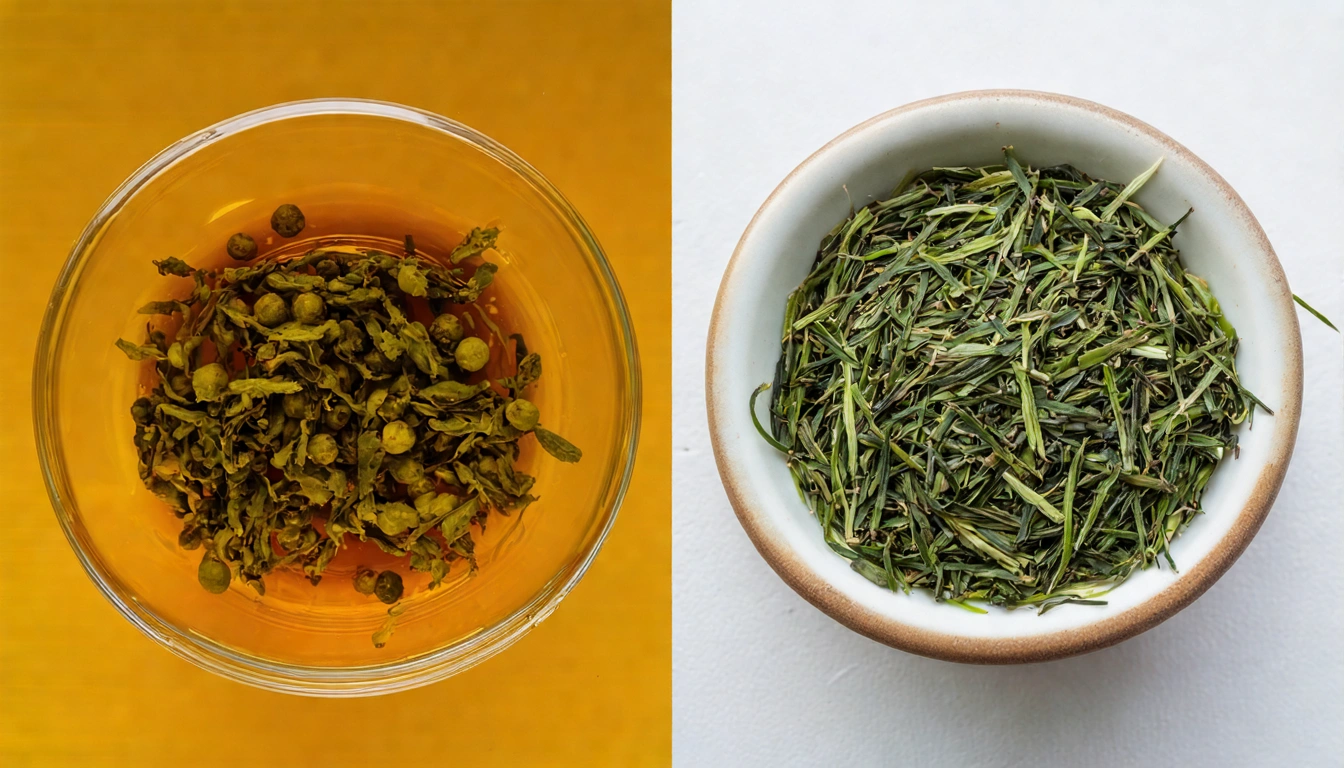
TL;DR: Taiwan excels in oolong diversity (floral/honey/roasted aromas); Japan excels in green tea craft (high EGCG/umami). Both Taiwan high-mountain oolong and Japanese gyokuro have high L-theanine, but flavors are completely different (Tea Research and Extension Station, 2024). In Taiwan, Taiwan tea offers better value.
Taiwan tea’s uniqueness is one of a kind — start tasting at ChaYanSo. Start Selecting Tea
Taiwan Tea vs Japanese Tea: One-Table Comparison
| Comparison | Taiwan Tea | Japanese Tea |
|---|---|---|
| Primary tea type | Oolong (diverse), black tea, Baozhong | Mainly green tea (sencha, gyokuro, matcha) |
| Climate terroir | Subtropical high mountains (200-2,600m) | Temperate lowlands (shade-growing for premium) |
| Core process | Fermentation craft (semi-fermented oolong) | Kill-green craft (steaming to preserve catechins) |
| Primary aroma | Floral, honey, roasted, fruity | Clean-astringent grassy, seaweed umami |
| L-theanine | High (high-mountain oolong, gyokuro level) | High (gyokuro, tencha highest) |
| EGCG content | Medium (oolong tea) | High (green tea, matcha highest) |
| Caffeine | Low-medium (30-50mg/cup) | Low-medium to high (gyokuro higher) |
| Price in Taiwan | Moderate (locally produced) | Import markup (higher) |
Taiwan Tea’s Core Advantage: Oolong Diversity
Taiwan’s tea culture is built on oolong tea’s diversity. From Wenshan Baozhong at 15% fermentation to Oriental Beauty at 70%, from Jin Xuan at 400 meters elevation to Lishan oolong at 2,600 meters — Taiwan has created the world’s richest oolong flavor spectrum on a single small island.
Taiwan currently has over 20 registered tea-producing regions, spanning from northern Wenshan, Taoyuan, and Hsinchu to central Nantou and Chiayi to southern Taitung. Each region’s different geography and climate creates Taiwan oolong’s rich terroir diversity (Taiwan Council of Agriculture, 2024).
Taiwan Tea’s Three Major Advantages
- Aroma complexity: The layered combination of floral, honey, fruity, and roasted aromas in Taiwan oolong is difficult for any other producing region worldwide to replicate
- Drinkability breadth: From ultra-light Baozhong to rich Tieguanyin, suitable for all palate preferences
- Value for money: Buying locally produced Taiwan tea in Taiwan eliminates import costs, making same-quality tea much cheaper than imported Japanese tea. Taiwan tea’s export unit price is approximately 6.5 times that of imported tea, reflecting high international recognition of Taiwan tea’s craftsmanship value (Ministry of Agriculture)
Japanese Tea’s Core Advantage: Green Tea Craft
Japanese tea’s strength lies in green tea processing and high EGCG content.
Japan’s steaming kill-green process (using steam to rapidly heat tea leaves and halt oxidation) preserves more EGCG (epigallocatechin gallate) than Chinese pan-fired kill-green. EGCG is the polyphenol compound with the strongest antioxidant effects in green tea (Taiwan Tea Research and Extension Station, 2023).
Representative Japanese Tea Varieties
| Tea | Characteristics | EGCG Content |
|---|---|---|
| Gyokuro | Shade-grown, highest L-theanine, rich umami | High |
| Sencha | Most common, clean and refreshing | Medium-High |
| Matcha | Ground to powder, highest EGCG | Highest |
| Bancha | Affordable, light aroma | Low-Medium |
| Genmaicha | Blended with rice, approachable aroma | Low-Medium |
Japanese tea’s aroma profile is completely different from Taiwan oolong — more astringent, more “grassy.” The Japanese call it “umami,” a seaweed-like savory sweetness. This style takes getting used to, but those who love it become devoted fans. Nantou County’s tea garden area accounts for 48.9% of the national total, making it Taiwan’s largest tea-producing region; Taiwan tea’s multi-region advantage provides a terroir diversity that Japanese tea cannot match (Ministry of Agriculture).
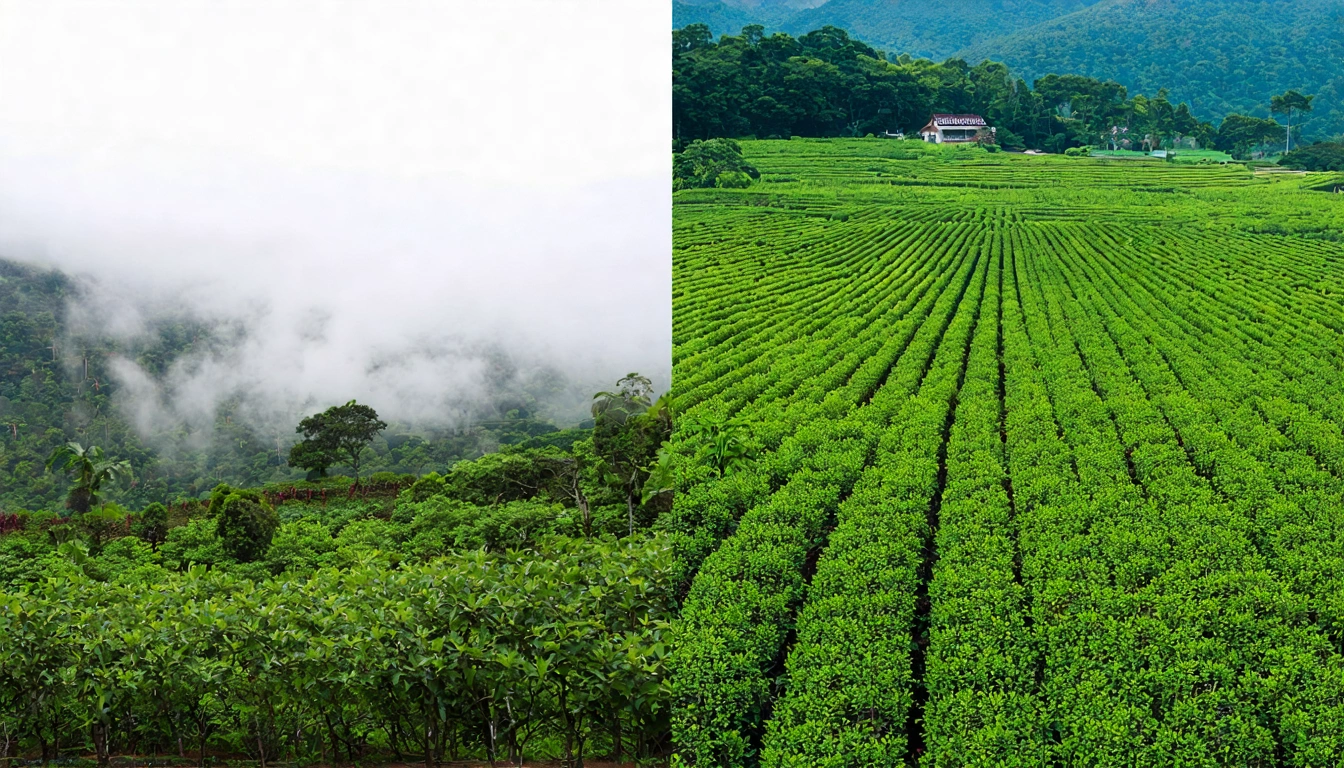
At ChaYanSo, we believe Taiwan oolong and Japanese green tea represent two entirely different tea culture philosophies: Taiwan pursues “complexity” — creating a rich flavor spectrum through varying fermentation levels and production regions; Japan pursues “purity” — using shade cultivation and steaming to preserve the tea leaf’s original umami as much as possible. Neither is superior — they represent different aesthetic pursuits (ChaYanSo, 2025).
In Taiwan: Which Tea Suits Which Person?
| Preference/Need | Recommended Direction |
|---|---|
| Enjoys complex floral-fruity aromas | Taiwan oolong (Si Ji Chun, Jin Xuan, Alishan) |
| Enjoys clean astringent purity | Japanese sencha, or Taiwan Sanxia Bi Luo Chun (local option) |
| Seeking highest EGCG antioxidants | Matcha, Japanese sencha (or Taiwan Bi Luo Chun) |
| Afternoon-safe drinking | Taiwan Wenshan Baozhong, Jin Xuan (low caffeine) |
| Value for money first | Taiwan tea (locally produced, no import markup) |
| Premium gifting | Taiwan Lishan/Alishan oolong or Japanese gyokuro (both excellent choices) |
A practical tip: If you’re in Taiwan and want high EGCG benefits, you can satisfy that need with “Taiwan Sanxia Bi Luo Chun” (Taiwan’s premium local green tea) without buying imported Japanese green tea — comparable quality at a more reasonable price.
Experience the charm of Taiwan oolong — curated by ChaYanSo. Shop Now
FAQ: Taiwan Tea vs Japanese Tea Common Questions
Which tastes better — Taiwan tea or Japanese tea?
Each has its own character; there is no winner or loser. Taiwan oolong excels in floral-fruity aromas and complex layering, suited for those who enjoy aroma-rich teas. Japanese green tea is known for clean astringent freshness and high EGCG, suited for those who enjoy pure, refreshing tastes. Among our ChaYanSo customers, those who switched from Japanese sencha to Taiwan oolong most commonly say “I never imagined Taiwan tea could be so aromatic and layered” — from this feedback, we understand the two truly represent different sensory worlds, and the best approach is to try more before discovering your own preference (ChaYanSo, 2025).
Is buying Japanese tea in Taiwan a good deal?
Usually not as good a deal as buying Taiwan tea directly. Taiwan tea (locally produced) has no import tariffs or logistics costs, and comparable quality Taiwan tea is typically 20-40% cheaper than imported Japanese tea (Taiwan Council of Agriculture market survey, 2024). If you want high antioxidant EGCG benefits, Taiwan Sanxia Bi Luo Chun is an excellent local alternative — quality comparable to Japanese sencha, and fresher (no long-distance shipping time loss).
Further Reading
- Complete Taiwan Tea Knowledge: Tasting, Selection & Tea Safety
- Seasonal Tea Guide: Best Taiwan Teas for Spring, Summer, Autumn & Winter
- Tea Pesticide Residue Safety Guide: How to Choose Safe Taiwan Tea
- Taiwan Green Tea Recommendations: Sanxia Bi Luo Chun & Longjing Complete Comparison
- Taiwan Tea vs Japanese Tea vs Chinese Tea: Complete Comparison of Asia’s Three Major Tea Systems
References
- Taiwan Tea Research and Extension Station (2024). L-theanine Comparative Study Between Taiwan and Japanese Tea.
- Taiwan Tea Research and Extension Station (2023). Effects of Different Kill-Green Processes on EGCG Retention Rates.
- Taiwan Council of Agriculture (2024). Taiwan Tea Region Survey and Market Report.