Complete Guide to Taiwan Tea Regions 2026 | Alishan, Lishan, Shanlinxi, Sun Moon Lake — Terroir & Representative Teas
Taiwan may be a small island, but the diversity of its tea regions is astounding — from the elegant Baozhong tea of northern Wenshan, to the premium high-mountain oolong from Lishan at over 2,000 meters in central Taiwan, to the honey-scented black tea of eastern Hualien. Each tea region, shaped by unique combinations of altitude, climate, and soil, produces teas with distinctly different characters. Knowing which tea region your tea comes from is the first lesson in appreciating Taiwan tea.
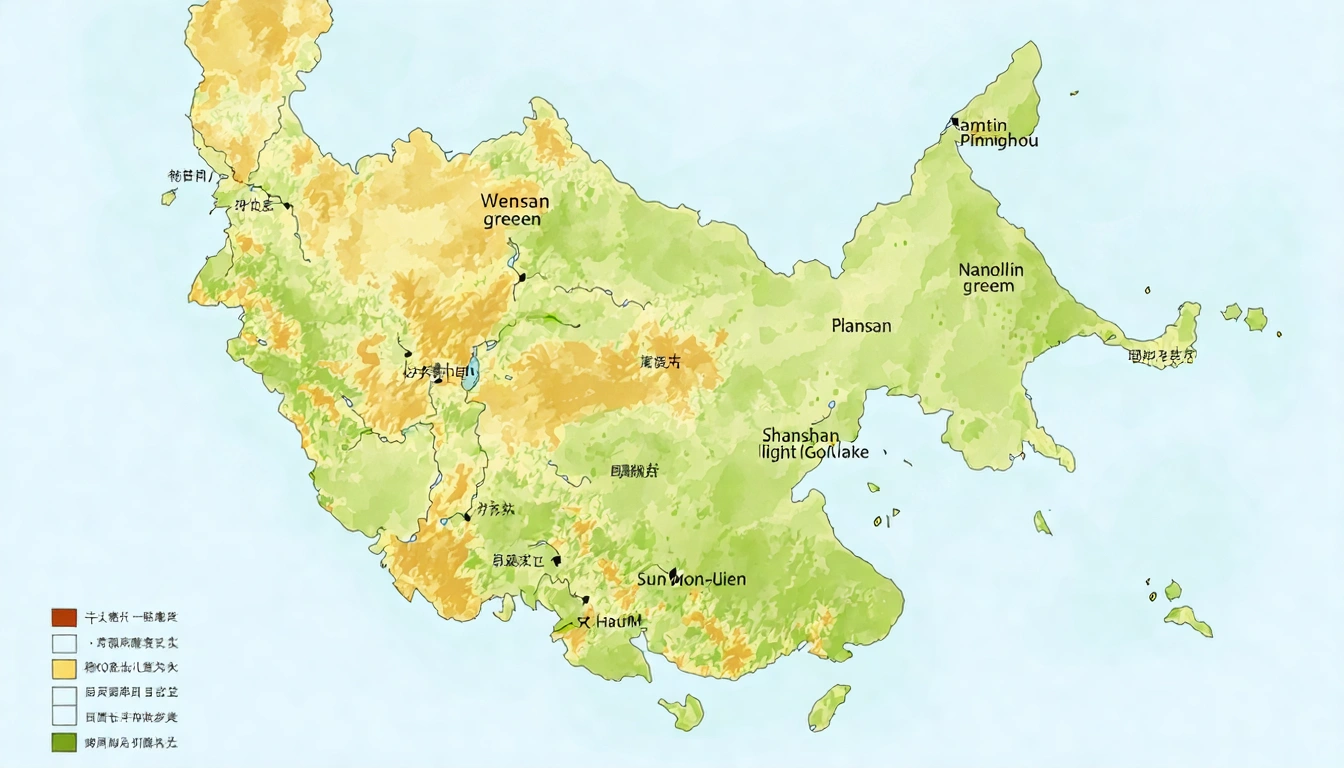
Taiwan Tea Region Map: From North to South, Lowlands to Highlands
Taiwan’s tea garden area spans approximately 12,000 hectares with annual production of about 14,000 metric tons (Ministry of Agriculture Tea Research and Extension Station), with Nantou County accounting for approximately 48.9% of national tea garden area and Chiayi County about 14% (Ministry of Agriculture). Tea regions are distributed from north to south and can be divided into four major systems: Northern Tea Region (Wenshan, Pinglin), Central Tea Region (Nantou, Shanlinxi, Lishan), Southern Tea Region (Alishan), and Eastern Tea Region (Sun Moon Lake, Hualien-Taitung).
The Essential Difference Between High-Mountain Tea and Low/Mid-Elevation Tea
In Taiwan, “high-mountain tea” generally refers to tea grown above 1,000 meters elevation. High altitude brings:
- Large day-night temperature differential (can exceed 15°C) → Tea leaves grow slowly, accumulating more sugars → Sweet and mellow
- Persistent cloud cover → Shorter sun exposure → Lower tea polyphenol content → Reduced bitterness and astringency
- Well-drained soil → Deep root development, rich mineral absorption → Lasting sweet aftertaste
This is why the same oolong cultivar simply tastes different when grown in Alishan versus the lowlands.
Northern Tea Region: Wenshan, Pinglin — Taiwan’s Most Fragrant Oolong
Wenshan Baozhong: Taiwan’s Lightest-Fermented Oolong
Wenshan Baozhong is Taiwan’s lowest-fermentation oolong (8-15%), renowned for its clean floral aroma — carrying natural orchid and osmanthus notes. Very elegant, it’s one of the most approachable varieties for Taiwan tea beginners.
- Origin: Wenshan District, Taipei; Pinglin District, New Taipei
- Elevation: 200-600 meters (relatively low)
- Characteristics: Clean, floral, no bitterness, golden-yellow liquor
- Best for: First-time Taiwan tea drinkers, those who prefer light flavors
Pinglin’s Agricultural Distinction
Pinglin is known for organic agriculture. Strict regulations as a Taipei water source protection area mean tea cultivation here is virtually pesticide-free — though this also means Pinglin tea production is very limited, and genuine Pinglin tea is relatively rare on the market.
Central Tea Region: Nantou, Shanlinxi, Lishan — The Heartland of Taiwan Oolong
Nantou Dong Ding Oolong: The Synonym for Taiwan Tea
Dong Ding Oolong is Taiwan’s most iconic oolong, with 30-40% fermentation and light roasting, presenting honey-sweet, slightly toasty, round and mellow flavors. Taiwan oolong (semi-fermented tea) accounts for the largest share of tea production (Ministry of Agriculture), and Dong Ding is the classic representative. “Dong Ding” refers to Dong Ding Mountain in Lugu Township, Nantou — the birthplace of Dong Ding Oolong.
- Origin: Lugu Township, Nantou County, Dong Ding Mountain
- Elevation: 600-800 meters
- Characteristics: Honey-sweet and toasty, smooth with sweet aftertaste; the quintessential traditional Taiwan tea taste
- Best for: Those who enjoy depth and mellow flavors; also an excellent gift for elders
Dong Ding Oolong’s status in Taiwan tea culture is akin to “the tea every Taiwanese knows” — virtually everyone in the older generation has had it, and no one says it’s a bad gift.
Shanlinxi: The Misty Oolong Sanctuary of Cloud-Wrapped Mountains
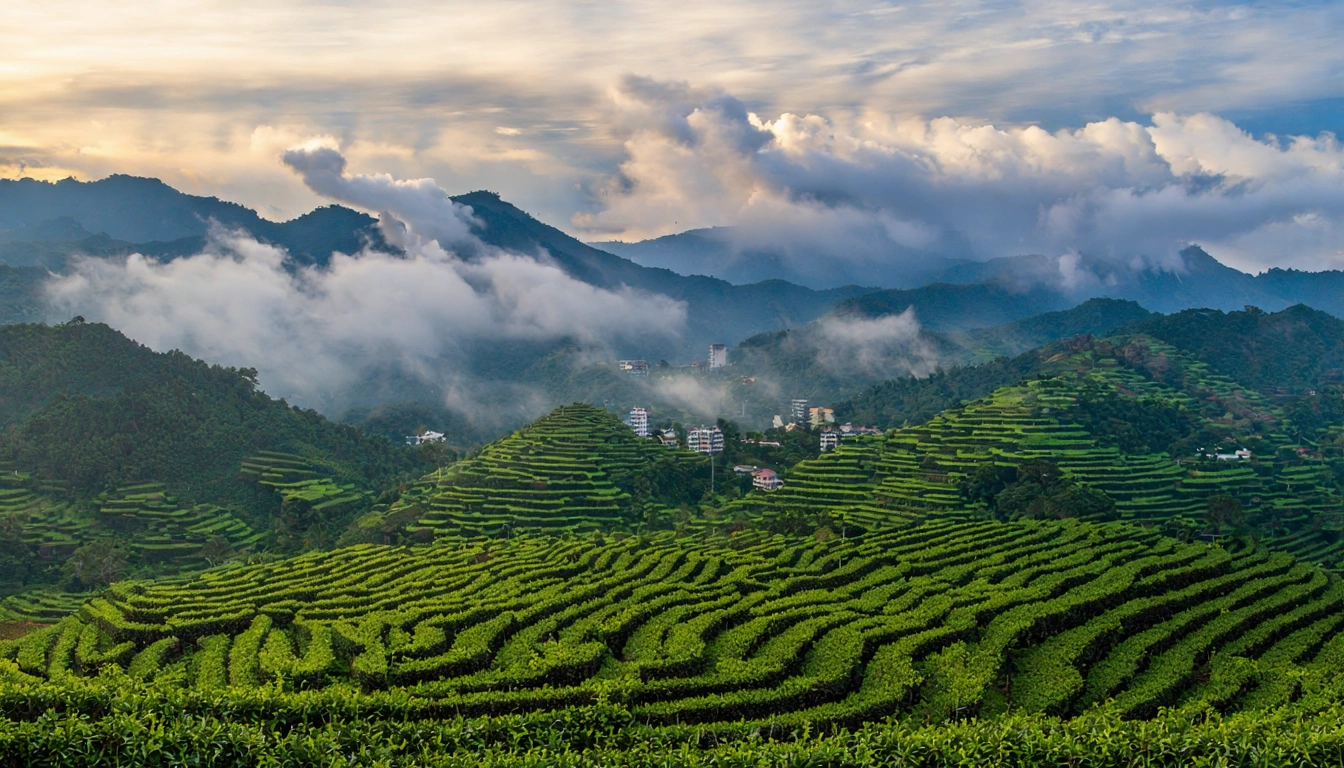
The Shanlinxi tea region in Zhushan Township, Nantou County, sits at 1,600-1,800 meters and is an important high-mountain oolong production area. Perpetually shrouded in clouds, the tea receives less sunlight, resulting in lower tea polyphenol content and particularly minimal bitterness — producing an exceptionally sweet, clean mouthfeel.
- Origin: Zhushan Township, Nantou County, Shanlinxi
- Elevation: 1,600-1,800 meters
- Characteristics: High-mountain sweetness, misty character, floral-fruity aroma, refined mouthfeel
- Best for: Those who appreciate high-mountain tea sweetness and are sensitive to mouthfeel nuances
Lishan: Taiwan’s Highest-Altitude Premium Tea Region
Lishan tea is one of Taiwan’s most premium high-mountain teas, at 1,600-2,600 meters elevation with the greatest day-night temperature differential (up to 20°C). Tea leaves grow extremely slowly, harvested only twice per year, making it precious.
- Origin: Heping District, Taichung City, Lishan
- Elevation: 1,600-2,600 meters
- Characteristics: Supreme sweetness, floral-honey-fruity aroma, long-lasting throat sensation — considered Taiwan’s finest oolong
- Best for: Tea lovers willing to invest in quality; also the top choice for premium gifts
Lishan tea’s limited production and high quality command premium market prices — a jin of top-tier Lishan oolong can easily exceed NT$10,000. When purchasing, verify the brand’s origin transparency to avoid counterfeits.
Explore great tea from every Taiwan tea region — curated and delivered direct by ChaYanSo. Start Selecting Tea
Southern Tea Region: Alishan — Taiwan’s Most Famous Tea Region
Alishan High-Mountain Tea: Crystallized Sweetness from Day-Night Temperature Swings
Alishan is Taiwan’s most widely recognized high-mountain tea-producing area, welcoming large numbers of tea tourists annually and serving as the most important brand image for Taiwan tea exports. Taiwan tea’s export unit price is approximately 4.7 times that of imported tea (Ministry of Agriculture), with Alishan high-mountain tea being a major driver of this premium. Chiayi County’s Alishan Township and Fanlu Township tea gardens, at 1,000-1,600 meters elevation, produce clean, fragrant high-mountain oolong known for its sweet, refreshing taste and natural floral aroma. Our ChaYanSo Alishan series comes directly from this tea region, and every spring tea season we personally visit the gardens to verify quality, ensuring every batch meets our selection standards.
- Origin: Alishan Township, Fanlu Township, Chiayi County
- Elevation: 1,000-1,600 meters
- Characteristics: Elegant floral aroma, sweet aftertaste, golden and bright liquor
- Representative teas: Alishan High-Mountain Oolong, Alishan Jin Xuan Oolong
- Best for: All tea drinkers — the best introductory high-mountain tea
Alishan Jin Xuan: The Secret of Natural Milky Aroma
Jin Xuan (TTES No. 12) is a tea cultivar unique to Taiwan. When grown in Alishan’s high-mountain environment, it develops a distinctive natural milky aroma — this is the result of cultivar characteristics combined with the high-mountain environment, absolutely not artificially added fragrance. That soft, natural milky scent is the starting point for many people’s love affair with Taiwan tea.
Eastern Tea Region: Sun Moon Lake, Hualien-Taitung — The Cradle of Taiwan Black Tea
Sun Moon Lake: Birthplace of Taiwan Black Tea
The Sun Moon Lake tea region (Yuchi Township, Nantou County) is an important birthplace of Taiwan black tea. In the 1920s, the Japanese introduced Assam tea trees here, and later Taiwan’s agricultural research station bred “TTES No. 18” (Ruby), which became a world-class Taiwan black tea representative.
TTES No. 18 (Ruby) is distinguished by its mint and cinnamon aroma — a unique black tea cultivar unmatched anywhere in the world, once recognized by top British tea merchants.
- Origin: Yuchi Township, Nantou County, Sun Moon Lake
- Representative teas: TTES No. 18 (Ruby), Assam Black Tea
- Characteristics: Distinctive mint and cinnamon aroma, deep red and clear liquor
- Best for: Black tea lovers wanting to experience Taiwan’s unique black tea cultivar
Hualien-Taitung Honey Scent: The Unique Sweetness of Insect-Bitten Fermentation
Honey-scented black tea and honey-scented oolong from the Hualien-Taitung region are produced through a unique process where leafhoppers naturally bite the tea leaves, triggering the plant’s defense mechanism to produce honey-sweet aromas — this “insect-bitten tea” is a uniquely Taiwan creation that can only be made under specific climatic conditions.
Oriental Beauty Tea also belongs to this category, produced in the Hsinchu and Miaoli areas. Similarly created through insect-bite fermentation producing honey-fruity aromas, it is one of the Taiwan teas most closely watched by international tea enthusiasts.
Quick Reference: Representative Teas by Region
| Region | Elevation | Representative Tea | Flavor Profile | Best For |
|---|---|---|---|---|
| Wenshan, Pinglin | 200-600m | Baozhong Tea | Clean floral, no bitterness | Taiwan tea beginners |
| Nantou Lugu | 600-800m | Dong Ding Oolong | Honey-sweet, toasty, mellow | Traditional Taiwan tea fans |
| Shanlinxi | 1,600-1,800m | Shanlinxi Oolong | High-mountain sweetness, floral-fruity | High-mountain tea lovers |
| Lishan | 1,600-2,600m | Lishan High-Mountain Oolong | Supreme sweetness, honey, lasting finish | Premium tea connoisseurs |
| Alishan | 1,000-1,600m | Alishan Oolong, Jin Xuan | Elegant floral, sweet | Everyone, best intro choice |
| Sun Moon Lake | 600-800m | TTES No. 18 Ruby, Assam | Mint-cinnamon, deep red richness | Black tea enthusiasts |
| Hualien-Taitung, Hsinchu | 200-400m | Honey-Scented Black Tea, Oriental Beauty | Honey-sweet fruity, unique craft | Unique flavor seekers |
FAQ
Q: Which Taiwan tea region is most famous?
Alishan, Sun Moon Lake, and Nantou (Dong Ding Oolong) each excel in different ways. If recommending just one region to “begin understanding Taiwan tea,” choose Alishan — it’s Taiwan’s most widely recognized high-mountain tea area, and its clean, sweet style makes it easy to fall in love at first sip. For Taiwan’s finest, choose Lishan; for the most representative traditional flavor, choose Dong Ding Oolong; for Taiwan black tea, choose Sun Moon Lake.
Q: Is high-mountain tea always better than lowland tea?
High-mountain tea, with its greater temperature differential, slower growth, and more cloud cover, does generally offer superior quality compared to the same cultivar grown at lower elevations — sweeter taste and less bitterness. But “better” is relative: Wenshan Baozhong, despite being a low-elevation tea, has a clean floral style that no other region can replicate. The key to choosing tea is “suitability,” not “the higher the better.”
Q: What’s the difference between Alishan and Lishan high-mountain tea?
Alishan (1,000-1,600m) oolong is elegantly sweet — the standard high-mountain tea of Taiwan. Lishan (1,600-2,600m), with higher elevation and greater temperature differential, is sweeter and richer with more pronounced floral-honey-fruity aromas and longer-lasting throat sensation, generally considered one grade above in quality. Price-wise, Lishan is considerably more expensive: comparable quality Lishan tea is typically 1.5-2.5 times the price of Alishan.
Q: Can Taiwan tea be purchased online? How do I verify the origin?
Yes. To verify origin: choose brands that label specific tea regions (county/city, farm name), and avoid vague labels like “Taiwan high-mountain tea.” For more online shopping tips, see Taiwan Tea Online Shopping Guide.
Choosing Tea by Region: Understanding Terroir to Find the Perfect Tea for You
The global tea market was valued at approximately US$69.5 billion in 2025 (Grand View Research), and Taiwan tea holds a unique position within this vast market with its artisan quality. Taiwan’s diverse topography — mountains, hills, basins, coastlines — gives tea leaves countless possible expressions. From the clean aromas of northern Wenshan to the supreme sweetness of Lishan, every tea region tells its own terroir story. The most fascinating aspect of drinking Taiwan tea is that through the flavors in your cup, you can come to know the land of Taiwan itself.
For brand selection recommendations, see Complete Taiwan Tea Brand Rankings; for Taiwan tea cultural background, see Taiwan Tea Culture History; to explore all tea varieties, see Complete Taiwan Tea Recommendations Guide.
Great tea nurtured by Taiwan’s mountains and waters, waiting for you to taste — curated by ChaYanSo. Explore ChaYanSo