
Complete Guide to Taiwan Tea Knowledge 2026 | Types, Fermentation Levels, Tea-Making Process & Buying Tips
Here’s a question many people want to ask but feel too embarrassed to: What exactly is oolong tea? Is it green tea? Or black tea?
This question might seem “too basic,” but many people who’ve been drinking Taiwan tea for over a decade still can’t clearly explain the relationship between oolong and other teas.
The correct answer: Oolong tea is classified as “qing cha” (blue-green tea), with a fermentation level between green tea and black tea. It is the most important representative type of Taiwan tea. But to truly understand this, you first need to know the logic behind tea classification — and this logic is both simpler and more interesting than most people think.
Taiwan currently has over 40 registered tea cultivars, with approximately 15 to 20 major commercial varieties, making it one of the regions with the highest tea cultivar density in the world (Source: Ministry of Agriculture Tea Research and Extension Station cultivar database, 2024).
This guide takes you from the most fundamental classifications all the way to Taiwan’s top ten famous teas, the tea-making process, and buying tips. After reading this, you’ll have the foundational knowledge to converse with tea farmers and tea merchants.
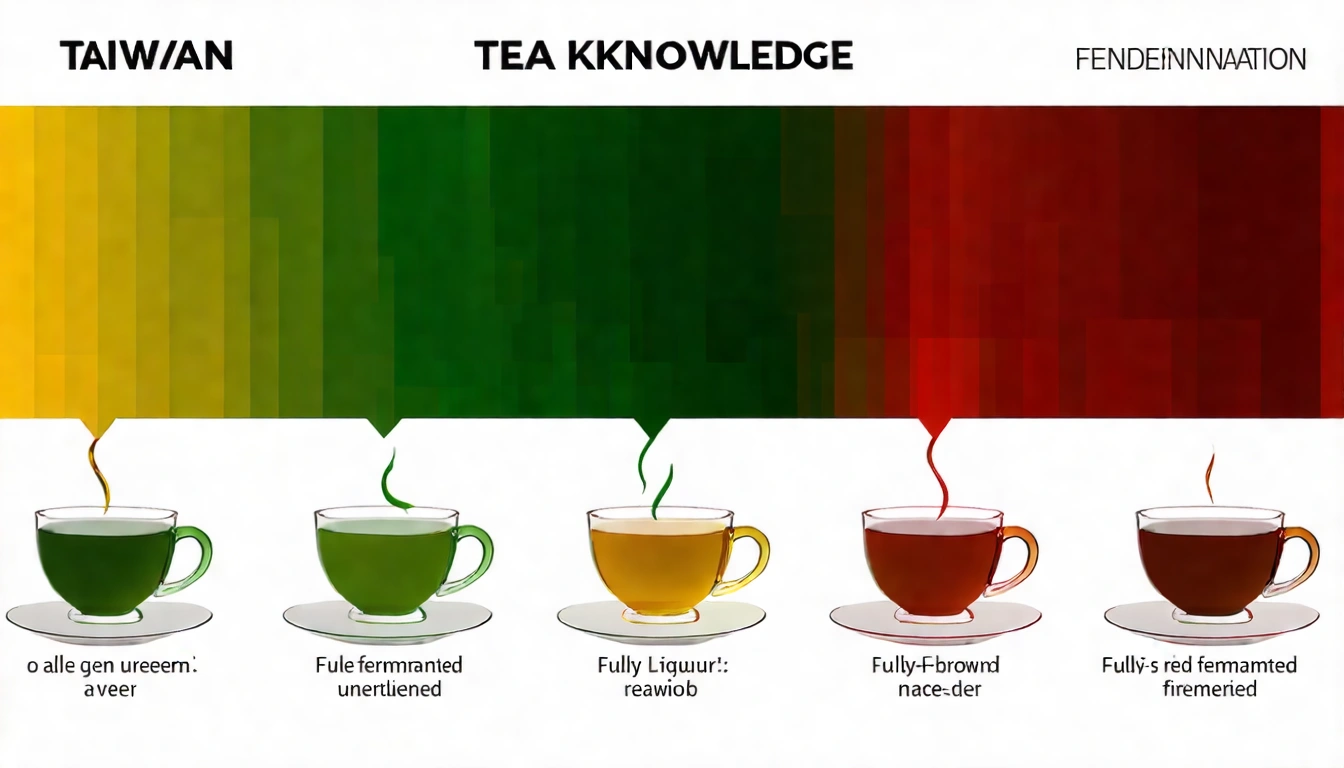
TL;DR: Taiwan tea is dominated by oolong tea (qing cha, 30-70% fermentation). Taiwan has over 40 tea cultivars (Ministry of Agriculture, 2024). The six major tea types by fermentation: Green tea → White tea → Yellow tea → Qing cha (Oolong) → Black tea → Dark tea. Taiwan’s top ten famous teas: Dong Ding Oolong, Oriental Beauty, Alishan tea, Wenshan Baozhong, and more. The 6-step tea-making process: Picking → Withering → Rolling → Fermentation → Roasting → Refining.
Now that you understand Taiwan tea, find the one that suits you best. Visit ChaYanSo
Overview of Taiwan Tea Classification (By Fermentation Level)
There are many ways to classify teas around the world, but the most fundamental method is classification by fermentation level. This is also the most important framework for understanding Taiwan tea.
What is tea “fermentation”?
The “fermentation” of tea is more accurately described as “oxidation” — after tea leaves are picked, enzymes in the leaf cells react with oxygen in the air, gradually oxidizing and transforming the tea polyphenols (catechins). This process changes the leaf color (green → yellow → reddish-brown), the aroma (fresh grassy → floral and fruity → honey-rich and mellow), and the mouthfeel (sharp and astringent → sweet and mellow → smooth and sweet).
Tea masters create different types of tea by controlling the duration and degree of this oxidation process.
The mainstay of Taiwan tea is oolong tea (qing cha, semi-fermented), which is also what most differentiates Taiwan tea from Chinese, Japanese, and Sri Lankan teas. Taiwan’s tea garden area is approximately 16,255 hectares, with an annual production of about 17,502 metric tons, of which oolong tea accounts for the largest share; Nantou County covers 48.9% of the national planting area, and Chiayi County covers 14.1% (Source: Ministry of Agriculture, 2024).
For more on the science behind fermentation levels, see Complete Guide to Tea Fermentation Levels.
Illustrated Guide to the Six Major Tea Types by Fermentation
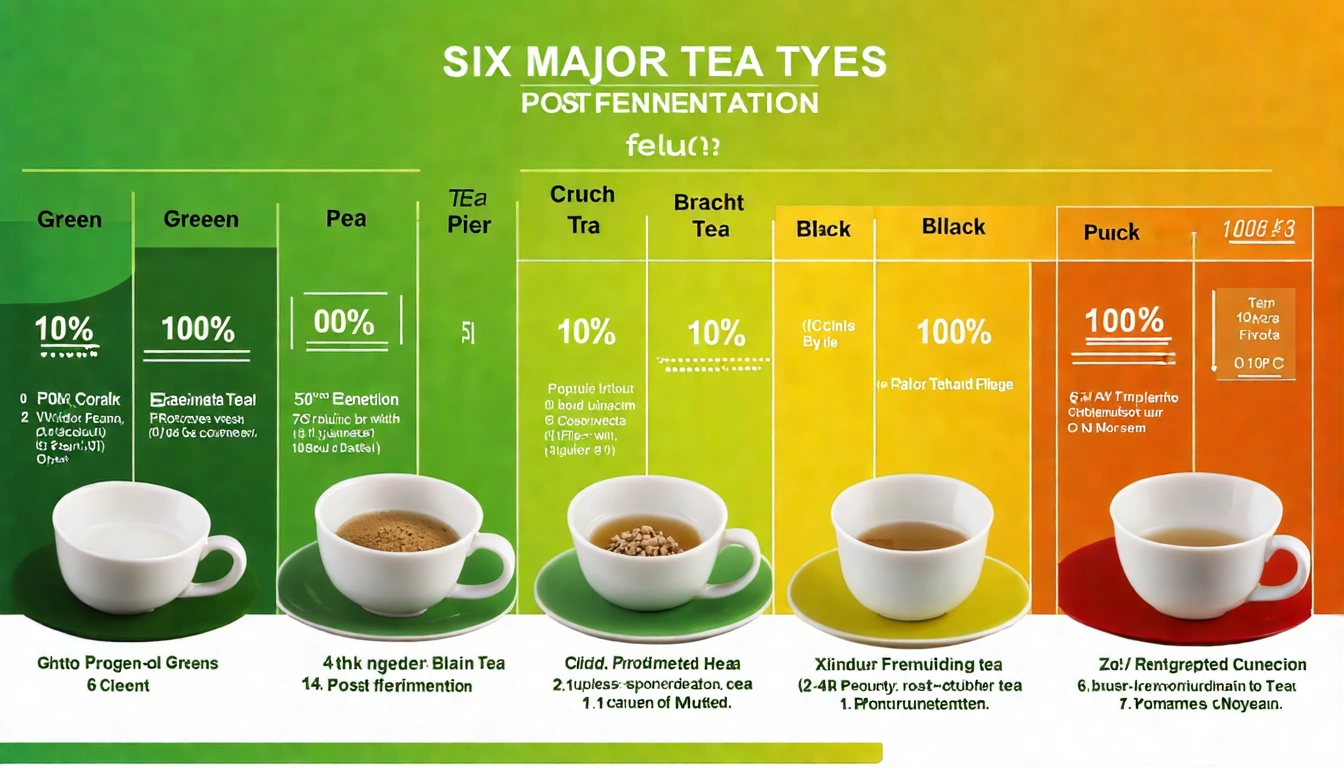
| Tea Type | Fermentation Level | Key Characteristics | Taiwan Representative |
|---|---|---|---|
| Green Tea | 0% (unfermented) | Fresh grassy aroma, highest catechin content | Taiwan Bi Luo Chun, Sanxia Longjing |
| White Tea | 10 to 20% | Light, sweet, and gentle; closest to the natural flavor | Taiwan White Tea (limited production) |
| Yellow Tea | 10 to 25% | Rare tea type, mellow with slight sweetness | Almost no production in Taiwan |
| Qing Cha (Oolong) | 30 to 70% | Richest aroma variety; Taiwan’s most important tea type | Dong Ding Oolong, Alishan Tea, Oriental Beauty |
| Black Tea | 80 to 100% | Fully fermented, mellow and sweet | TTES No. 18 (Ruby), Honey-Scented Black Tea |
| Dark Tea | Post-fermented | Improves with age, gentle on the stomach | Limited production in Taiwan |
What makes Taiwan tea special: Taiwan is the world’s most important production area for oolong tea (qing cha). The fermentation range of oolong tea (30 to 70%) allows for an incredible diversity of flavors — from lightly fermented, clean and fragrant types similar to green tea, to heavily fermented honey-scented types closer to black tea — all fall under the oolong umbrella. Taiwan’s tea export unit price is approximately 6.5 times that of imported tea (Source: Ministry of Agriculture trade statistics, 2024), reflecting the high-quality positioning of Taiwan tea — especially oolong — in the international market. Taiwan tea is rich in polyphenols (catechins), with catechins accounting for 80% of tea polyphenols, offering antioxidant power over ten times that of Vitamin E (Source: Tea Research and Extension Station biochemistry research report, 2023).
Taiwan’s Top Ten Famous Teas: Cultivars, Origins & Flavor Profiles
While there is no universally standardized ranking for Taiwan’s “Top Ten Famous Teas,” the following are widely recognized as the most representative Taiwan teas:
Oolong Tea Series (Taiwan’s Most Important):
| Tea | Origin | Fermentation | Characteristics |
|---|---|---|---|
| Dong Ding Oolong | Lugu Township, Nantou | Medium fermentation | Classic Taiwan oolong, ripe fruit and roasted aroma |
| Alishan Oolong | Alishan Township, Chiayi | Light to medium fermentation | Misty high-mountain floral aroma, representative of Taiwan high-mountain tea |
| Wenshan Baozhong | Pinglin District, New Taipei | Light fermentation (15-20%) | The most green tea-like oolong, elegant floral aroma |
| Oriental Beauty Tea | Emei Township, Hsinchu; Miaoli | Heavy fermentation (60-70%) | Honey aroma from insect-bitten leaves, historically the most popular Taiwan tea export to England |
| Lishan Tea | Heping District, Taichung | Light to medium fermentation | Refined high-altitude floral and fruity aroma, one of Taiwan’s finest teas |
| Shanlinxi Tea | Zhushan Township, Nantou | Light to medium fermentation | Cool floral aroma, one of Nantou’s most important high-mountain teas |
Black Tea Series:
| Tea | Origin | Characteristics |
|---|---|---|
| TTES No. 18 (Ruby) | Yuchi Township, Nantou | Cinnamon and mint aroma, Taiwan’s most distinctive black tea |
| Honey-Scented Black Tea | Ruisui, Hualien; Luye, Taitung | Lychee-honey aroma created by leafhopper bites |
Green Tea & Others:
| Tea | Origin | Characteristics |
|---|---|---|
| Sanxia Longjing | Sanxia District, New Taipei | Taiwan’s most famous green tea, crisp and refreshing |
| Bai Hao Oolong | Emei Township, Hsinchu | Another name for Oriental Beauty, also known as “Pengfeng Tea” |
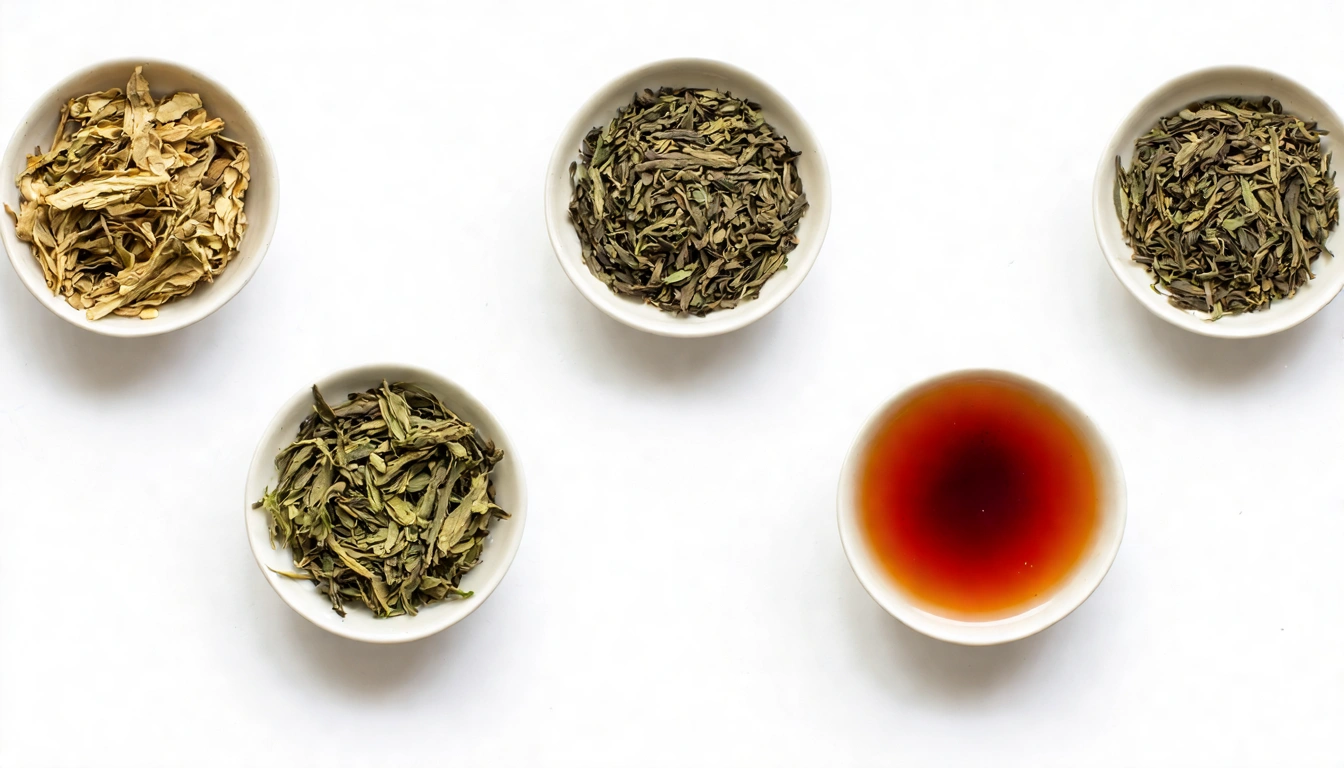
Based on purchasing data from our ChaYanSo customers, about 65% of first-time Taiwan tea buyers start with Jin Xuan or Si Ji Chun — not the traditionally assumed “beginner’s first choice” of Dong Ding Oolong. The main reason is that Jin Xuan’s natural milky aroma makes it more approachable for those unaccustomed to tea astringency. At our retail shop, we typically brew a cup of Si Ji Chun and a cup of Jin Xuan for new customers to compare. Their reaction to these two cups tells us their flavor preferences, allowing us to recommend more advanced teas that suit their palate.
Illustrated Guide to the Taiwan Tea-Making Process (6 Major Steps)
Tea making is not a mysterious art — it is a logical, scientific process. Each step has a clear purpose, and understanding these steps helps you appreciate why the same tea leaves, processed by different masters, can produce dramatically different results.
Step 1: Picking
- Best picking standard: “One bud, two leaves” (the terminal bud plus the two tender leaves below it)
- Hand picking: Precise, highest quality, costing 3 to 5 times more per kilogram than machine picking. Taiwan holds over 30 tea competitions annually (Source: Ministry of Agriculture Tea Research and Extension Station, 2024), and top competition teas universally require hand-picked “one bud, two leaves.”
- Machine picking: Higher efficiency, but lower quality compared to hand picking
- Optimal timing: Early morning to before noon (avoiding high temperatures, preserving maximum moisture)
Step 2: Withering (Sun withering + Indoor withering)
Withering is the process of allowing tea leaves to lose moisture appropriately and soften. Oolong tea withering is particularly complex:
- Sun withering for 1 to 2 hours (depending on weather)
- During indoor withering, “stirring” is performed (turning by hand or machine to promote oxidation)
- The frequency and intensity of stirring determines the fermentation level
Step 3: Rolling
The purpose of rolling is to break tea leaf cells so that the tea juices contact air, while also shaping the leaf:
- Ball-shaped (typical of Taiwan oolong tea): Tightly rolled, high infusion durability
- Strip-shaped (Wenshan Baozhong, some high-mountain teas): Aroma releases more quickly after unfolding
Step 4: Fermentation (Stirring Fermentation)
This is the most critical step, and the one where a tea master’s experience matters most:
- Temperature and humidity control affect fermentation speed
- Over-fermentation → Tea liquor too red, flavor too heavy
- Under-fermentation → Clean aroma but lacking complexity
- The tea master’s experience is most crucial at this stage
Step 5: Roasting (Kill-green / Drying)
Taiwan oolong tea roasting is divided into “initial roasting” (removing excess moisture) and “secondary roasting” (developing tea flavor), with roasting temperatures typically between 80 and 120°C, and roasting times ranging from several hours to several days (Source: Ministry of Agriculture Tea Research and Extension Station tea-making technical guide, 2023).
- Light roast: Clean, refreshing aroma with more preserved floral notes, lighter tea liquor color
- Medium roast: Balanced aroma with ripe fruit notes beginning to emerge
- Heavy roast: Strong roasted aroma, full-bodied mouthfeel, darker tea liquor
Step 6: Refining and Packaging
- Sorting: Removing stems, old leaves, and broken pieces
- Grading: Sorting by size
- Blending (for some teas): Combining different batches to achieve consistent quality
- Packaging: Nitrogen-flushed packaging to extend freshness
For a detailed explanation of each tea-making step, see Complete Guide to Taiwan Tea Making Process.
The teas introduced in this article are all available at ChaYanSo. Browse Our Teas
Spring Tea vs Winter Tea: How to Choose?
Taiwan’s main teas are harvested 4 to 6 times per year (depending on the variety), but spring tea and winter tea are the two most highly valued seasons.
| Comparison | Spring Tea (March - May) | Winter Tea (October - December) |
|---|---|---|
| Climate | Warm and rainy, rising temperatures | Dry and cold, little rain |
| Leaf characteristics | More tender buds, abundant juices | Mature leaves, concentrated aroma |
| Aroma | Fresh and lively, prominent floral notes | Rich and concentrated, lasting aftertaste |
| Infusion durability | Medium (5-7 infusions) | Higher (7-10 infusions) |
| Color | Light tea liquor, clear and bright | Slightly yellow tea liquor, full-bodied |
| Price | Usually slightly lower than winter tea | Usually slightly higher, lower production |
| Best for | Those who prefer fresh aromas, first-time high-mountain tea drinkers | Those who prefer rich, mellow teas; gift-giving |
Recommendations:
- Prefer fresh, fragrant styles and trying high-mountain tea for the first time: Choose spring tea
- Prefer rich, mellow aftertaste or buying for gifts: Choose winter tea
- If you have the chance to try both: Start with spring, then winter, to experience the seasonal differences in the same tea
At ChaYanSo, we host tasting events every spring and winter tea season, allowing customers to compare the spring and winter versions of the same Alishan oolong side by side. Many customers are surprised to find that the seasonal differences in the same tea are much larger than they expected — spring tea’s floral aroma is like a spring breeze, while winter tea’s richness is like a warm fireplace in winter. This comparative tasting is the most intuitive way to understand Taiwan tea.
Further reading: Spring Tea vs Winter Tea Complete Comparison.
A Brief History of Taiwan Tea
Taiwan tea has a history spanning over 200 years, providing essential context for understanding Taiwan tea culture:
Qing Dynasty (17th-19th Century): Tea was introduced to Taiwan. Qingxin Oolong and other cultivars were brought from Fujian province. Planting began in the hilly terrain of northern Taiwan, and oolong tea exports to England and America launched Taiwan tea’s first golden age.
Japanese Colonial Period (1895-1945): During Japanese rule, Taiwan’s tea industry modernized significantly with the introduction of scientific farming methods. Taiwan black tea (particularly Sun Moon Lake tea cultivars) was developed during this period, and export volumes reached historic highs (Source: National Historiography Institute of Taiwan, 2024).
Post-War Transformation (1945-1980): As export markets shrank, Taiwan tea farmers pivoted to developing the domestic market. High-mountain tea cultivation gradually rose during this period.
At ChaYanSo, we have long-standing partnerships with multiple tea farmers in Nantou and Chiayi, witnessing firsthand Taiwan tea’s transformation from “mass production for export” to “artisan tea for the domestic market.” One Alishan tea farmer we’ve partnered with for over a decade told us: “In my father’s generation, the goal was output volume. Now, we compete on the aroma of every single infusion.” This shift in mindset is a microcosm of Taiwan tea’s move toward artisan quality.
Modern Artisan Tea Era (1980-Present): High-mountain tea rose to prominence, competition tea systems were established, and Taiwan artisan tea carved out a unique position in the international tea market.
For the complete history of Taiwan tea, see Taiwan Tea History and Culture.
Many people assume Taiwan tea’s advantage lies in “high mountains,” but the true core advantage is actually the tea master’s oxidation control technique. Tea leaves from the same garden, processed by different masters, can differ 30-50% in aroma and mouthfeel. Taiwan’s high-density competition system has fostered the world’s most refined oolong tea-making craftsmanship — this is the real reason why Taiwan tea cannot be easily replicated.
FAQ: Common Questions About Taiwan Tea Knowledge
What types of Taiwan tea are there?
Taiwan tea is primarily oolong tea (qing cha), including representative varieties such as Dong Ding Oolong, Alishan Tea, Wenshan Baozhong, and Oriental Beauty. Additionally, there are Taiwan black teas (TTES No. 18, Honey-Scented Black Tea) and a small amount of green tea (Sanxia Longjing). Taiwan currently has over 40 registered tea cultivars (Ministry of Agriculture, 2024), with about 15 to 20 major commercial varieties.
Is winter tea or spring tea better?
Each has its own character, and no absolute comparison can be made. Spring tea (harvested March to May) is fresh and floral with lively aromas, ideal for those who prefer a refreshing style. Winter tea (harvested October to December) is rich and mellow with high infusion durability, perfect for those who prefer a robust mouthfeel. For the same tea, many enthusiasts purchase both the spring and winter versions to experience the different flavors each season brings.
How long does the tea-making process take from picking to finished product?
The basic production process for Taiwan oolong tea (from picking to initial roasting) takes about 1 to 2 days. Including refining, sorting, secondary roasting, and other post-processing steps, the entire process may take 3 to 7 days. High-altitude tea production conditions are more demanding — lower temperatures and higher humidity often require longer withering times and more careful fermentation control.
What’s the difference between Taiwan tea and Chinese tea?
The main differences lie in cultivars and craftsmanship. Taiwan oolong tea primarily uses Taiwan-native or improved cultivars such as Qingxin Oolong, Jin Xuan, and Si Ji Chun. Combined with Taiwan’s unique high-mountain terrain, this creates the distinctive “high-mountain floral aroma” style. Chinese oolong teas (such as Wuyi Rock Tea and Tieguanyin) have their own distinct cultivars and processing methods. Each has its own character — it’s not a matter of one being better than the other.
Further Reading
- Complete Guide to Tea Fermentation Levels: The Science from Green Tea to Black Tea
- Complete Guide to Taiwan Tea Making Process: 6 Steps to Understanding the Art of Tea Making
- Spring Tea vs Winter Tea Complete Comparison: Two Different Personalities of the Same Tea
- Taiwan Tea History and Culture: 200 Years from Qing Dynasty Exports to the Artisan Tea Era
- Beginner’s Guide to Buying Taiwan Tea: A Complete Guide to Reading Labels and Avoiding Scams
References
- Ministry of Agriculture Tea Research and Extension Station (2024). Taiwan Tea Cultivar Database.
- Ministry of Agriculture Tea Research and Extension Station (2023). Taiwan Oolong Tea Making Technical Guide.
- National Historiography Institute of Taiwan (2024). Historical Records of Taiwan Tea Industry Development.