Taiwan Tea Bag Recommendations 2026 | Complete Comparison of 10 Popular Whole-Leaf Tea Bags, From Beginner to Advanced
You’ve bought a bunch of tea bags, but they all brew into a tasteless cup — sound familiar?
The problem usually isn’t your brewing technique; it’s choosing the wrong tea bags in the first place. Taiwan tea bag quality varies enormously — some use whole leaves, others are stuffed with crushed dust; some bag materials are perfectly safe, while others give off a faint plastic smell when hot water hits them.
This article compiles the 10 most worthwhile Taiwan tea bags of 2026, covering everything from oolong to honey black tea, from office use to travel scenarios — all compared for you, so you can pick the right one straight away.
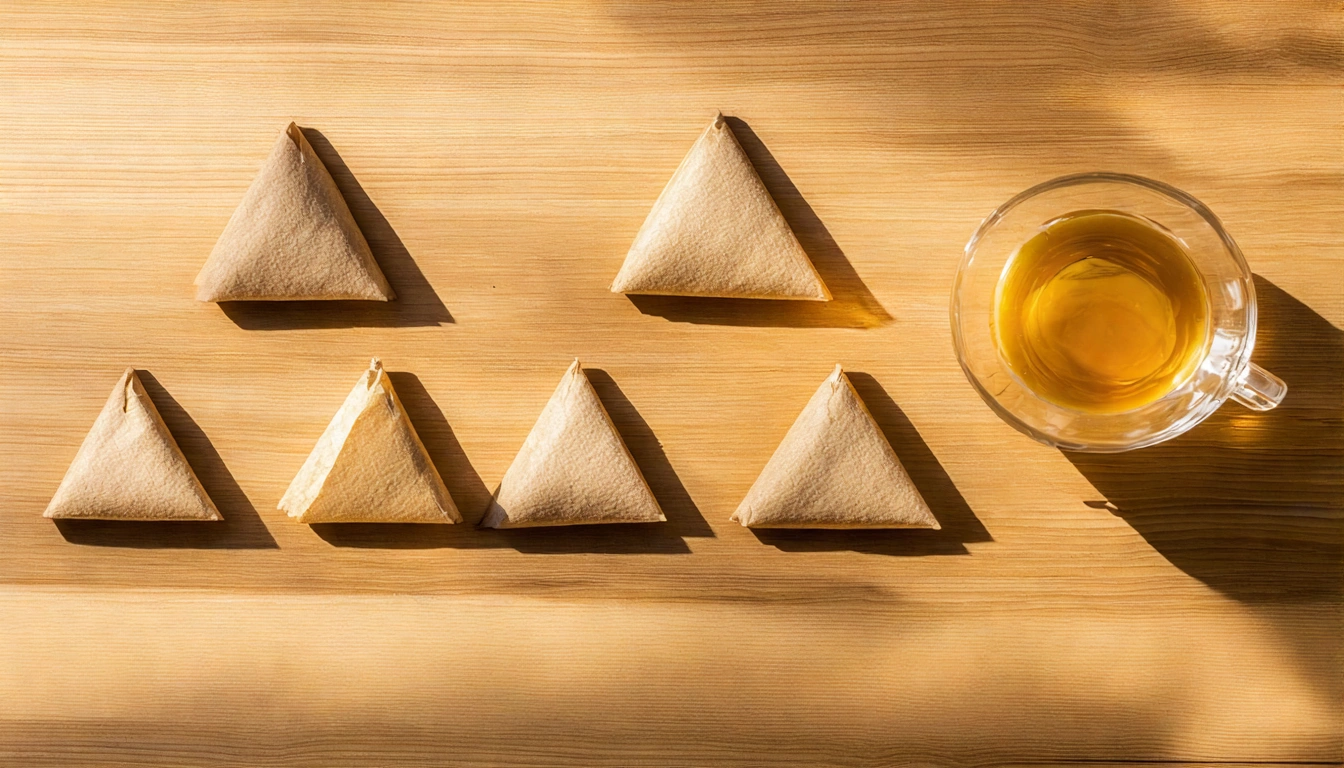
TL;DR: The Taiwan tea bag market continues to grow in 2026, with the global tea bag market reaching US$60.9 billion (Global Growth Insights, 2025). Taiwan’s locally sourced whole-leaf tea bags far surpass imported crushed-tea alternatives. Key buying criteria: prioritize pyramid tea bags (sufficient room for leaves to unfurl) + PLA corn starch or cotton fabric material (plastic-free and safe) + clear indication of tea-growing region. All 10 recommendations in this article are locally sourced and processed in Taiwan, covering oolong, black tea, Jin Xuan, Si Ji Chun, green tea, and more.
Why Choosing the Right Tea Bag Matters
According to the Global Growth Insights 2025 report, the global tea bag market has reached US$60.9 billion and is projected to grow to US$62.76 billion in 2026, with a compound annual growth rate of 3.04% (Global Growth Insights, 2025). Behind these numbers is a steadily increasing global demand for “convenient yet delicious tea.” But a large market with uneven quality is exactly the biggest trap in choosing tea bags.
Taiwan’s tea bag market is highly fragmented. According to Euromonitor International’s 2025 Taiwan Tea market report, “other brands” combined account for nearly half the retail market, and this share continues to rise (Euromonitor, 2025). What does this mean? Small brands and generic tea bags flood the market with highly inconsistent quality. Without basic knowledge, consumers can easily make poor choices.
Whole-Leaf Tea Bags vs. Crushed Tea Bags: How Big Is the Difference?
Many people don’t realize there’s a huge difference in what’s inside tea bags.
| Comparison | Whole-Leaf Tea Bags | Crushed Tea Bags |
|---|---|---|
| Leaf form | Whole leaves or large leaf pieces | Tea dust and tiny fragments |
| Flavor complexity | Full floral notes, lingering sweetness, depth | Quick extraction but bitter, no complexity |
| Steepable times | 2-3 times | 1 time (second steep is flavorless) |
| Price | Higher | Lower |
| Best for | Drinking, gifting, daily enjoyment | Quick brewing, high-volume consumption |
Whole-leaf pyramid tea bags provide enough room for leaves to fully unfurl, producing flavors that approach loose-leaf tea — something flat crushed-tea bags simply cannot achieve.
Common Consequences of Choosing the Wrong Tea Bag
- Thin, flat taste with no aftertaste: Crushed tea dust releases everything instantly, and after the first steep, it’s done
- Plastic taste: Bag materials using PET or low-quality non-woven fabric may release harmful substances when steeped in hot water
- Pesticide residue concerns: Some imported tea leaves have different pesticide regulations from Taiwan, and opaque sourcing makes verification difficult
2026 Taiwan Tea Bag Recommendation Rankings (Complete Comparison Table)
Taiwan’s tea cultivation area is approximately 12,000 hectares with an annual output of about 14,000 metric tons, of which oolong tea (semi-oxidized tea) accounts for the largest share (Tea Research and Extension Station, 2022). Nantou County alone accounts for 48.9% of the national tea garden area (Ministry of Agriculture), making it the core source of Taiwan tea bag raw materials. All 10 recommendations below come from premium Taiwan tea-growing regions.
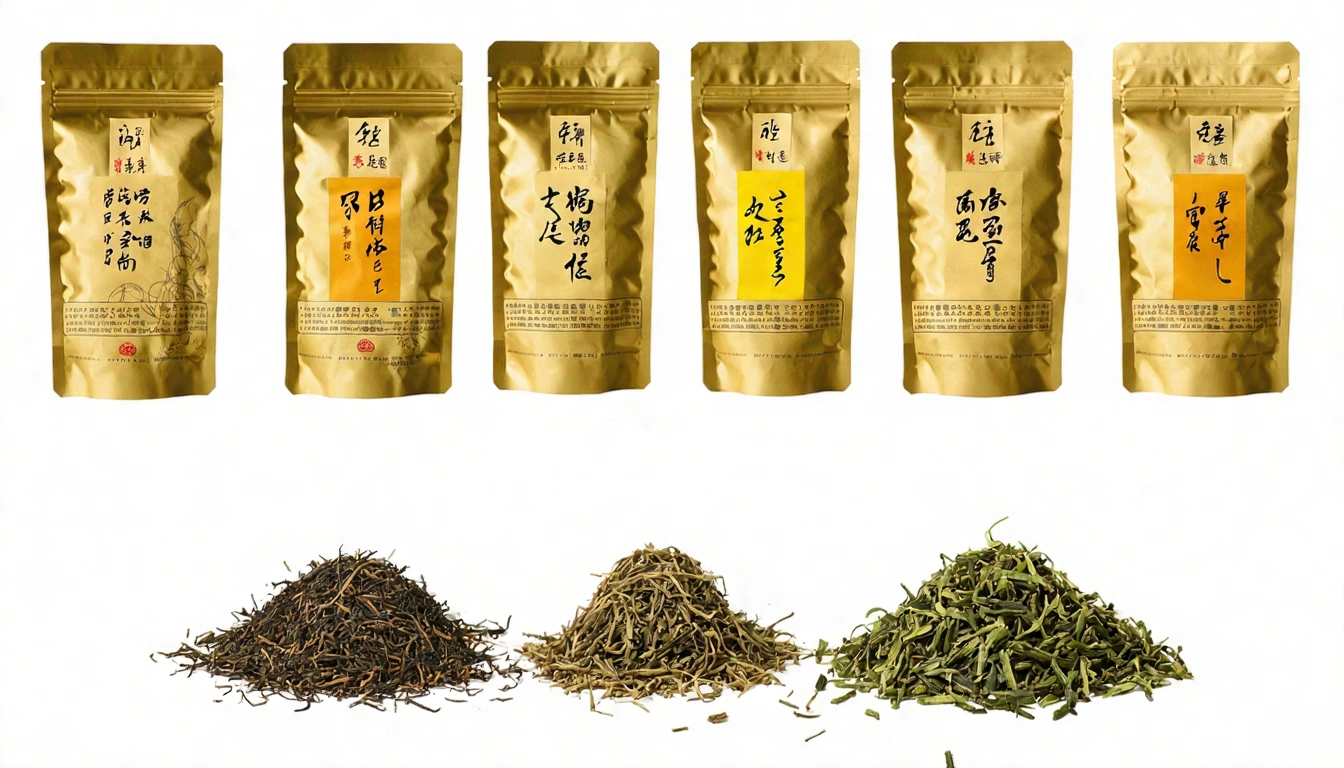
Here is the complete comparison table for quick reference:
| Tea | Flavor Profile | Aroma Type | Recommended Brewing | Best For |
|---|---|---|---|---|
| High Mountain Oolong Pyramid Tea Bag | Subtle floral, long-lasting sweetness | Light floral | Hot brew, cold brew | Daily drinking, experienced drinkers |
| Jin Xuan Milk Oolong Pyramid Tea Bag | Natural milk aroma, smooth sweetness | Milky | Hot brew, cold brew | Beginners, those who prefer sweet flavors |
| Honey Black Tea Bag | Natural honey sweetness, smooth brew | Honey | Hot brew | Afternoon tea, non-bitter-tea drinkers |
| Si Ji Chun Pyramid Tea Bag | Refreshing floral, cooling aftertaste | Floral | Primarily cold brew | Summer cold brew, office daily drink |
| Dong Ding Oolong Tea Bag | Roasted aroma, rich brew | Roasted | Hot brew | Those who prefer bold flavors |
| Taiwan Tea No. 18 (Ruby) Tea Bag | Menthol coolness, hint of cinnamon | Unique aroma | Hot brew | Adventurous tea lovers |
| Oriental Beauty Tea Bag | Ripe fruit honey, orange-red brew | Honey | Hot brew | Advanced tea enthusiasts |
| Lishan Cold Brew Tea Bag | Sweet fruit notes, smooth, no astringency | Light floral | Cold brew | Summer cold drinks, office workers |
| Jasmine Green Tea Bag | Jasmine fragrance, refreshingly invigorating | Floral | Hot brew, cold brew | Beginners, summer favorite |
| Alishan Oolong Tea Bag | Milk and floral notes combined, rich | Complex | Hot brew | Those wanting to try high mountain tea |
Oolong Tea Bag Series: How to Choose Between Light and Rich Styles?
Taiwan oolong tea bags are the most popular type, but “oolong” actually encompasses a very broad flavor range.
We’ve conducted side-by-side tastings comparing high mountain oolong (light oxidation, floral) and Dong Ding oolong (medium oxidation, roasted) tea bags. The former has an immediately noticeable herbal freshness, ideal for mornings; the latter has a richer roasted character, perfect with meals or in the afternoon. Choosing wrong is like ordering the wrong coffee — it’s not bad, just not what you wanted.
Recommendation: High Mountain Oolong Pyramid Tea Bag
- Tea region: Nantou Ren’ai Township, Chiayi Alishan
- Features: Grown above 1,000 meters elevation with significant day-night temperature variation, higher theanine content, noticeably sweet
- Recommended water temperature: 90°C
- Optimal first steep: 40 seconds
Recommendation: Dong Ding Oolong Tea Bag
- Tea region: Nantou Lugu, Dong Ding
- Features: Traditional charcoal roasting, golden brew, full roasted aroma, steepable 3-4 times
- Recommended water temperature: 95°C
- Optimal first steep: 50 seconds
Jin Xuan Milk Oolong Tea Bag: Natural Milk Aroma, Not Artificial
Jin Xuan tea (Taiwan Tea No. 12) is a uniquely Taiwanese cultivar that naturally carries a subtle milk aroma and sweetness — it is not artificially added.
When sourcing at the origin, ChaYanSo pays special attention to whether the Jin Xuan’s milk aroma is naturally pure — some Jin Xuan tea bags on the market add artificial milk flavoring, which smells strong but has a chemical aftertaste. Authentic natural Jin Xuan milk aroma is warm and delicate, becoming even more pronounced with cold brewing.
The most common scenario at our ChaYanSo shop is customers buying Jin Xuan tea bags as souvenirs, only to have the recipients immediately ask “Where did you buy these?” — Jin Xuan’s natural milk aroma truly amazes first-time drinkers. This tea bag is particularly suited for newcomers to Taiwan tea because it lacks the heaviness of pu-erh or heavily oxidized teas, tasting smooth and sweet from the first sip. Suitable for both hot and cold brewing; the milk aroma becomes more prominent when cold brewed in summer.
- Main growing regions: Chiayi Zhuqi, Meishan; Tainan Dongshan
- Best for: Beginners, those who prefer smooth sweet flavors
- Recommended water temperature: 85°C (avoid too high to prevent bitterness)
Honey Black Tea Bag: Taiwan’s Unique Natural Honey Sweetness
What makes Taiwan honey black tea special is that its honey aroma comes from natural leafhopper feeding. When the small green leafhoppers bite the tea leaves, the tea plant secretes special aromatic compounds as a self-defense response, creating a natural honey sweetness that cannot be artificially replicated.
According to research by the Tea Research and Extension Station, the special aromatic components of honey black tea are primarily terpene compounds, including linalool and its oxides, which can only form under specific insect-feeding conditions (Tea Research and Extension Station, 2023).
- Main growing regions: Hualien Ruisui, Taitung Luye
- Features: Amber-orange brew, natural honey sweetness, zero astringency
- Recommended water temperature: 95°C and above
- No need for a second steep: One steep is usually sufficient for honey black tea bags
Si Ji Chun Tea Bag: Cold Brew Champion, Refreshing All Summer
Si Ji Chun is one of Taiwan’s most widely planted tea cultivars, harvestable four to five times per year, with stable supply and affordable pricing. Its refreshing floral aroma is particularly suited for cold brewing — just drop it in a cold water pitcher and refrigerate overnight for a delicious cold brew tea the next day.
- Main growing regions: Nantou Mingjian, Taichung Dajia
- Features: Refreshing floral aroma, cooling aftertaste, suitable for both hot and cold brewing
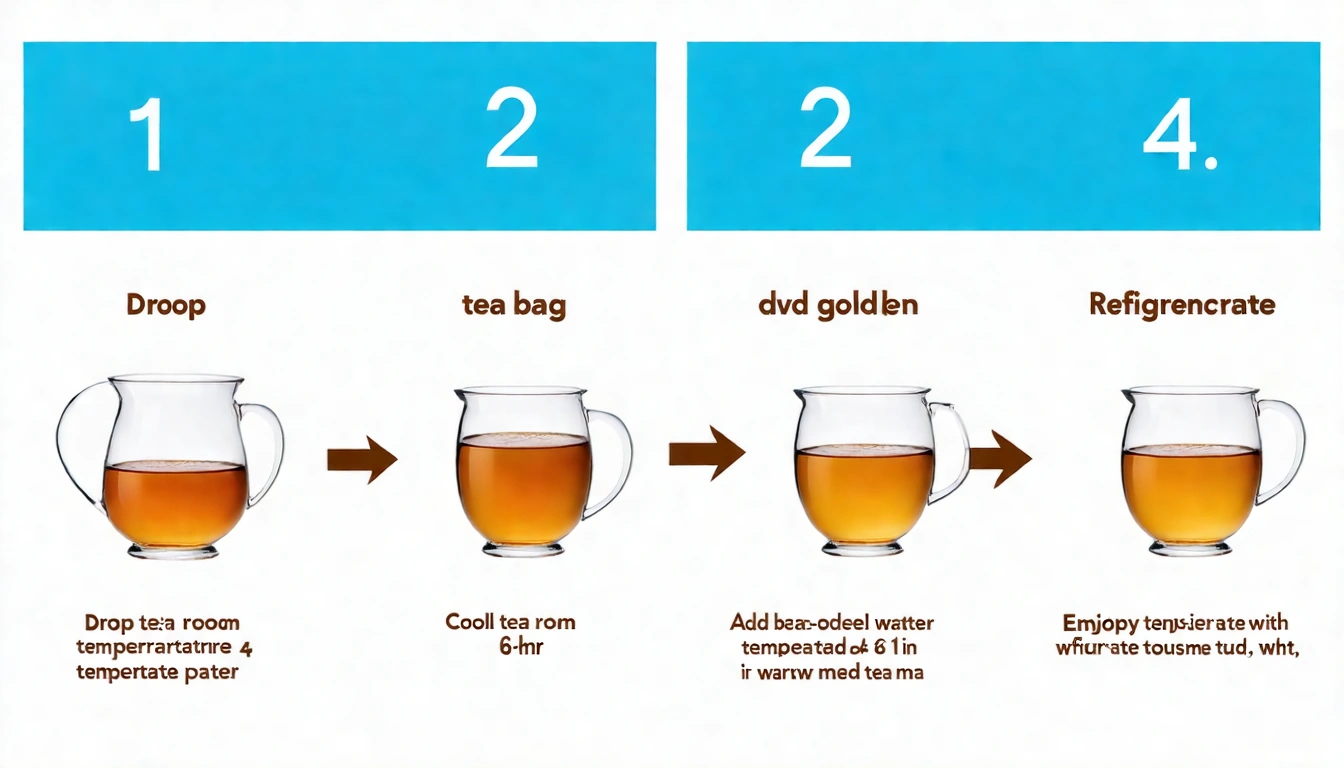
- Cold brew recommendation: Room temperature water 500ml + 1 tea bag, refrigerate 6-8 hours
Jasmine Green Tea Bag: Invigorating and Refreshing, a Summer Essential
Jasmine green tea combines Taiwan green tea’s freshness with captivating jasmine fragrance, making it one of the most popular summer tea bags. When shopping, note that quality jasmine green tea is scented with real jasmine flowers, not artificial flavoring — properly made versions have a naturally lasting floral fragrance without being sharp.
Understanding Tea Bag Materials: Pyramid vs. Flat Bag vs. Cotton Muslin
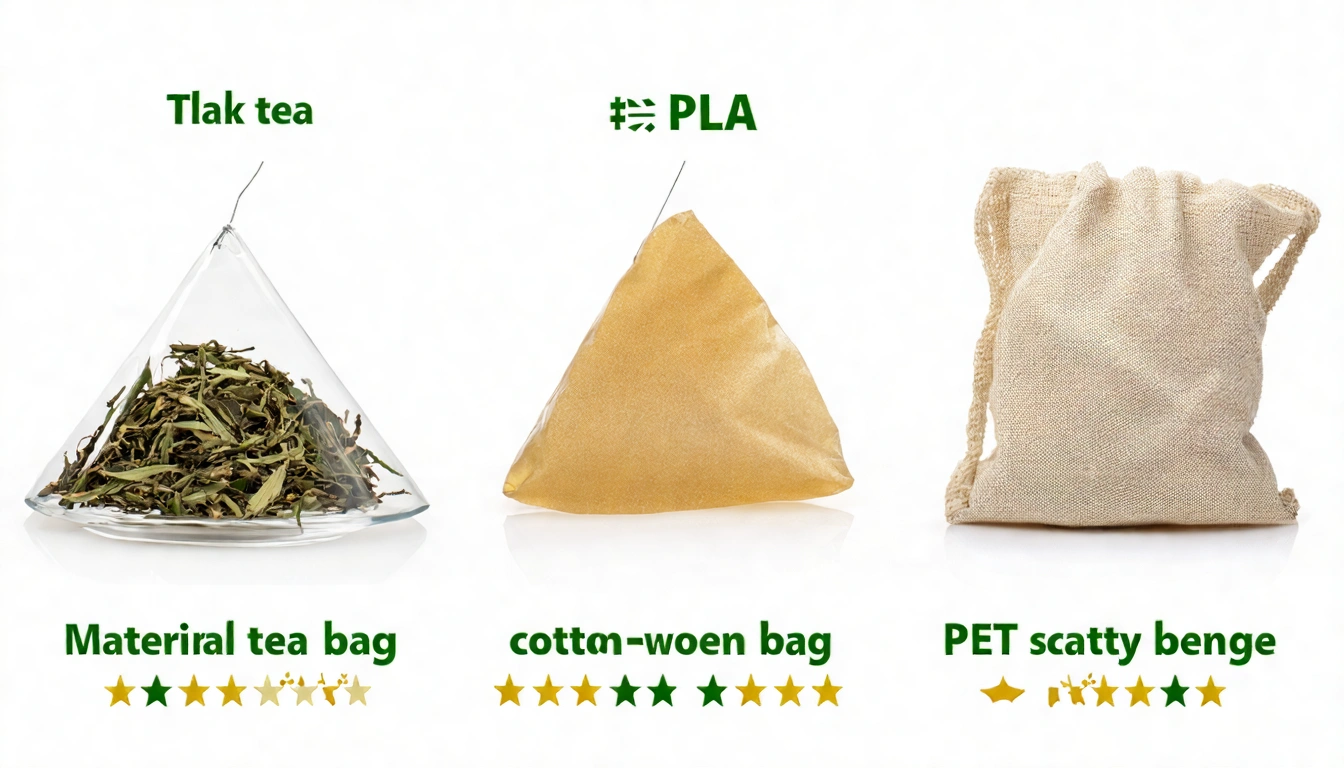
Taiwan’s export tea unit price is approximately 6.5 times that of imported tea (Ministry of Agriculture). Great tea deserves safe packaging materials. This is a selection criterion many people overlook — material safety directly affects what you’re drinking.
According to SGS testing data from Taiwan food industry sources, PLA corn fiber pyramid tea bags showed no detectable plasticizers (DEHP, DEHA), heavy metals, or microplastics when steeped in 60°C hot water (highteaworld.com, 2024).
Comparison of Three Main Materials
| Material | Composition | Safety Level | Heat Resistance | Leaf Expansion Space | Recommendation |
|---|---|---|---|---|---|
| PLA Corn Fiber | Plant starch-derived | Safest | >= 80°C | Large (pyramid) | Top choice |
| Cotton Muslin | Natural cotton fiber | Safest | No limit | Medium | Recommended |
| PET Non-woven | Petroleum-based | No plasticizer issues | 65-85°C | Small (flat bag) | Acceptable |
| Standard Non-woven | Chemical fiber | Use caution | Low | Small | Avoid |
| Cotton Paper | Wood pulp paper | Safe | Hot brew OK | Small (flat bag) | Acceptable |
How to Identify Whole-Leaf Tea Bags
True “whole-leaf tea bags” have three identification criteria:
- Visible leaf form: Good transparent pyramid tea bags show whole leaves or large leaf pieces, not dust or powder
- Longer extraction time: Whole-leaf tea bags typically need 40-60 seconds to develop flavor, while crushed tea bags release in 10-20 seconds (but with thin flavor)
- Steepable a second time: Whole-leaf tea bags have flavor on the second steep and are still acceptable on the third; crushed tea bags are virtually flavorless by the second steep
Want to try safe, plastic-free whole-leaf pyramid tea bags? —> Browse ChaYanSo tea bag collection
For a more detailed analysis of tea bag material safety, see our Complete Guide to Tea Bag Material Safety.
How to Brew Tea Bags for the Best Flavor: Water Temperature x Time x Steeps
According to a Pollster survey, the top three factors consumers prioritize when choosing tea bags are “mouthfeel” (60.46%), “flavor” (57.24%), and “price” (56.25%) (Pollster, 2019). But half of the mouthfeel quality depends on brewing method — water too hot or steeped too long makes it bitter; temperature too low or time too short makes it bland.
Hot Brew: Optimal Water Temperature Chart by Tea Type
| Tea Type | Recommended Temp | 1st Steep | 2nd Steep | 3rd Steep | Special Notes |
|---|---|---|---|---|---|
| High Mountain Oolong | 90°C | 40 sec | 50 sec | 60 sec | Avoid 100°C, easily bitter |
| Jin Xuan | 85°C | 35 sec | 45 sec | 55 sec | Low temp preserves milk aroma |
| Dong Ding Oolong | 95°C | 50 sec | 60 sec | 70 sec | High temp needed for roasted aroma |
| Honey Black Tea | 95-100°C | 90 sec | — | — | Usually one steep, best for complete honey aroma |
| Taiwan Tea No. 18 Ruby | 95°C | 90 sec | 120 sec | — | — |
| Si Ji Chun | 85-90°C | 35 sec | 45 sec | 55 sec | Low temp preserves floral aroma |
| Oriental Beauty | 90°C | 60 sec | 90 sec | — | — |
| Jasmine Green Tea | 75-80°C | 30 sec | 40 sec | — | Never use boiling water for green tea |
Quick tip: If you have tea bags with no instructions, start at 90°C for oolong types and 95°C for black tea types — you generally can’t go wrong.
Cold Brew Method: The Easiest Way to Make Tea in Summer
Cold brew tea works on the principle of trading time for temperature — slow, low-temperature extraction means bitter compounds (caffeine) don’t dissolve as readily, and the sweetness becomes more prominent.
Standard Cold Brew Tea Bag Process:
- Place 1 tea bag in a 500-600ml glass pitcher or container
- Add room temperature drinking water or mineral water (ice water isn’t necessary)
- Place in the refrigerator
- Let it sit for 6-8 hours (overnight is most convenient)
- Remove the tea bag and enjoy; best consumed within 24 hours
Best tea bags for cold brewing: Si Ji Chun, Jin Xuan, light oolong, jasmine green tea
For more cold brew tips, see Cold Brew Tea Bag Recommendations and Complete Tutorial.
How Many Times Can You Steep a Tea Bag?
| Tea Bag Type | 1st Steep | 2nd Steep | 3rd Steep | Recommendation |
|---|---|---|---|---|
| Whole-leaf pyramid (oolong types) | 5/5 | 4/5 | 3/5 | Steepable 3 times |
| Whole-leaf flat bag | 4/5 | 3/5 | 2/5 | Best at 2 times |
| Crushed tea flat bag | 4/5 | 1/5 | — | Only 1 time recommended |
| Honey black tea bag | 5/5 | 2/5 | — | Best at 1 time |
| Jasmine green tea bag | 4/5 | 3/5 | — | 1-2 times |
Now that you know how to brew, come pick a great tea —> Shop now
Tea Bag Recommendations by Scenario: Find the One That’s Right for You
The global tea market reached approximately US$69.5 billion in 2025 (Grand View Research), with growing demand for tea bags across different scenarios. The office needs convenience, travel needs portability, gifting needs to make an impression — different life scenarios have completely different tea bag requirements.
| Scenario | Recommended Tea | Why | Suggested Packaging |
|---|---|---|---|
| Office daily | Si Ji Chun, Jin Xuan | Subtle aroma that won’t bother colleagues, cold brew backup | Box (25+ bags) |
| Travel | High Mountain Oolong, Honey Black Tea | Individual foil packets, sealed and shelf-stable | Individual packets (10 bags) |
| Gifting | Oriental Beauty, Lishan Oolong | Unique flavor, premium packaging | Gift box (4-6 variety assortment) |
| Summer cold brew | Lishan Cold Brew, Si Ji Chun | Specially suited for cold brewing, clean sweet extraction | Bulk (30 bags) |
| Camping/Outdoors | Jin Xuan, Honey Black Tea | Shelf-stable, convenient anytime brewing | Individual packets |
Office Tea Bag Recommendations: Quick Brewing, Considerate to Others
Drinking tea at the office has special considerations: brewing needs to be quick, the aroma shouldn’t be too strong, and ideally it can be cold brewed as a backup.
Si Ji Chun and Jin Xuan are the two most recommended options for the office — their subtle, elegant floral aromas aren’t overpowering, and when cold brewed, they can be poured directly into your own water bottle, saving office hot water resources. For more options, see Essential Office Tea Bag Recommendations.
Travel Tea Bag Recommendations: Lightweight and Sealed
Whether traveling internationally or domestically, a small pack of Taiwan tea bags in your luggage lets you brew the taste of home anywhere. Choose individual foil-sealed packets for moisture and odor protection with a longer shelf life. For a detailed travel tea bag buying guide, see Complete Travel Tea Bag Guide.
Gift Tea Bag Recommendations: Premium Packaging and Gift Box Selection
Tea bags as souvenirs are becoming increasingly popular in Taiwan, especially high mountain oolong and Oriental Beauty in gift box packaging — they look exceptionally elegant. See Premium Tea Bag Gift Box Recommendations to make your tea gift more thoughtful.
Loose Tea vs. Tea Bags: Which Is Better for You?
Globally, approximately 60% of tea consumers prefer tea bags, with convenience being the primary reason (Tea Infusiast, 2025). But in Taiwan, loose tea culture runs deep, and the most common question from newcomers is: “Is loose tea better than tea bags?”
There’s no standard answer to this question.
| Comparison | Loose Tea | Whole-Leaf Tea Bags |
|---|---|---|
| Quality ceiling | Higher (complete leaves, richer flavors) | Approaching loose tea (depends on leaf quality) |
| Convenience | Requires teaware, more involved | No teaware needed, brew anytime |
| Price | Relatively higher (same grade) | Slightly above crushed tea, comparable to loose |
| Best scenarios | Home tea sessions, deep experiences | Office, travel, daily convenience |
| Learning curve | Requires practice | Almost none |
| Storage | Sealed canister, cool and dark | Individual packaging is more convenient |
The same Taiwan high mountain oolong, carefully brewed as loose tea versus brewed in a quality whole-leaf pyramid tea bag, actually shows a much smaller flavor gap than most people imagine. For busy modern lifestyles, whole-leaf tea bags can satisfy 90% of drinking needs without necessarily investing more time in loose tea.
For a deeper loose tea vs. tea bag comparison, see Loose Tea vs. Tea Bags: Complete Quality and Convenience Comparison.
Frequently Asked Questions
Q: How many times can you steep a tea bag?
Whole-leaf pyramid tea bags (primarily oolong types) can generally be steeped 2-3 times. The first steep unfurls the leaves, the second steep is the most fragrant, and the third is slightly lighter. Crushed tea flat bags are recommended for only 1 steep, as the second is virtually flavorless. Honey black tea and Oriental Beauty tea bags, due to their special aroma profiles, are best steeped only once to preserve the complete honey aroma.
Q: How long should you steep a tea bag?
It depends on the tea type. Oolong types: hot brew 40-60 seconds for the first steep, extending to 60-80 seconds for the second; black tea: about 90 seconds; green tea: the shortest at 30-40 seconds — too long makes it bitter. Cold brew tea bags universally require 6-8 hours; low temperature and slow extraction are the keys to cold brewing.
Q: Can tea bags be cold brewed?
Yes, and many Taiwan tea bags actually taste better cold brewed than hot. Light oolong varieties (Si Ji Chun, Jin Xuan, High Mountain Oolong) have more prominent floral notes when cold brewed, with bitterness virtually eliminated. It’s simple: put a tea bag in a cold water pitcher and refrigerate for 6-8 hours.
Q: Are tea bags safe from plasticizers?
Choose the right material and they’re safe. PLA corn fiber pyramid tea bags and cotton muslin bags are the safest choices — SGS testing shows these two materials release no detectable plasticizers under hot water steeping conditions. Cotton paper tea bags are also safe. Be aware of some chemical fiber non-woven tea bags, which may pose higher long-term risk if they contain plasticizer additives. Check the packaging material labeling before purchasing.
Q: Which is better, loose tea or tea bags?
When quality is comparable, it mainly depends on your lifestyle. If you have time to brew at home and enjoy a slow tea session, loose tea offers a richer experience. For busy professionals, travelers, and office workers, the convenience of whole-leaf tea bags is unmatched. High-quality whole-leaf pyramid tea bags now perform very close to loose tea, making them the best compromise for daily drinking.
Taiwan Tea Bag Buying Principles: Three Core Rules
Taiwan’s hand-shaken drink market exceeded NT$133.1 billion in revenue in 2024 (Ministry of Economic Affairs Statistics Division), but more and more people are returning to the simple life of brewing their own tea bags. Choose Taiwan tea bags well, and you’ll have a great cup of tea to accompany you every day. Here are three core buying principles:
- Check the material: Prioritize PLA corn fiber or cotton muslin — specific labeling is more reassuring than no labeling at all
- Choose whole leaf: Look through the packaging to see if the leaves are whole or powdered — only whole leaves provide complexity and aftertaste
- Match the tea type: Light oolong and Jin Xuan for daily drinking; honey black tea for afternoon tea; Si Ji Chun and Lishan for cold brewing
Taiwan’s fine teas deserve proper tea bags to present them. From the origin to your hands, every sip is a taste of Taiwan.
Explore ChaYanSo and Find Your Perfect Taiwan Tea
ChaYanSo carefully selects whole-leaf tea bags from Taiwan’s finest tea regions — with clear origin sourcing, safe materials, and pure flavors, every cup is a moment worth looking forward to.
From origin to your cup, every sip is a taste of Taiwan —> Explore ChaYanSo
Further Reading
- Complete Guide to Tea Bag Material Safety: PLA, Cotton Muslin, PET Differences Explained
- Cold Brew Tea Bag Recommendations and Complete Tutorial: Essential Summer Cold Brew Guide
- Essential Office Tea Bag Recommendations: Convenient Brewing, Refreshing Energy
- Travel Tea Bag Recommendations: Lightweight, Sealed, Take Taiwan’s Flavors Everywhere
- Premium Gift Tea Bag Box Recommendations: Add Warmth to Your Tea Gifts
- Loose Tea vs. Tea Bags: Complete Quality, Convenience, and Price Comparison
References
- Global Growth Insights (2025). Tea Bag Market Trends & Forecast Report 2026-2035.
- Euromonitor International (2025). Tea in Taiwan Market Research Report.
- Tea Research and Extension Station (2023). Honey Black Tea Flavor Component Research Report.
- highteaworld.com (2024). Do Tea Bags Release Microplastics? PLA Tea Bags Are Zero-Plastic Safe!
- Ministry of Agriculture (2020). Taiwan Tea Production Statistics.
- Pollster Online Survey (2019). Tea Bag Brand Preference and Drinking Habits Survey.
- Tea Infusiast (2025). How Popular Are Tea Bags? Global Tea Bag Statistics.
- Grand View Research (2025). Global Tea Market Size Report.
- Ministry of Economic Affairs Statistics Division (2024). Hand-Shaken Drink Market Statistics.
- Ministry of Agriculture - Taiwan Tea Production Status and Guidance Measures.