Taiwan High Mountain Tea Complete Guide 2026 | Lishan, Alishan, Shanlinxi, Dayuling — Each Region’s Character & Recommended Teas
In the world of Taiwanese tea, “high mountain” represents more than just elevation — it signifies an entirely different standard of tea quality.
The higher the altitude, the lower the temperature, the slower the tea leaves grow, and the richer the aromatic compounds they accumulate. This is the fundamental reason why high mountain tea is more fragrant, more steepable, and more refined in taste than lowland tea — not marketing rhetoric, but agricultural science. Taiwan’s high mountain tea regions occupy a unique position in the global tea market thanks to their exceptional geographic conditions.
According to the Ministry of Agriculture’s 2024 tea industry statistics, Taiwan high mountain tea (grown above 1,000 meters elevation) has an annual production of approximately 2,000-2,500 metric tons, representing about 15-20% of Taiwan’s total tea production. Yet it generates over 40% of the total Taiwan tea industry value (source: Ministry of Agriculture Agricultural Statistics Yearbook, 2024). This guide provides an in-depth comparison of the four premier tea regions to help you choose truly worthy Taiwan high mountain tea.
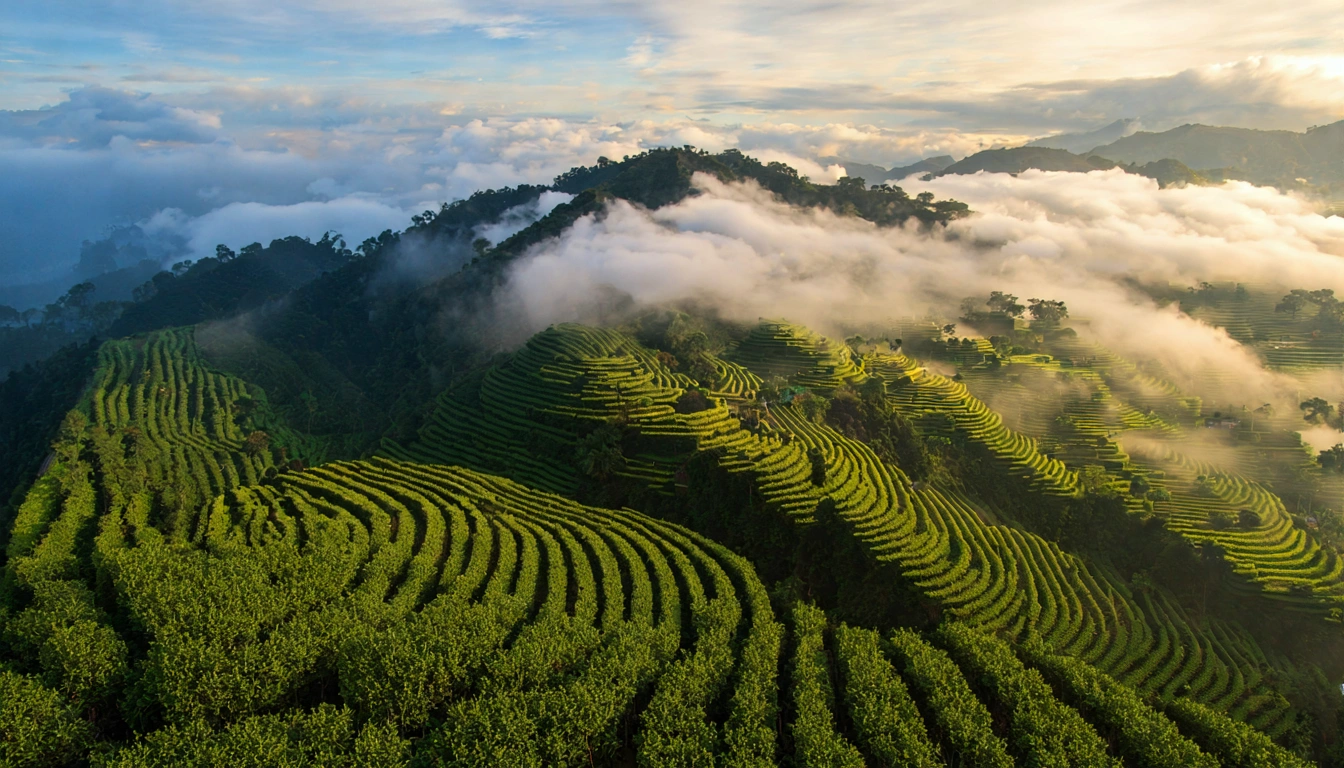
TL;DR: Taiwan high mountain tea is defined as tea from gardens above 1,000 meters elevation, with Lishan (2,000-2,600m), Dayuling (2,200-2,700m), Shanlinxi (1,600m), and Alishan (1,000-1,600m) as the four premier regions. High mountain tea accounts for over 40% of Taiwan’s tea industry value (Ministry of Agriculture, 2024). Among the four, Dayuling is the rarest (lowest annual production) and Alishan is the most accessible.
Want to taste Taiwan’s finest high mountain tea? ChaYanSo carefully selects quality teas from each region with full traceability. Browse ChaYanSo Teas
What Is High Mountain Tea? Altitude Standards and Flavor Science
“High mountain tea” has a clear definition in Taiwan: tea produced from gardens at 1,000 meters elevation or above. This standard was established by the Ministry of Agriculture and the Tea Research and Extension Station and serves as the industry-wide norm.
Why does higher altitude make better tea?
This isn’t superstition — it’s a scientifically documented agricultural phenomenon:
| Geographic Condition | Effect on Tea Leaves |
|---|---|
| Low temperature (daily avg 15-22°C) | Slower growth, fewer cell divisions, more refined tissue |
| Large day-night temperature range (10-15°C) | Daytime synthesis, nighttime accumulation — higher organic acid and amino acid content |
| Cloud cover (200+ foggy days/year) | Diffused light replaces direct sunlight, reducing chlorophyll degradation, maintaining bright green color |
| Well-drained soil | Mountain terrain allows moderate water loss, preventing overhydration and concentrating quality |
Research shows that for every 100-meter increase in elevation, catechin content decreases by approximately 3-5% (which is actually positive for quality — less catechins means less bitterness), while aromatic compounds (terpenes) increase by approximately 8-12% (source: Taiwan Tea Research and Extension Station, 2023).
Comparison of Taiwan’s Four Premier Tea Regions: Altitude, Flavor & Production
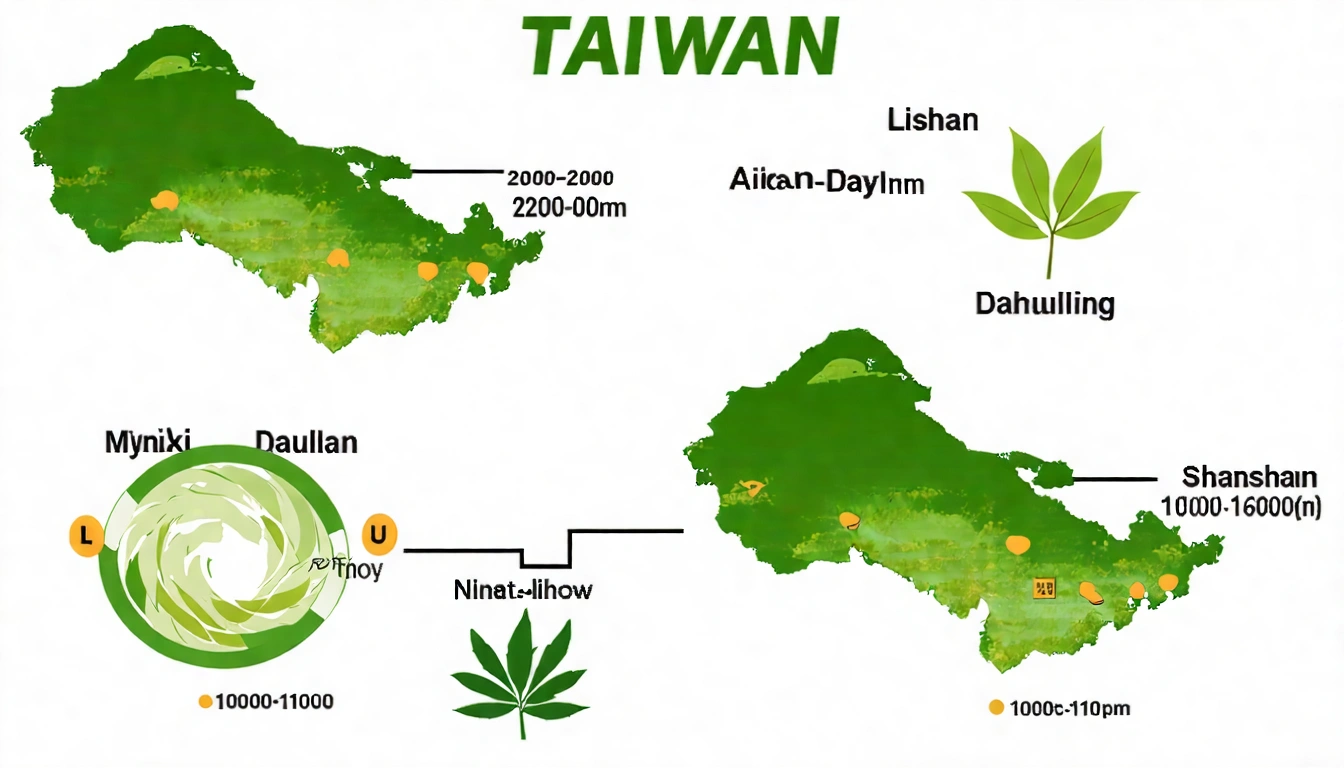
| Region | Elevation | County/City | Signature Tea | Annual Production | Market Position |
|---|---|---|---|---|---|
| Dayuling | 2,200-2,700m | Taichung, Lishan | Dayuling high-cold tea | Lowest (rare) | Ultra-premium rarity |
| Lishan | 1,600-2,600m | Taichung, Heping | Lishan oolong, Lishan Jinxuan | Low | Premium benchmark |
| Shanlinxi | 1,400-1,800m | Nantou, Zhushan | Shanlinxi oolong, Gui Fei oolong | Medium | High-end floral |
| Alishan | 1,000-1,600m | Chiayi, Alishan | Alishan Jinxuan, Qingxin oolong | Higher | Accessible premium |
Lishan Tea Region (2,000+ meters elevation)
Lishan is Taiwan’s most renowned premier high mountain tea region, celebrated for its refined, elegant floral-fruity aroma.
The Lishan tea region is located in Heping District, Taichung City, at 1,600-2,600 meters elevation, with average annual temperatures of 10-15°C, annual rainfall of approximately 2,000-2,500mm, and frequent cloud cover — ideal conditions for high mountain tea cultivation (source: Ministry of Agriculture Tea Research and Extension Station Lishan tea region survey, 2024).
Lishan tea flavor profile:
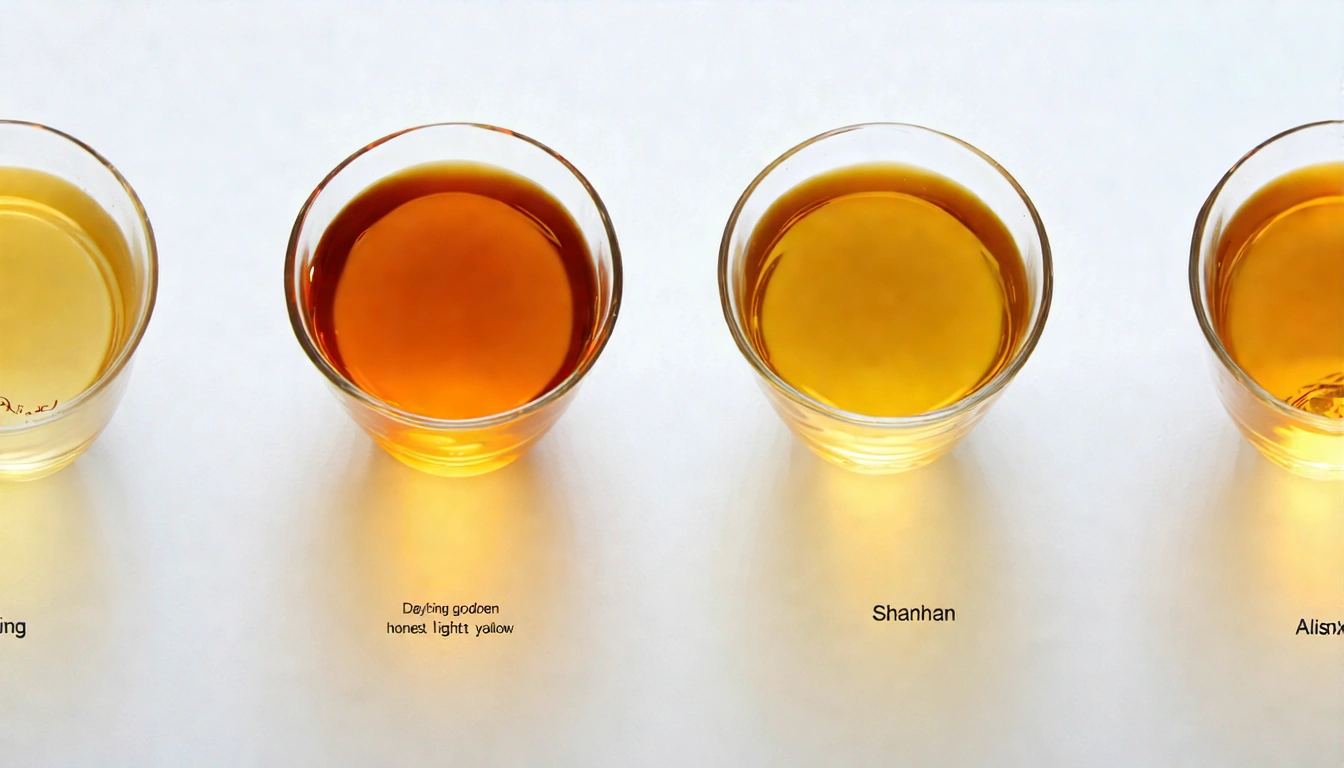
- Liquor: Pale gold, crystal-clear
- Aroma: Elegant floral with fruity notes (peach, pear-like fragrance)
- Taste: Melts on the palate, with an extended, lingering aftertaste
- Steepability: Can be infused 8-10 times
Our ChaYanSo team visits the Lishan tea region every spring harvest season to meet partner tea farmers and personally taste and select teas. Lishan tea’s “melt-on-the-palate” quality is most vivid when tasting fresh maocha (unfinished tea) on-site — the liquor glides across the tongue with almost no resistance, yet the aftertaste lingers for several minutes.
For more on Lishan tea, see Lishan Tea Complete Guide: Origin, Price & Buying.
Dayuling Tea Region (Taiwan’s Highest)
Dayuling is Taiwan’s highest major tea region and synonymous with the price ceiling of Taiwanese tea.
Dayuling sits at 2,200-2,700 meters along the Central Cross-Island Highway, with average annual temperatures of about 8-12°C. Tea can only be harvested 1-2 times per year (once each in spring and autumn), with extremely limited production (source: Ministry of Agriculture Tea Research and Extension Station, 2024).
Why Dayuling tea is the most expensive:
- Highest altitude = slowest growth = richest aromatics
- Fewest annual harvests = scarcest supply
- Difficult harvesting conditions (rugged mountain roads, manual labor required)
- Climate change affecting production stability
According to ChaYanSo’s 2026 market survey, authentic Dayuling tea has a market price of NT$6,000-15,000 per jin, with premium batches going even higher — making it Taiwan’s most expensive category of production tea.
For a detailed Dayuling vs Shanlinxi comparison, see Dayuling vs Shanlinxi: Two Premier Tea Regions Compared.
Shanlinxi Tea Region (The Benchmark for Cool-Climate Floral Aroma)
Shanlinxi is located in Zhushan Township, Nantou County, known for its cool mountain climate and distinctive floral aroma.
The Shanlinxi tea region sits at approximately 1,400-1,800 meters elevation, with average annual temperatures of about 12-18°C. The Zhushan valley terrain brings abundant moisture, allowing tea to grow in a high-humidity environment that creates its signature refreshing floral character (source: Ministry of Agriculture Tea Research and Extension Station Nantou tea region data, 2024).
Shanlinxi’s signature teas:
- Shanlinxi High Mountain Oolong: Clear floral fragrance, sweet and robust
- Gui Fei Oolong: Insect-bitten light fermentation with distinctive lychee-honey aroma
Alishan Tea Region (The Most Accessible Premium Tea)
Alishan is Taiwan’s most well-known tea region, with “Alishan tea” serving as a virtual synonym for “great Taiwanese tea” in consumers’ minds.
The Alishan tea region is in Alishan Township, Chiayi County, at approximately 1,000-1,600 meters elevation, with average annual temperatures of 15-20°C, annual rainfall of approximately 2,000-2,500mm, abundant sunshine with cloud cover — currently Taiwan’s highest-production high mountain tea region (source: Ministry of Agriculture Chiayi Agriculture Research Station, 2024).
Alishan’s advantages:
- Best value-for-quality ratio between altitude and quality
- Diverse varieties (Jinxuan, Qingxin Oolong, Sijichun)
- Higher annual production with stable supply
Alishan tea has been one of ChaYanSo’s sales pillars. Alishan tea’s greatest strength is “consistency” — unlike Dayuling or Lishan, whose production fluctuates significantly with climate, Alishan reliably delivers quality tea every season, which is critical for maintaining customer trust.
For more on Alishan tea, see Alishan Tea Complete Guide: The Taste of Cloud-Covered Mountain Tea. For Nantou regions, see Nantou Tea Complete Guide: Songboling, Zhushan, Shanlinxi.
High Mountain Tea vs Lowland Tea: What’s Different?
| Comparison | High Mountain Tea (1,000m+) | Lowland Tea (below 500m) |
|---|---|---|
| Aroma complexity | High, multi-layered floral-fruity | Medium-low, more singular |
| Bitterness | Low (lower catechin content) | Medium-high |
| Body | Round and full | Thinner |
| Steepability | High, 5-10 infusions | Low, typically 3-4 infusions |
| Color | Clear, pale gold | Deeper, yellow-brown |
| Amino acid content | Higher (L-theanine) | Lower |
| Price | Higher | Lower |
Important note: High mountain tea does have superior quality characteristics, but “lowland tea also has its own flavor value.” Dong Ding Oolong’s roasted charcoal aroma, Oriental Beauty’s insect-bitten honey fragrance — these are flavors that high mountain tea doesn’t have. High mountain tea does not equal “the only good tea,” just a different character.
When planning our product line at ChaYanSo, we deliberately offer both high mountain and lowland teas. We’ve found that many customers who start with Alishan Jinxuan gradually develop interest in Dong Ding Oolong’s roasted character — the tea world isn’t about “higher equals better,” but “the more you drink, the broader your horizon.”
Many tea enthusiasts misunderstand that “the most expensive high mountain tea is the only good tea.” In reality, choosing based on drinking context is most important — Alishan offers the best value for daily hydration, while Lishan or Dayuling should be considered for dedicated tasting sessions or premium gifting, rather than blindly pursuing the highest altitude.
Taiwan High Mountain Tea Recommendation Rankings 2026
| Region | Best For | Recommended Entry Point | Budget (per jin) |
|---|---|---|---|
| Dayuling | Ultimate seekers, VIP gifts | Dayuling spring tea select | NT$6,000-15,000 |
| Lishan | Tea enthusiasts, premium gifting | Lishan oolong select | NT$2,000-8,000 |
| Shanlinxi | Floral aroma lovers, value seekers | Shanlinxi high mountain oolong | NT$1,000-3,000 |
| Alishan | Daily enjoyment, first high mountain tea | Alishan Jinxuan/Qingxin oolong | NT$800-3,000 |
From origin to your cup, every sip is the essence of Taiwan’s terroir. ChaYanSo curates teas from each region, delivered to your door. Browse ChaYanSo Teas
High Mountain Tea Buying Guide
5 Methods to Identify Authentic High Mountain Tea:
Method 1: Verify altitude labeling
Genuine high mountain tea packaging should state: “Altitude XXXm” (specific number). Packages that only say “high mountain tea” or “high mountain” without a specific altitude warrant caution.
Method 2: Confirm origin name
Lishan, Dayuling, Shanlinxi, Alishan — these are verifiable geographic names. Generic references to “Taiwan high mountain” without a specific place name are difficult to trace.
Method 3: Reasonable price judgment
| Region | Be cautious below this price |
|---|---|
| Dayuling | Below NT$3,000 per jin |
| Lishan | Below NT$1,500 per jin |
| Shanlinxi | Below NT$700 per jin |
| Alishan | Below NT$500 per jin |
“High mountain tea” priced below these thresholds raises authenticity concerns.
Method 4: Smell the dry tea aroma
Authentic high mountain tea has a clear, fragrant or floral dry leaf aroma that feels natural without artificiality. Lowland or blended teas have comparatively flat aromas.
Method 5: Test steepability
High mountain tea still has noticeable aroma and sweetness on the third infusion. Lowland or blended teas typically fade rapidly after the second infusion.
FAQ: Common Questions About Taiwan High Mountain Tea
How much does Lishan tea cost per jin?
According to TeaDB price surveys and market data, Lishan tea prices by quality: standard spring/summer tea approximately NT$2,000-5,000 per jin, premium spring tea or competition tea can reach NT$8,000-15,000 per jin (sources: TeaDB, 2024; ChaYanSo market survey, 2026). Prices significantly below this range raise authenticity concerns.
Why is Dayuling tea the most expensive?
Three fundamental reasons: (1) Taiwan’s highest elevation (2,200-2,700 meters), slowest growth, richest aromatic accumulation; (2) fewest annual harvests (1-2 times), extremely scarce supply; (3) difficult harvesting conditions (rugged mountain roads, high labor costs). These three factors combined drive Dayuling tea’s market price.
Which is better — high mountain tea or lowland tea?
It depends on what you’re looking for. High mountain tea has more refined, complex aromatics, less bitterness, and higher steepability — from that perspective, it’s indeed “superior.” But lowland teas (like Dong Ding Oolong’s roasted aroma, Oriental Beauty’s honey fragrance) have unique flavors that high mountain tea cannot replicate. The best answer: both are worth trying — choose what fits your needs.
References
- Ministry of Agriculture (2024). Agricultural Statistics Yearbook: Taiwan tea industry production and marketing statistics.
- Ministry of Agriculture Tea Research and Extension Station (2023). High mountain tea aromatic compounds and altitude relationship study.
- Ministry of Agriculture Tea Research and Extension Station (2024). Lishan, Dayuling, Alishan tea region survey reports.
- Ministry of Agriculture Chiayi Agriculture Research Station (2024). Alishan tea region current status survey.
- TeaDB (2024). Price of High-Mountain Tea in Taiwan.