Oolong Tea vs Green Tea 2026 | Fermentation, Benefits & Caffeine — Complete Comparison to Find Your Best Fit
“Is oolong tea the same as green tea?” is one of the most commonly asked questions about Taiwanese tea. The answer is clear: no. Taiwanese oolong tea (semi-fermented tea) accounts for the largest share of Taiwan’s tea production, with approximately 12,000 hectares of tea gardens producing about 14,000 metric tons annually. But to truly understand the differences — not just “whether or not it’s fermented” but how that difference affects aroma, benefits, caffeine, and your tea-drinking experience — this article explains everything clearly in one go.
TL;DR
The fundamental difference between oolong tea (10-80% fermentation) and green tea (0% fermentation) lies in processing: green tea is immediately kill-greened after harvesting (stopping oxidation), preserving the most catechins and fresh astringency. Oolong tea allows partial oxidation before kill-green, developing rich aromas. Each has health advantages: green tea has the highest EGCG content, while oolong tea has unique aromatic compounds and semi-fermentation active ingredients.
Oolong Tea vs Green Tea: Key Differences at a Glance
| Dimension | Oolong Tea | Green Tea |
|---|---|---|
| Fermentation | 10-80% (semi-fermented) | 0% (unfermented) |
| Post-harvest processing | Wither > Shake/Toss > Partial oxidation > Kill-green > Roll > Roast | Harvest > Immediate kill-green > Roll > Dry |
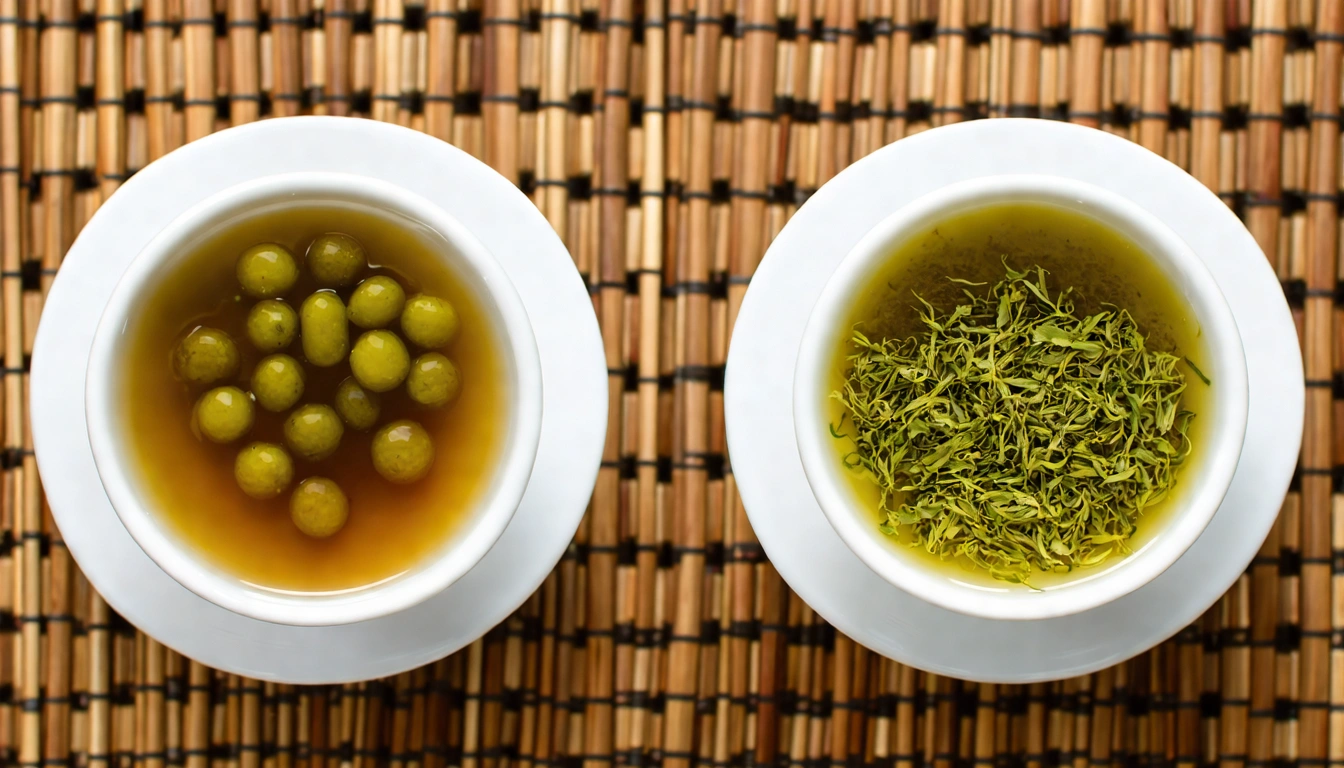
| Tea liquor color | Pale yellow to orange-red (by fermentation level) | Tender green to deep green |
| Primary aroma | Floral, honey-sweet, roasted (by variety) | Grassy, fresh, seaweed umami |
| Taste profile | Sweet, round, layered complexity | Fresh astringent, crisp, somewhat bitter |
| EGCG content | Medium (partially converted by fermentation) | Highest (no fermentation preserves the most) |
| Caffeine | 25-60mg/cup | 30-50mg/cup |
| L-Theanine | Medium-High | High |
| Major origins | Taiwan (high mountain oolong), China (Wuyi rock tea) | Japan (matcha, sencha), China (Longjing) |
The Fundamental Difference in Production
Green Tea: The Art of Kill-Green Preservation
The key to green tea production is “rapid kill-green” — immediately after harvesting, high temperature (pan-firing or steaming) halts the tea leaf’s oxidation enzyme activity, locking the leaf in its freshest state:
- Pan-firing (Chinese Longjing): High-temperature wok firing produces a subtle “wok aroma”
- Steaming (Japanese matcha, sencha): Steam kill-green preserves the most chlorophyll, creating greener tea liquor
This process maximally preserves chlorophyll (determines green color) and catechins (EGCG, the primary antioxidant), along with the fresh, astringent taste.
Oolong Tea: The Art of Semi-Fermentation
Oolong tea production has a crucial step that green tea lacks — “shaking/tossing” (yaoqing). After harvesting, tea leaves are gently agitated on bamboo trays, allowing leaf edges and surfaces to rub together, promoting localized oxidation (fermentation).
During this process:
- Tea leaf aroma molecules (terpenes, ester compounds) are produced abundantly
- Tea polyphenols partially convert to theaflavins, thearubigins, etc.
- Taste transforms from astringent to sweet; aroma shifts from grassy to floral and honey-sweet
After shaking is complete, kill-green stops the fermentation. The duration of shaking determines the fermentation level (10% to 80%), which in turn determines the final flavor profile.
Health Benefits Comparison: The Science Speaks
Catechin (EGCG) Content Comparison
This is the most frequently asked health-related question.
Green tea’s EGCG is indeed higher: With zero fermentation, catechins have no opportunity to convert. EGCG content per gram of dried tea is approximately 100-300mg — 3-5 times that of black tea, and higher than most oolong teas.
Oolong tea has its unique compounds: Semi-fermentation produces theaflavins and thearubigins, which have specific antioxidant and cardiovascular protective effects found in lower quantities in green tea. Taiwanese oolong tea’s light fermentation (about 10-30%) lets it retain high catechin levels while also producing theaflavins and thearubigins beneficial for gut health and metabolic balance. Additionally, Taiwan’s Wenshan Baozhong and high mountain oolong teas have higher EGC/EGCG ratios compared to Japanese green teas, making them more suitable as immune-regulation ingredients.
Antioxidant Comparison
| Compound | Green Tea | Oolong Tea |
|---|---|---|
| EGCG (catechins) | High | Medium (varies by fermentation level) |
| Theaflavins | Low | Medium (unique to semi-fermentation) |
| Thearubigins | Low | Medium |
| Overall antioxidant ORAC value | High | Medium-High |
Caffeine & L-Theanine
The two don’t differ much in caffeine content (both approximately 30-60mg per cup), but oolong tea’s production process converts some L-theanine into other compounds, making its content slightly lower than high-quality shade-grown green teas (like gyokuro).
L-theanine’s relaxation effect combined with caffeine’s alertness effect is what makes all teas superior to coffee — this synergistic combination exists in both types of tea. Research shows EGCG’s antioxidant capacity is equivalent to 25-100 times that of Vitamin C and Vitamin E; both green tea and oolong tea are excellent natural antioxidant sources.
Metabolism-Related Research
Oolong tea has a special advantage in metabolism research: oolong tea’s specific polyphenols (oolong tea monomeric polyphenols) showed higher fat oxidation-promoting effects than green tea with equivalent caffeine content in some studies. However, both have metabolism-boosting effects, and the difference isn’t dramatic.
Best Choice by Occasion
Morning Energy: Both Work, Green Tea Is More Invigorating
For early morning alertness: green tea’s astringent quality + caffeine combination makes you feel “alert and refreshed,” especially suitable for mornings requiring quick focus. Oolong tea’s sweetness is also comfortable in the morning, though its energizing sensation is slightly gentler than green tea’s stimulus.
Afternoon Transition: Oolong Tea Is Better Suited
When you feel a bit drowsy in the afternoon but don’t want too much caffeine: light oolong (Jin Xuan, Alishan light) with its gentle alertness plus floral relaxation is the perfect afternoon beverage.
Antioxidant Health Purpose: Green Tea Has the Highest EGCG
If your primary goal for choosing tea is maximizing EGCG intake, go with quality Japanese green tea or Chinese Longjing. But if you want “delicious tea that also has health benefits,” oolong tea’s comprehensive effects and drinking experience are superior.
Sensitivity to Bitterness: Strongly Recommend Oolong Tea
For consumers who dislike bitterness, light Taiwanese high mountain oolong (Alishan, Jin Xuan) has virtually no bitterness — the ideal choice. Most green teas have some degree of astringency, making them unsuitable for bitterness-sensitive individuals. In customer feedback at ChaYanSo, many consumers who previously only drank green tea said after trying Alishan light oolong: “I never knew tea could be this sweet without bitterness” — which is why we recommend high mountain oolong as a transition tea.
Post-Meal Digestion: Both Good, Oolong Tea Is Gentler
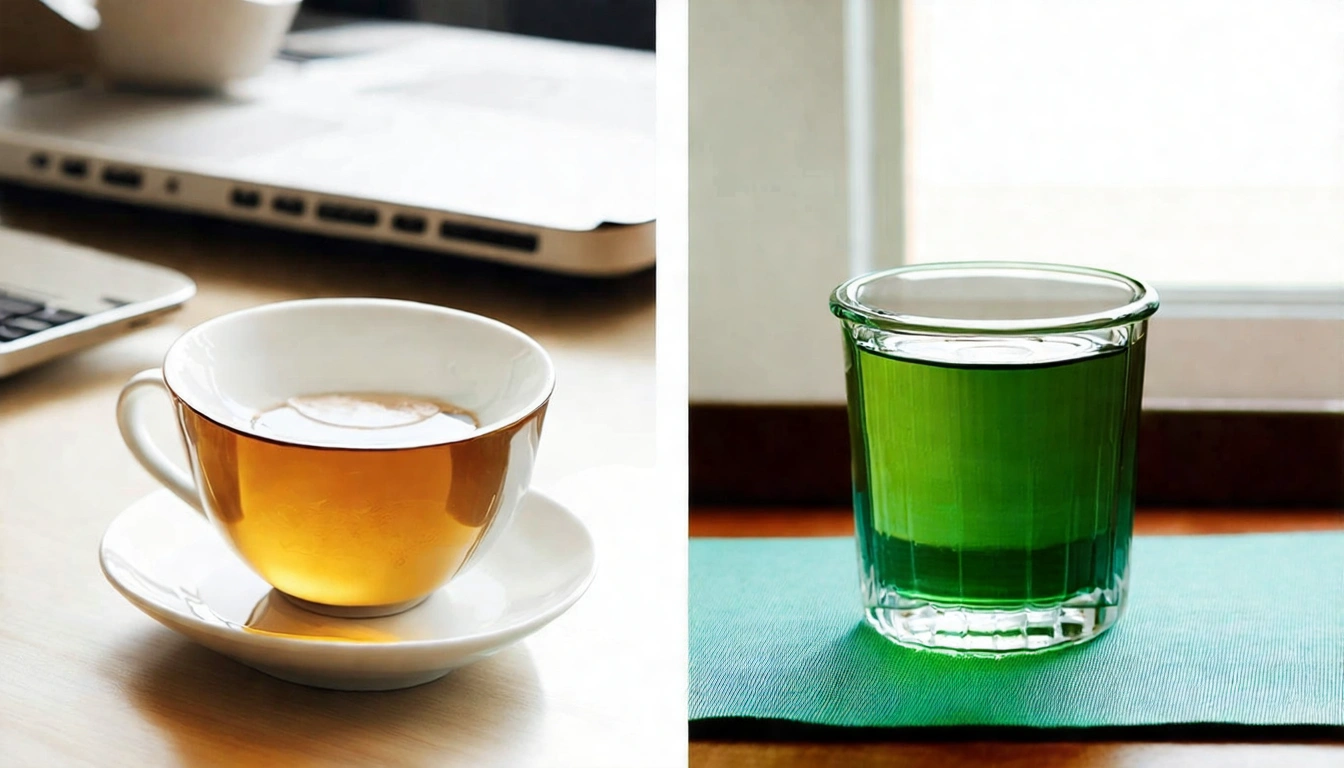
Research supports that drinking tea after meals aids digestion. Oolong tea, being semi-fermented, is less irritating to the gastric mucosa than green tea, making it a gentler post-meal choice. Our ChaYanSo team’s own daily office tea habit is light oolong in the morning for alertness, switching to Jin Xuan or Si Ji Chun in the afternoon for relaxation — having experienced firsthand the optimal pairing of both teas at different times.
Have you chosen your tea? ChaYanSo has all varieties of Taiwanese tea in one place — oolong and Taiwan specialty teas alike. Shop now
FAQ
Q: Is oolong tea the same as green tea?
No. Oolong tea is a semi-fermented tea (fermentation 10-80%), while green tea is an unfermented tea (0%). Their production processes, taste, aroma, and compound profiles have fundamental differences. Simply put: green tea “stops oxidation immediately after harvesting,” while oolong tea “allows partial oxidation before stopping” — this single difference creates two entirely different tea worlds.
Q: Which tastes better, oolong tea or green tea?
It depends on personal taste preferences. Those who enjoy fresh astringency choose green tea. Those who prefer sweet floral flavors without bitterness will find Taiwanese high mountain oolong (light Alishan, Jin Xuan) a better choice. There’s no objective “tastes better” — only “better suited to you.”
Q: Does oolong tea have more caffeine than green tea?
Generally, the two are comparable — both around 30-60mg per cup. The main factors affecting caffeine content are the tea leaf cultivar, harvesting part (buds have the highest content), and brewing method — not fermentation level. Shade-grown Japanese gyokuro has very high caffeine; Taiwanese high mountain light oolong has relatively low caffeine.
Q: For weight loss, should I choose oolong tea or green tea?
Both have supportive metabolic effects; neither is a weight-loss miracle. Research shows oolong tea’s specific polyphenols have a slight edge in promoting fat oxidation, but the difference isn’t significant. What matters more is “can you actually drink it regularly” — delicious tea is the one you’ll stick with long-term, and the health benefits of long-term drinking far outweigh the choice of tea variety.
Oolong Tea vs Green Tea: Finding Your Perfect Match by Taste and Occasion
Oolong tea and green tea aren’t competitors — they’re two completely different tea experiences. If you haven’t determined your preference yet, the simplest approach is to try each once — even within Taiwanese teas, the difference between Alishan light oolong and Wenshan Baozhong tea (light fermentation, close to green tea style) becomes immediately clear with one sip. At ChaYanSo, we’ve offered an “Oolong vs Green Tea Experience Set” letting consumers compare both teas side-by-side with the same brewing method — the most direct way to discover your taste preference.
For more complete oolong tea knowledge, see Oolong Tea Complete Guide; to learn about Taiwan tea types, see Taiwan Tea Recommendations Complete Guide.
Further Reading
- Oolong Tea Complete Guide: Types, Benefits, Recommendations & Brewing
- Taiwan Tea Recommendations Complete Guide: From Varieties to Brewing, Essential for Beginners
- Oolong Tea Health Benefits Complete Analysis: 8 Science-Backed Benefits
- Alishan Oolong Tea Guide: Origin Characteristics, Prices & Shopping Tips
- Oolong Tea Brewing Complete Tutorial: Water Temperature, Time & Infusion Count Guide
Find the Taiwanese tea that’s right for you — start at ChaYanSo, with all varieties in one place. Explore teas