
Oolong Tea Complete Guide 2026 | Fermentation, Varieties & Composition Science
Why is oolong tea called “semi-fermented”? What distinguishes Jin Xuan, Qingxin Oolong, and Four Seasons? Why do Alishan and Lishan teas taste so different? This guide uses the latest 2025-2026 industry and tea-making data to walk you through fermentation, cultivars, composition, and brewing parameters — the full picture of oolong tea.
Key Compounds in Oolong Tea
Before understanding oolong flavor and character, get to know its main active compounds:
| Compound | Content (per 240ml cup approx.) | Role in the Infusion |
|---|---|---|
| Tea polyphenols | 150-400mg (20-30% of dry weight) | Astringency, body, mouthfeel depth |
| EGCG and other catechins | 80-200mg | Green-leaf notes, astringent edge |
| Caffeine | 30-50mg | Bitter backbone, stimulating note |
| L-Theanine | 20-50mg | Umami and sweet aftertaste |
| Theaflavins | Moderate (unique to semi-fermentation) | Amber hue, flavor complexity |
| Minerals (potassium, manganese, fluoride) | Trace amounts | Mineral mouthfeel |
What makes oolong different: Semi-fermentation partially oxidizes catechins into theaflavins and thearubigins — an intermediate state that green tea lacks and black tea has already passed through. This is the chemical basis for oolong’s coexistence of floral and honey-fruit notes. Taiwan’s tea garden area covers approximately 12,000 hectares with annual production of about 14,000 metric tons, with oolong comprising the largest share (Ministry of Agriculture Tea Research and Extension Station).
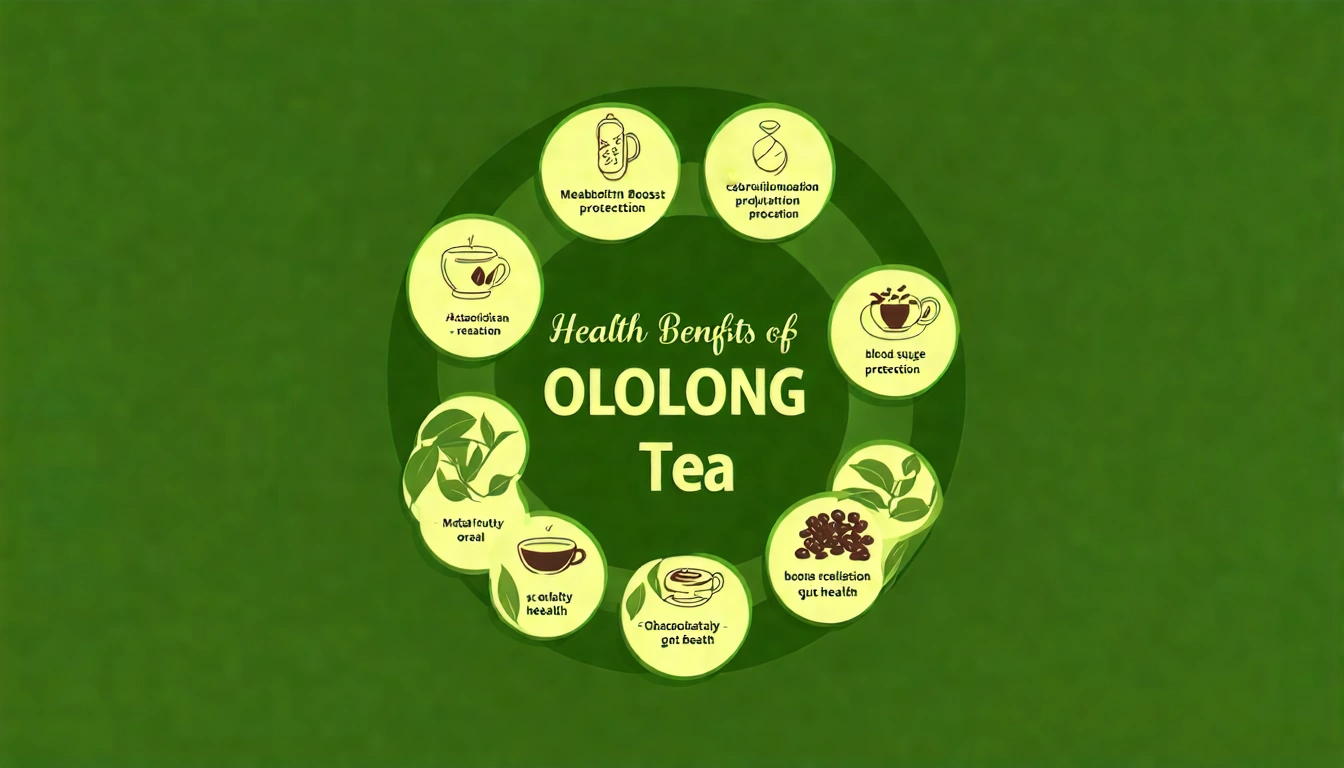
8 Aspects of Oolong: Varieties & Composition
1. Semi-Fermentation: A Flavor Spectrum from 10% to 70%
“Oolong” isn’t a single flavor — it’s every tea on the 10-70% fermentation spectrum:
- 10-20% (light fermentation): high-mountain oolong, light-style Dong Ding — young floral notes, golden liquor
- 30-40% (medium fermentation): traditional Dong Ding, Muzha Tieguanyin — ripe fruit, amber liquor
- 50-60% (medium-heavy fermentation): Oriental Beauty (Bai Hao Oolong) — honey aroma, orange-red liquor
- 60-70% (heavy fermentation): some Hakka orange-peel oolong, old-style Tieguanyin — roasted notes, deep brown liquor
The higher the fermentation, the more catechins oxidize — astringency drops and sweetness and honey-fruit notes rise.
2. Jin Xuan (TTES No. 12): The Natural Milk Aroma Cultivar
Jin Xuan was bred by Taiwan’s Tea Research and Extension Station in 1981 by crossing “Tai-Nung No. 8” with “Ying Zhi Hong Xin,” registered as “Taiwan Tea Experiment Station No. 12” (TTES No. 12), also known informally as “Jin Xuan” or “27-zai.” The dry leaves carry a natural milky aroma and light osmanthus note from the cultivar’s own volatile ester compounds — not from any additive.
- Typical fermentation: 15-30%
- Major origins: Nantou Mingjian, Chiayi Alishan, Yunlin Gukeng
- Flavor keywords: milky, osmanthus, smooth
3. Qingxin Oolong: The Backbone of Taiwan High-Mountain Tea
Qingxin Oolong (also called “soft-stem oolong”) is the most widely planted cultivar in Taiwan’s high-mountain tea regions, suited to gardens above 1,000 meters elevation.
- Typical fermentation: 20-35%
- Major origins: Alishan, Lishan, Dayuling, Shanlinxi
- Flavor keywords: clear floral, returning sweetness, deep throat finish
4. Four Seasons (Si Ji Chun): The Lowland Cultivar with 6-7 Harvests a Year
Four Seasons is an early-budding cultivar selected by Muzha-area farmers. Its strong growth and early sprouting allow 6-7 harvests per year. The liquor carries a “gardenia” floral note, is cost-effective, and is a common base for bubble-tea shops.
- Typical fermentation: 15-25%
- Major origins: Nantou Mingjian, Taoyuan Longtan
- Flavor keywords: light floral, gardenia, accessible price
5. Tieguanyin and Oriental Beauty: Two Medium-Heavy Fermentation Icons
Muzha Tieguanyin is a medium-fermentation, heavy-roast style at 30-45% fermentation, with roasted layers of ripe fruit, charcoal, and osmanthus. Oriental Beauty (Bai Hao Oolong) comes from summer leaves that were bitten by small green leafhoppers — the insect’s saliva triggers the leaves to begin their own “bug-bitten” reaction, pushing fermentation up to 50-60% and producing the signature honey aroma.
6. Taiwan’s Oolong Regions by Elevation
Elevation shapes composition — high-altitude gardens with big day-night temperature swings and strong UV accumulate more L-theanine and relatively less catechins, giving a sweeter, finer flavor:
| Region | Elevation | Flavor Character |
|---|---|---|
| Alishan | 1,000-1,600m | Pronounced floral, golden liquor |
| Shanlinxi | 1,600-1,800m | Fresh, orchid notes |
| Lishan | 1,800-2,400m | Fruity, full-bodied returning sweetness |
| Dayuling | 2,200-2,700m | Crisp, sweet, deep throat finish |
| Dong Ding (Lugu) | 600-1,200m | Roasted character, ripe fruit |
7. Caffeine Content vs. Other Beverages
Oolong tea contains approximately 30-50mg caffeine per 240ml — moderate among common drinks:
| Beverage | Caffeine (per 240ml approx.) |
|---|---|
| Americano coffee | 95-200mg |
| Black tea | 40-70mg |
| Oolong tea | 30-50mg |
| Green tea | 25-40mg |
| White tea | 15-30mg |
Daily caffeine intake for general adults is commonly advised to stay under 400mg (US FDA general guideline) — roughly 8-10 cups of oolong.
8. L-Theanine: The Chemistry Behind “Umami” in Tea
L-Theanine makes up about 1-2% of oolong’s dry weight and is the main contributor to the “sweet-savory” taste in the liquor. It creates a sensory interaction with caffeine that rounds out mouthfeel and softens bitterness. High-elevation regions accumulate more L-theanine — one reason high-mountain oolong is known for its pronounced sweet return.
How to Brew a Good Cup of Oolong
Basic Parameters: Temperature, Ratio, Time
| Tea Type | Water Temp | Ratio (pot:water) | First Steep |
|---|---|---|---|
| Light high-mountain oolong | 85-90°C | 1:20 (150ml to 7.5g) | 45-60 sec |
| Medium-fermentation Dong Ding | 90-95°C | 1:20 | 40-50 sec |
| Roasted Tieguanyin | 95°C boiling | 1:15 (150ml to 10g) | 30-40 sec |
| Oriental Beauty (Bai Hao) | 85°C | 1:25 | 60-90 sec |
Timing Suggestions (from a flavor perspective)
- Morning: light high-mountain oolong — floral volatiles release at their best
- Afternoon: roasted styles pair well with tea snacks
- Before 3 PM: caffeine-sensitive drinkers should stop earlier
Common Brewing Variables Affecting Flavor
- Water too cool: grassy, aromas muted
- Water too hot (for light-fermentation teas): tannins extract too quickly, taste turns harsh
- Steeping too long: over-extracts polyphenols, strong astringency
- Imbalanced tea-to-water ratio: too much tea causes flavor to collapse from the second steep
Find a Taiwan oolong that suits you — ChaYanSo curates high-mountain gardens from fermentation to roast. Shop now
What to Look for When Choosing Oolong Tea
Different cultivars, regions, and fermentation levels suit different palate preferences:
| Preference | Suggested Cultivar / Region | Fermentation Range |
|---|---|---|
| Light floral, refreshing | Alishan Qingxin Oolong | 15-25% |
| Milky, smooth | Jin Xuan (TTES No. 12) | 15-30% |
| Roasted, ripe fruit | Dong Ding, Muzha Tieguanyin | 30-45% |
| Honey, rich aroma | Oriental Beauty (Bai Hao) | 50-60% |
| Cold-brew sweet | Four Seasons, light high-mountain | 15-25% |
| Daily drinker | Four Seasons, Mingjian oolong | 15-25% |
| Gift-grade | Dayuling, Lishan high-mountain | 20-30% |
FAQ
Q: What is the fermentation range of each oolong variety?
Oolong as a whole sits at 10-70% fermentation. Jin Xuan and Qingxin Oolong are typically 15-35%; Four Seasons 15-25%; Muzha Tieguanyin 30-45%; Oriental Beauty (Bai Hao) 50-60%; some traditional old-style Tieguanyin and Hakka orange-peel oolong reach 60-70%. Higher fermentation means darker liquor, less floral, and more ripe-fruit and honey notes.
Q: How do I set brewing parameters for oolong tea?
Using a 150ml gaiwan: light high-mountain oolong at 85-90°C, 7.5g leaves, first steep 45-60 seconds; medium-fermentation Dong Ding at 90-95°C, 7.5g, 40-50 seconds; roasted Tieguanyin at 95°C boiling water, 10g, 30-40 seconds; Oriental Beauty at 85°C, 6g, 60-90 seconds. Add 10-15 seconds per subsequent steep.
Q: What’s the compositional difference between oolong and green tea?
Green tea is unfermented — catechins (especially EGCG) are preserved most completely, with green liquor and high freshness. Oolong is semi-fermented, so catechins partially oxidize into theaflavins and thearubigins, producing amber to orange-red liquor with floral, fruity, and honey layers. Caffeine is slightly higher in oolong than green tea (30-50mg vs 25-40mg per 240ml); L-theanine levels are similar, but oolong’s flavor complexity varies more widely with fermentation level.
Understanding Oolong — From Cultivar and Origin to Brewing, All in One Picture
Oolong’s appeal lies in the “semi-fermented” middle state — the 10-70% fermentation range, combined with Taiwan’s elevation span from lowland to 2,700-meter gardens, produces the full flavor spectrum from light floral to roasted ripe fruit. Once you understand the cultivars (Jin Xuan, Qingxin Oolong, Four Seasons, Tieguanyin, Oriental Beauty), elevations (Alishan 1,000-1,600m, Lishan 1,800-2,400m, Dayuling 2,200-2,700m), and brewing parameters (85-95°C, 1:15 to 1:25, 30-90 seconds), you’ll start to read the tea maker’s craft in every cup.
Since our founding, ChaYanSo has insisted on selecting only oolong from high-mountain gardens above 1,000 meters elevation, because high-altitude leaves carry richer L-theanine and more complete flavor layers. We verify origin, cultivar, fermentation, and roast for every batch, so every cup traces back to a documented production record.
For more oolong varieties and shopping advice, see the Oolong Tea Complete Guide; for optimal brewing methods, see the Oolong Tea Brewing Complete Tutorial.
Read oolong tea from the leaf up — ChaYanSo’s high-mountain selection, one good cup at a time. Explore ChaYanSo
Further Reading
- Oolong Tea Complete Guide: From Regions, Varieties to Shopping — Everything About Taiwan Oolong
- Oolong Tea Brewing Complete Tutorial: Water Temperature, Amount & Time Guide
- Oolong vs Green Tea: Flavor, Caffeine, Fermentation — A Complete Comparison
- Taiwan Tea Complete Guide: Six Tea Categories and Their Origins
- Alishan Oolong Tea Complete Guide: Origin, Characteristics & Shopping Tips