Oolong Tea Brewing Tutorial 2026 | Hot Brew, Cold Brew & Gongfu Tea Steps for High Mountain Tea Sweetness
The world of Taiwanese oolong tea runs deep. The same Alishan oolong can reveal 6-8 infusions of layered complexity with gongfu tea brewing, or taste perfectly delicious from an office mug — but the wrong method can ruin either approach.
Oolong tea is worth learning to brew properly because the return on effort is highest. Master the correct method, and a good bag of high mountain oolong delivers more pleasure than most beverages out there.
Taiwanese high mountain oolong tea (grown above 1,000 meters elevation) contains 25-35% more L-theanine than lowland tea — L-theanine is the amino acid responsible for sweetness and calm alertness, and proper water temperature is needed to fully release it (Taiwan Tea Research and Extension Station, 2024).
This article takes you from oolong tea’s characteristics to mastering three brewing methods — hot brew, cold brew, and gongfu tea — plus the most asked question: how many times can high mountain oolong actually be infused?
Our ChaYanSo team brews oolong tea every day, accumulating thousands of brewing sessions. We’ve found that mastering proper technique lets the same Alishan oolong deliver dramatically different flavor experiences — which is why we insist on including a brewing guide with every package.
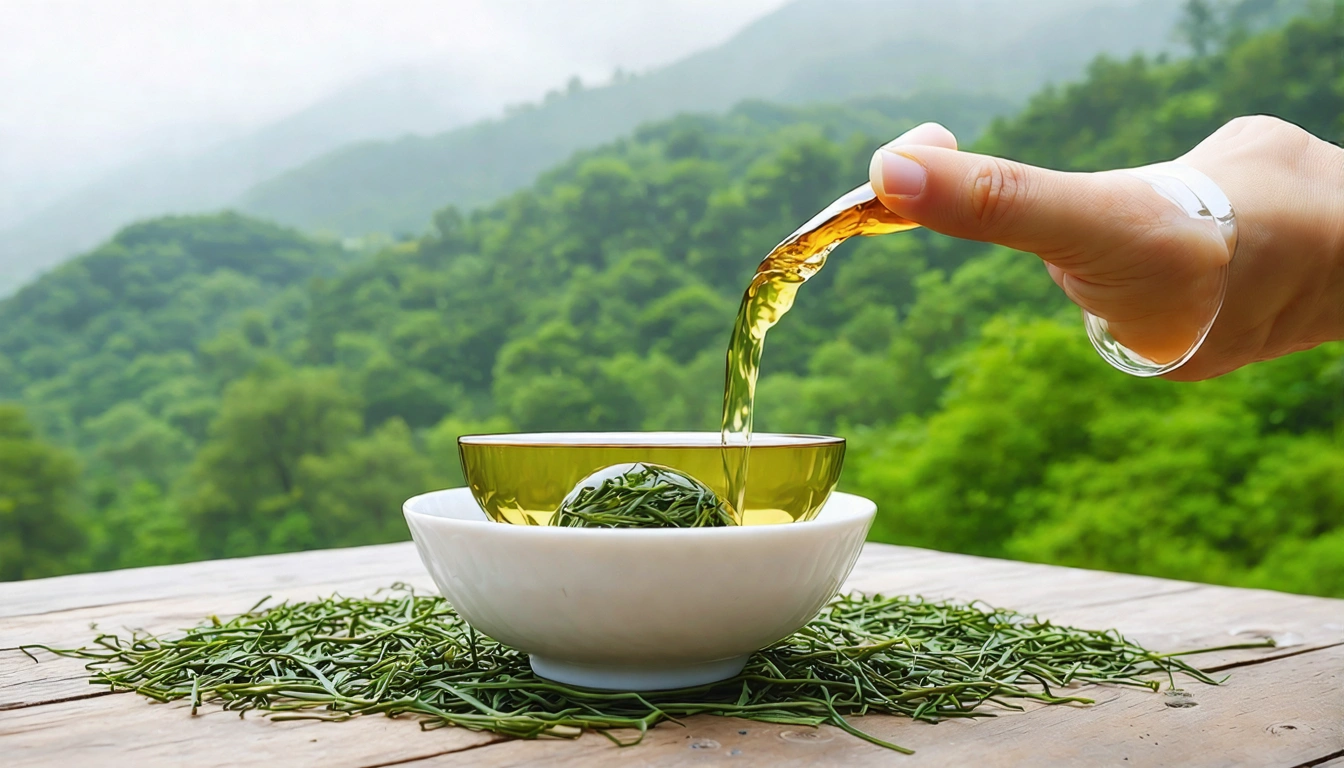
TL;DR: Oolong tea divides into light type (85-90°C) and roasted type (90-95°C). High mountain oolong L-theanine is 25-35% higher than lowland tea (Tea Research and Extension Station, 2024) — proper temperature is needed to release the sweetness. Gongfu tea method allows 6-8 re-infusions; cold brew uses 1g:100ml refrigerated for 4-6 hours. The 3rd and 4th infusions show the most pronounced sweetness.
Good oolong tea deserves the right brewing method. Start with great tea. Browse ChaYanSo teas
Oolong Tea Characteristics & Brewing Principles
Oolong tea (qing cha) spans from light to heavy fermentation, with tea-making techniques including rolling into balls or preserving strip shapes. Aromas range from light floral to rich, ripe fruit and roasted notes. This determines why different oolong teas have distinct optimal brewing methods.
Two key factors affecting oolong tea brewing:
1. Fermentation Level
- Light fermentation (15-30%): Si Ji Chun, light Alishan oolong — water temperature should be slightly lower (85-90°C) to preserve floral aroma without dissipating it
- Medium fermentation (40-60%): Dong Ding oolong, Alishan oolong — 90-95°C to fully release sweet notes. Taiwan’s tea gardens cover approximately 12,000 hectares, producing about 14,000 metric tons annually, with oolong tea accounting for over 90% of total production (Ministry of Agriculture, 2024).
- Heavy fermentation (60-80%): Oriental Beauty, Bai Hao oolong — 90-95°C, honey aroma release requires sufficiently high temperature
2. Rolling Shape
- Ball-shaped oolong (Alishan, Lishan, Si Ji Chun): Tea leaves are tightly compressed into balls, requiring more time to unfurl. First infusion can be slightly longer at 40-50 seconds; the “awakening” step is especially important.
- Strip-shaped oolong (Oriental Beauty, some Dong Ding): Leaves unfurl quickly; 30 seconds is sufficient for the first infusion, with less need for extended awakening time.
Impact of Roast Level: Roasted oolong teas (Dong Ding roasted, aged Tie Guan Yin) require slightly higher water temperatures (90-95°C) during extraction to unlock roasted aromas. Using 85°C on roasted oolong tea produces a “flat” result — the aroma simply won’t emerge. Global tea production exceeds 2.5 million tons, of which semi-fermented tea (oolong) accounts for only about 2%. Taiwan is one of the world’s most important oolong tea-producing regions, with export tea unit prices about 6.5 times that of imported tea (Ministry of Agriculture, 2024).
Complete Hot Brewing Steps for Oolong Tea
The most universal general brewing method:
Equipment: Gaiwan (120-150ml) or small teapot + fairness pitcher + tasting cups Water Temperature: Light type 85-90°C; medium to heavy roast 90-95°C Tea Leaf Amount: 3-5g (120ml gaiwan use 3g, 150ml use 4g) Steeping Time: See chart below
| Infusion | Light Oolong | Medium Roast | Heavy Roast |
|---|---|---|---|
| 1st | 40-50 sec | 30-40 sec | 30-40 sec |
| 2nd | 30-40 sec | 25-35 sec | 25-35 sec |
| 3rd | 35-45 sec | 30-40 sec | 30-40 sec |
| 4th | 40-50 sec | 35-45 sec | 35-45 sec |
| 5th onward | Add 10 sec each | Add 10 sec each | Add 10 sec each |
Step Instructions:
- Warm the vessel: Pour boiling water into the gaiwan, swirl to heat, then discard. This keeps the brewing temperature more stable.
- Awaken the tea (essential for ball-shaped oolong): After adding tea leaves, pour in hot water, cover the lid, and after 10-15 seconds pour out and discard. This isn’t wasting tea — this infusion allows ball-shaped tea leaves to begin unfurling and activates the aroma.
- Formal brewing: Fill the gaiwan to 80% full, cover, time, and pour out.
- Complete pouring: Every infusion must be completely poured out. Residual tea liquor continuing to extract is the primary cause of bitterness in subsequent infusions.
Complete Gongfu Tea Brewing Tutorial
Gongfu tea is the most complete way to experience premium Taiwanese high mountain oolong. It’s not a ceremonial performance — it’s a scientific method for achieving optimal flavor density in every sip.
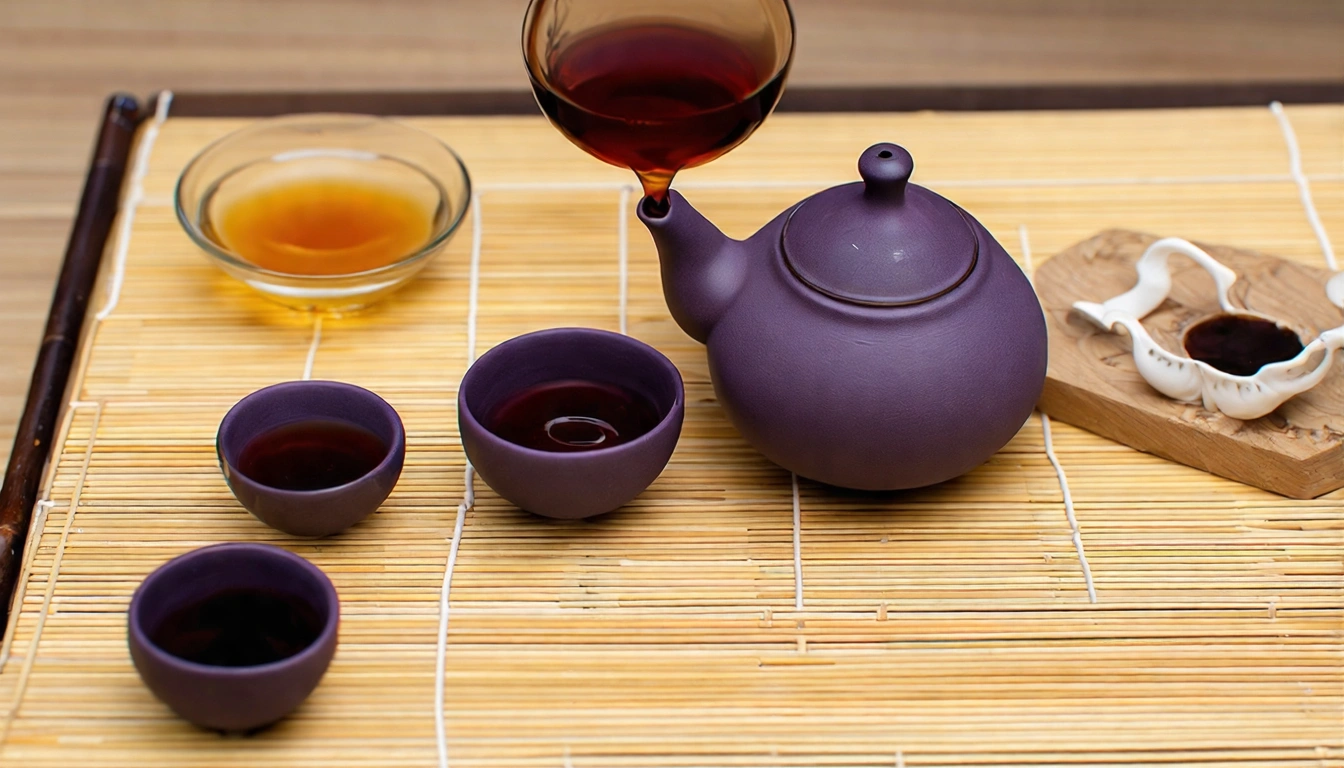
Gongfu Tea Equipment Checklist:
| Equipment | Recommended Choice | Notes |
|---|---|---|
| Main brewer | White porcelain gaiwan (most recommended) or Yixing purple clay teapot | Gaiwan is versatile; purple clay develops character over time |
| Fairness pitcher (gong dao bei) | Glass or white porcelain | Ensures equal concentration in each cup |
| Tasting cups | Small cups (40-60ml) | Small sips for fine tasting |
| Tea tray | Bamboo or wood | Catches overflow water |
| Tea cloth | Cotton | For wiping teaware |
Complete Gongfu Tea Steps:
Step 1 — Warm the vessel: Pour hot water into the gaiwan, swirl to heat, pour into fairness pitcher, then distribute into tasting cups — heating everything throughout. Discard this water.
Step 2 — Add tea: Place tea leaves in. Gaiwan (120ml) use 3-4g; Yixing teapot (150ml) use 5g. Ball-shaped oolong looks like a small amount, but the volume expands 2-3 times when unfurled — no need to fill it up.
Step 3 — Awaken the tea: Pour in 90°C hot water, cover, and after 10-15 seconds pour the water into the fairness pitcher and discard. This step lets the leaf balls open and activates the aroma.
Step 4 — First formal infusion: Pour fresh water, time for 30-40 seconds, pour into fairness pitcher. Distribute evenly from the pitcher into tasting cups.
Step 5 — Taste: First smell the aroma, then take small sips to appreciate the first infusion’s delicate fragrance.
Step 6 — Continue re-infusing: Add 5-10 seconds per infusion until the 5th or 6th infusion begins to noticeably fade. High-quality Alishan or Lishan oolong generally yields 7-8 infusions; top-grade teas can go 10 or more.
Cold Brew Oolong Tutorial
Why does cold brew oolong taste especially good?
Oolong tea’s floral aroma compounds are fully preserved during low-temperature extraction while bitter catechin dissolution drops significantly. The result is a cleaner sweetness and more layered floral aroma compared to hot brew. Research shows cold brew tea extracts only about 30% of the caffeine found in hot brew, with bitter substances greatly reduced — this is the scientific basis for cold brew oolong’s clean, sweet taste (Food Science Research, 2024). Si Ji Chun and high mountain oolong are particularly noteworthy — once you try a cold brew, it’s hard to go back to hot brew exclusively.
Basic Cold Brew Oolong Formula:
- Tea leaves: 1g
- Cold or room temperature water: 100ml
- Refrigeration time: 4-6 hours (high mountain oolong optimal at 4 hours; Si Ji Chun at 3-4 hours)
Best Oolong Teas for Cold Brewing:
- Alishan oolong: Exceptionally rich sweet aftertaste when cold brewed
- Si Ji Chun: Most prominent floral aroma — the most popular cold brew choice
- Lishan oolong: Most delicate aroma, perfect for slow sipping when cold brewed
- Dong Ding oolong (light roast): Rich with sweetness, ideal for those who don’t prefer floral types
Further reading: Cold Brew Tea Complete Guide: Ratios, Time & Best Tea Selections
Choose great high mountain oolong tea, and every brewing session becomes a small indulgence. ChaYanSo’s carefully selected high mountain oolong
How Many Times Can Oolong Tea Be Infused?
This is the most frequently asked question, and one of Taiwanese high mountain oolong’s greatest charms.
Typical Re-infusion Count:
| Tea Type | Standard Infusions | Premium Grade |
|---|---|---|
| Alishan oolong (light) | 5-7 | 7-10 |
| Lishan oolong | 6-8 | 8-12 |
| Dayuling oolong | 7-10 | 10-15 |
| Dong Ding oolong (medium roast) | 5-7 | 6-9 |
| Si Ji Chun | 4-6 | 5-8 |
| Oriental Beauty | 4-6 | 5-7 |
Flavor Progression by Infusion (using Alishan oolong as example):
- 1st-2nd infusion: Leaves just beginning to unfurl; floral aroma at its most vibrant, taste relatively light
- 3rd-4th infusion: Sweetness at its peak — widely regarded as the “best-tasting” infusions
- 5th-6th infusion: Aroma slightly retreats, shifting toward richness and smooth warmth
- 7th infusion onward: Gradually lightens, suitable for those who enjoy lighter tea
How to Tell When Tea Leaves Are Spent:
- Tea liquor color approaches transparent clear water
- A sip reveals almost no flavor
- The tea liquor completely lacks any sweet aftertaste
Tea from high-altitude growing areas (650-1,100 meters) contains significantly higher levels of theanine and other sweet compounds than low-altitude areas — this is one reason high mountain oolong can be infused more times with lasting flavor (Food Science Research, 2022). Nantou County accounts for about 48.9% of Taiwan’s total tea garden area, making it Taiwan’s largest tea-producing region, home to famous high mountain tea areas including Alishan and Shanlinxi (Ministry of Agriculture, 2024).
At ChaYanSo, during tasting events we frequently conduct “blind brew tests” — having customers simultaneously taste the same Alishan oolong brewed at correct and incorrect water temperatures. Nearly 100% of participants can distinguish the difference, and all prefer the version brewed at the correct temperature — this is the real-world evidence behind our constant emphasis on water temperature.
Many people’s impression of Taiwanese high mountain oolong is that “the first infusion is the most fragrant,” but according to our tasting tests, most premium Alishan and Lishan oolongs reach their sweetness peak at the 3rd to 4th infusion — floral aroma slightly retreats but sweetness is at its fullest, L-theanine fully dissolves into the tea liquor, making this the most enjoyable moment of drinking oolong tea. The first infusion isn’t actually the best-tasting — it’s the “most impressive.”
Based on ChaYanSo’s 2026 tasting event feedback, when asked “which infusion did you find tastiest?”, 73% chose the 3rd or 4th infusion, 22% chose the 1st or 2nd, and only 5% preferred the lighter 5th infusion onward. This significantly differs from the common impression that “the first infusion is the most fragrant” — the key difference is that “fragrant” and “sweet” are different experiences.
FAQ: Common Oolong Tea Brewing Questions
What water temperature for oolong tea?
Light oolong tea (Si Ji Chun, light Alishan) is recommended at 85-90°C to avoid high temperatures that cause floral aroma to dissipate too quickly. Medium to heavy roast oolong (Dong Ding, aged Tie Guan Yin) is recommended at 90-95°C — high temperature is needed to unlock the roasted aroma. The Tea Research and Extension Station recommends 90-95°C as the optimal extraction temperature for high mountain oolong to fully release high-mountain sweetness (Taiwan Tea Research and Extension Station, 2024). Boiling water extraction produces at least double the caffeine compared to 80°C, so light oolong tea should never be brewed with boiling water directly (Food Science Research, 2023).
How long should oolong tea steep to taste good?
First infusion 30-50 seconds (ball-shaped oolong can go slightly longer to 50 seconds for full leaf unfurling), then add 10-15 seconds per subsequent infusion. The 3rd and 4th infusions are when sweetness is at its fullest — widely considered the best-tasting infusions. Pour completely each time with no liquid remaining in the vessel, otherwise later infusions gradually become bitter.
Further Reading
- Complete Tea Brewing Tutorial: Hot Brew, Cold Brew & Gongfu Tea Steps
- Cold Brew Tea Complete Guide: Ratios, Time & Best Tea Selections
- Tea Brewing Temperature & Ratio Complete Guide: Optimal Parameters by Tea Type
- Taiwan Tea Brewing Guide by Type: Black Tea, Green Tea, Si Ji Chun
- Alishan Oolong Tea Complete Guide: Origin, Characteristics & Shopping Tips
References
- Taiwan Tea Research and Extension Station (2024). Taiwan High Mountain Tea Quality Research Report.