How to Brew Oolong Tea? 2026 Complete Guide | Water Temperature, Time & Tea-to-Water Ratio for Maximum Aroma
Good tea leaves brewed the wrong way can be a complete waste. A cup of Alishan high mountain oolong steeped at boiling 100°C for 5 minutes versus one brewed at 88°C for 1.5 minutes — the two cups taste worlds apart: the former bitter and astringent, the latter sweet with floral fragrance. Oolong tea brewing isn’t as complicated as you might think, but getting a few key numbers right unlocks all the aroma.
TL;DR
Three key numbers for oolong tea brewing: Water temperature 85-92°C (light oolong), tea-to-water ratio 1:50 (1g tea to 50ml water), first infusion 1-1.5 minutes. Water that’s too hot (above 95°C) damages aroma molecules; steeping too long (over 3 minutes) causes excessive release of bitter compounds. Premium high mountain oolong can be infused 6-8 times, with different aroma layers each time.
Basic Principles of Oolong Tea Brewing
Water Quality: The Invisible Factor Affecting Tea Taste
Water quality is a factor many overlook, yet it has a huge impact.
Best choice: Bottled mineral water or filtered water (RO water or activated carbon filter) Acceptable: Boiled and cooled tap water (letting chlorine evaporate) Avoid: Direct tap water (chlorine affects aroma), overly hard mineral water (excessive minerals mask tea fragrance)
Taiwan’s Tea and Beverage Crops Research Station research indicates that brewing water quality affects catechin content and aroma-flavor expression in tea liquor. Water with pH below 7 and low total hardness produces the best color, aroma, and taste when brewing Baozhong tea and high mountain tea.
Taiwan’s tap water quality is generally decent — simple filtration yields great tea. If you’ve always felt your home-brewed tea doesn’t match the tea house experience, try switching to mineral water. The difference is immediate and dramatic.
How Teaware Affects the Experience
Different teaware has a certain impact on taste:
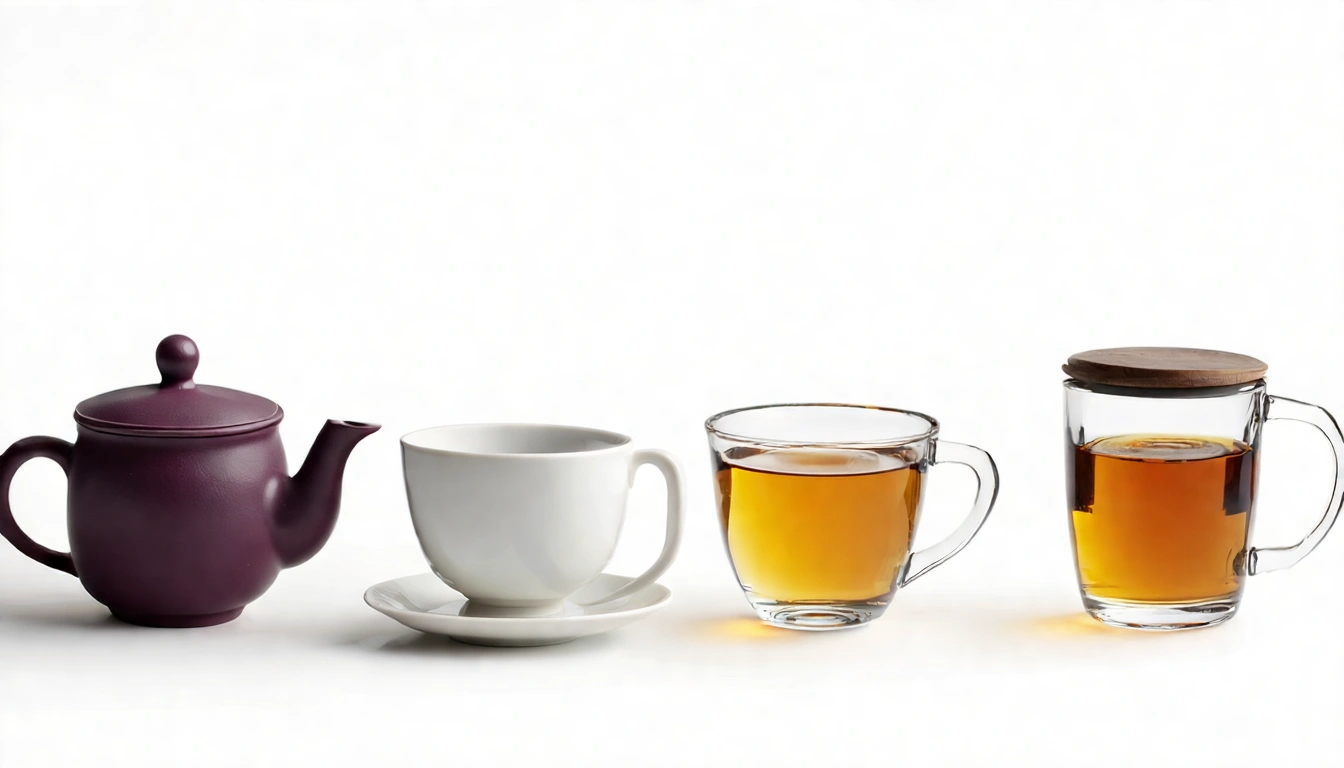
| Teaware | Advantages | Disadvantages | Best Suited Oolong |
|---|---|---|---|
| Purple clay (Yixing) teapot | Absorbs tea aroma, enhances richness | Higher price, maintenance needed | Roasted oolong (Dong Ding) |
| Gaiwan (lidded cup) | Fully reveals tea’s true flavor, easy to clean | Hot to handle, requires technique | Light oolong (Alishan) |
| Glass cup | Shows tea liquor color beautifully | Poor heat retention | Light oolong, cold brew |
| Mug (with lid) | Convenient for daily use | Hard to control steeping time | All types, quick brew and drink |
For most people, a lidded mug or gaiwan is the most practical oolong tea vessel — it steeps well, allows time control, and is perfectly everyday.
Hot Brewing Oolong Tea: Step by Step Complete Tutorial
Equipment Preparation
- Teapot or gaiwan (recommended capacity 150-200ml)
- Fairness pitcher (for distributing tea)
- Tea cups (1-4, depending on number of people)
- Timer (phone works fine)
- Food thermometer (recommended for beginners)
Standard Hot Brewing Steps
Step 1: Heat water to the correct temperature
Light oolong (Alishan, Jin Xuan, Si Ji Chun): 85-90°C Shanlinxi/Lishan high mountain oolong: 88-92°C Roasted oolong (Dong Ding): 90-95°C
The Tea Research and Extension Station conducted brewing experiments at 80°C, 90°C, and 100°C, showing that caffeine, catechins, and free amino acids all increase with water temperature. High mountain tea and Dong Ding oolong scored best with boiling water in sensory evaluations, but light Baozhong tea and Oriental Beauty performed better at 80-90°C.
Without a thermometer: after water boils, pour a small amount of room-temperature water into a cup, then add boiling water at a ratio of about 1:4 — the water temperature will be approximately 85-88°C. Our ChaYanSo team uses this method regularly at the office, and real-world testing shows the difference from thermometer readings is no more than 3°C — very practical.
Step 2: Warm the vessel
Pour hot water into the teapot/gaiwan, swirl, then pour out. This raises the vessel temperature — a cold vessel prevents tea aroma from fully releasing. This step is often skipped, but makes a noticeable difference.
Step 3: Add tea leaves
Tea-to-water ratio: 1g tea to 50ml water
For example: 150ml gaiwan = 3g tea; 200ml = 4g.
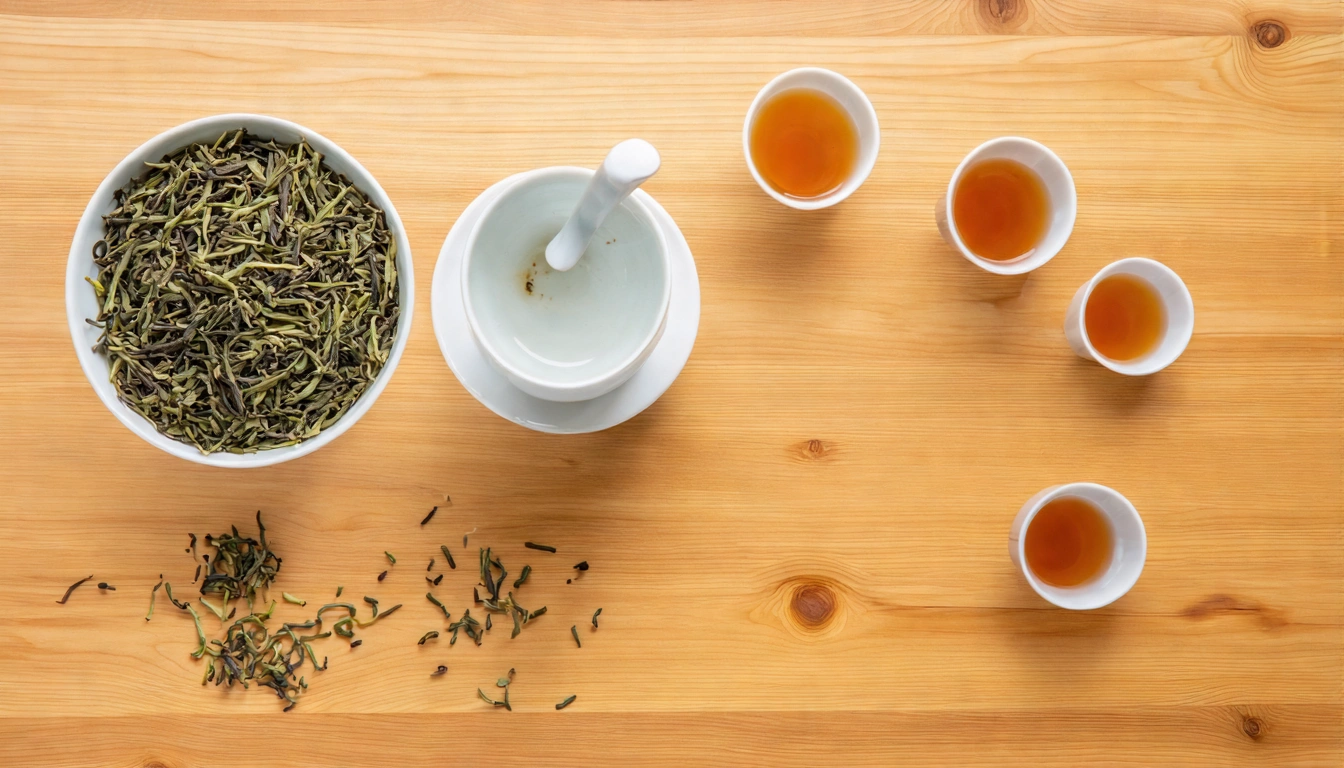
Taiwanese high mountain oolong is mostly ball-shaped tightly rolled tea. Visually, 3g is about one heaping small spoonful (tea scoop).
Step 4: Smell the dry tea aroma (advanced technique)
After adding tea, close the lid, gently shake, then open the lid and smell the dry tea’s aroma. This step lets you anticipate the tea’s aromatic profile, and is also an opportunity to detect fraudulent teas with added fragrances (natural tea aroma is subtle and lasting; artificial fragrance is intense and chemical-smelling).
Step 5: Pour water, first infusion
Gently pour hot water along the vessel wall, avoiding direct impact on the tea leaves (high pouring increases bitterness).
First infusion: Cover and rest for 1-1.5 minutes
Step 6: Pour out the tea
Quickly pour from the teapot spout into the fairness pitcher, ensuring the tea leaves don’t continue steeping. The fairness pitcher ensures consistent concentration in each cup poured.
Step 7: Taste and appreciate the aroma
First infusion: Palest tea liquor, most prominent floral aroma Second infusion: Deeper color, increased sweetness and richness Third infusion: Optimal balance — floral aroma + sweetness + lingering aftertaste coexist Fourth infusion onward: Floral aroma fades, transitioning to rounder sweet notes
At our ChaYanSo shop during tasting sessions, what surprises customers most is the third infusion — many assume the third steep should be flavorless, yet it turns out to be the best-tasting cup.
| Infusion | Suggested Time | Flavor Profile |
|---|---|---|
| 1st infusion | 1-1.5 min | Light floral, delicate tea liquor |
| 2nd infusion | 1.5-2 min | Sweetness rises, floral still present |
| 3rd infusion | 2-2.5 min | Optimal balance, floral and sweet coexist |
| 4th infusion | 2.5-3 min | Sweet notes dominate, floral fades |
| 5th infusion+ | 3-4 min | Round sweetness, enduring body |
Premium Alishan or Shanlinxi high mountain oolong can be infused 6-8 times. After the sixth infusion, extend each steep by 1-2 minutes. Taiwan’s tea garden area is approximately 12,000 hectares with annual production of about 14,000 metric tons, with oolong tea comprising the largest share — Nantou accounts for 48.9% and Chiayi for 14.1% (Ministry of Agriculture statistics).
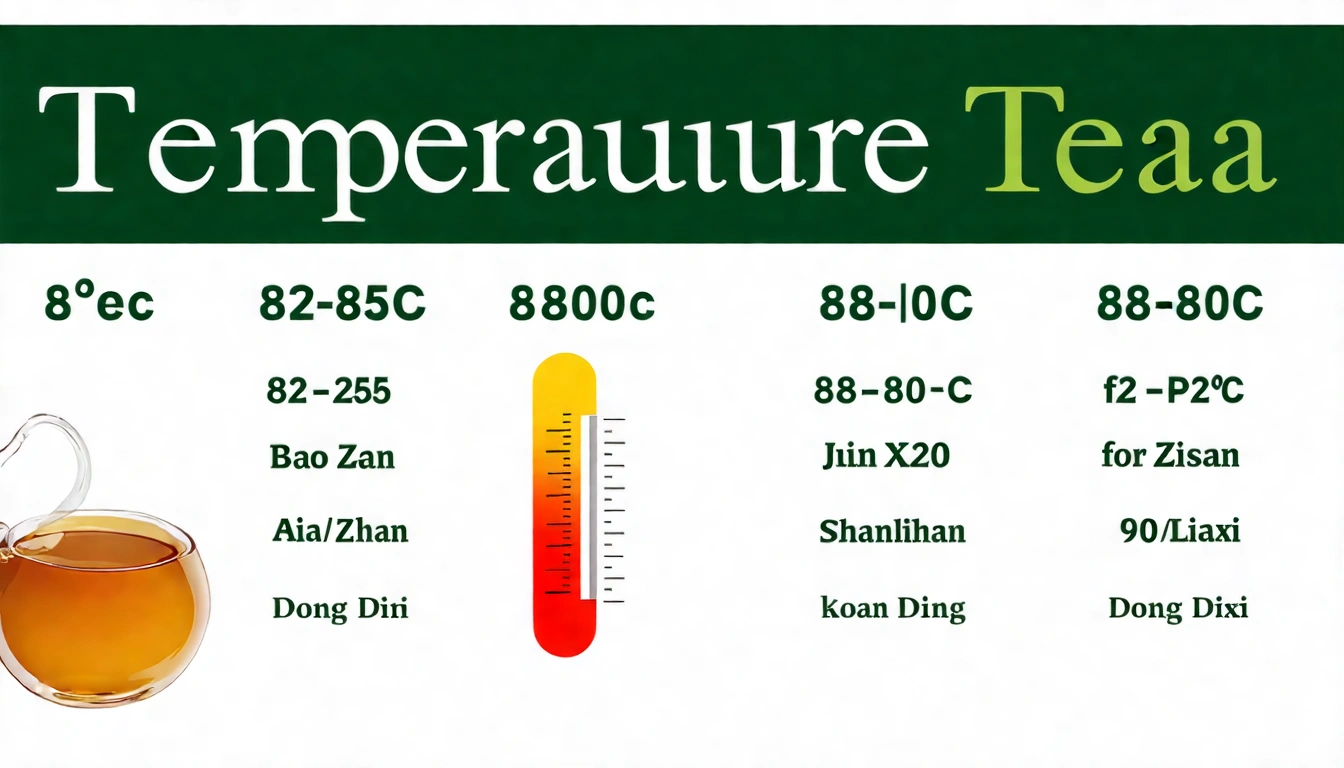
Water Temperature Reference Chart by Tea Type
Different types of oolong tea have different optimal water temperatures:
| Tea Type | Optimal Temperature | Reason |
|---|---|---|
| Baozhong tea (light fermentation) | 82-85°C | Lightest fermentation; high heat damages floral aroma |
| Jin Xuan oolong | 85-88°C | Best temperature to preserve natural milky aroma |
| Alishan light oolong | 88-90°C | Balances floral aroma and sweetness release |
| Shanlinxi/Lishan high mountain oolong | 88-92°C | High altitude tea needs slightly higher temps |
| Dong Ding oolong (light roast) | 90-92°C | Roasted tea needs higher temps to awaken roasted notes |
| Oriental Beauty tea | 85-90°C | Heavy fermentation but honey aroma needs gentle extraction |
| Gui Fei oolong | 85-90°C | Honey-floral-fruit aroma suits medium-temp extraction |
Cold Brew Oolong Tea Tutorial
Cold brew oolong tea isn’t just a “summer thing” — it’s a method that reveals a completely different side of the tea’s aroma. Low-temperature extraction keeps floral and fruity aromas pure, with virtually no bitterness. Research shows that low-temperature extraction preserves more L-theanine while reducing the release of bitter compounds (tannins, caffeine), resulting in a sweeter, cleaner taste (Taiwan food science research).
At ChaYanSo, every summer we recommend customers try cold brew high mountain oolong — place 5g of Alishan light oolong in a 500ml cold water bottle, refrigerate overnight, and bring it to work the next morning. Many customers never go back once they try it, saying the cold brew’s floral aroma is purer and more lasting than hot brew. It’s also our best-selling brewing method recommendation in summer.
Choosing Oolong Teas Suitable for Cold Brewing
Most suitable for cold brew: Light oolong (Alishan light, Jin Xuan, Si Ji Chun), Gui Fei oolong Also suitable: Oriental Beauty tea Less suitable: Heavy-roast oolong (roasted notes don’t extract well at low temperatures)
Standard Cold Brew Steps
- Tea-to-water ratio: 1g tea to 100-120ml cold water (double the water compared to hot brew)
- Water temperature: Cold water (room temperature) or ice water (5°C) both work
- Container: Glass pitcher or bottle (being able to see the tea liquor color is ideal)
- Steeping time:
- Room temperature cold brew: 3-4 hours
- Refrigerated cold brew: 6-8 hours (most recommended)
- Overnight cold brew (8-10 hours): Most aromatic and sweet
- Remove tea leaves: After brewing, remove the leaves to avoid over-extraction
- Storage: Refrigerated for 1-2 days; recommend finishing within 24 hours
Cold Brew vs. Hot Brew Flavor Differences
| Characteristic | Hot Brew | Cold Brew |
|---|---|---|
| Aroma | Pronounced hot aroma, rich layers | Pure cold aroma, floral-fruity especially prominent |
| Taste | Sweet and rich | Clean and refreshing, virtually no bitterness |
| Caffeine release | Higher (hot water extracts more) | Lower (about 30-40% reduction) |
| L-theanine | Normal | More preserved (protected by low temperature) |
| Best for | Tea ceremony ritual, winter | Daily hydration, summer, when avoiding caffeine |
Great brewing methods need great tea leaves to match — ChaYanSo’s carefully selected high mountain oolong makes every infusion worthwhile. Browse teas
Can You Brew Good Oolong Tea in a Mug?
Yes, and many people do it daily. Tips for mug-brewing oolong tea:
- Use a mug with a lid: Covering the lid improves the steeping effect and keeps aromas from escaping
- Quick brew, quick drink: Finish drinking soon after brewing to avoid tea leaves continuing to steep in cooling water (increasing bitterness)
- Adjust the tea-to-water ratio: Mugs are larger (usually 300-400ml), so increase tea leaf quantity accordingly (6-8g)
- First infusion can be slightly longer: Mugs lose heat faster, so you can extend the first infusion to 2-2.5 minutes
FAQ
Q: How long should you steep oolong tea?
First infusion 1-1.5 minutes, second and third infusions 1.5-2.5 minutes, after the fourth infusion add 30 seconds each time. The golden rule: don’t exceed 3 minutes (leads to bitterness), especially for light oolong. Beyond 3 minutes, bitter polyphenols and caffeine are released in large amounts.
Q: How many times can you infuse oolong tea?
Premium Taiwanese high mountain oolong (Alishan, Shanlinxi, Lishan) can be infused 6-8 times, with different aroma layers each time. Standard quality oolong yields about 3-5 infusions. Signs that the tea is spent: the liquor color becomes noticeably pale and the taste is flat with no aroma — time for fresh tea.
Q: Can you brew good oolong in a mug?
Yes, but use a mug with a lid (for heat retention and aroma preservation), and remove the tea leaves (or tea bag) promptly after brewing to avoid over-steeping. Using a larger lidded mug for daily Taiwanese oolong at work is perfectly fine.
Oolong Tea Brewing Summary: Master Temperature, Ratio, and Time to Make Every Infusion Worth It
Brewing tea isn’t rocket science, but getting a few key numbers right lets the same tea leaves reveal completely different flavors. Master the water temperature (85-92°C), tea-to-water ratio (1:50), and time (first infusion 1-1.5 minutes), and you’ll maximize the aroma of every box of good tea. Taiwan tea’s export unit price is about 6.5 times that of imported tea (Ministry of Agriculture), reflecting clear quality advantages worth showcasing through proper brewing.
For more oolong tea knowledge, see Oolong Tea Complete Guide; to learn about Alishan oolong tea characteristics, see Alishan Oolong Tea Complete Guide; for oolong tea health benefits, see 8 Health Benefits of Oolong Tea.
Great brewing methods + great Taiwanese tea — making every day a little better. ChaYanSo’s carefully selected high mountain oolong awaits your experience. Explore ChaYanSo
Further Reading
- Oolong Tea Complete Guide: From Regions, Varieties to Shopping — Everything About Taiwan Oolong
- 8 Health Benefits of Oolong Tea: Science-Backed Benefits of Drinking Oolong
- Alishan Oolong Tea Complete Guide: Origin, Characteristics & Shopping Tips
- Cold Brew Tea Complete Guide: Summer Cold Brew Tips & Recommended Teas
- Taiwan High Mountain Tea Complete Guide: Lishan, Alishan, Shanlinxi Full Comparison