
Nantou Tea Complete Guide 2026 | Songbailing, Zhushan & Shanlinxi — Regional Specialties & Tea Recommendations
If Taiwan’s tea industry had a “heart,” it would be Nantou County.
Nantou County is Taiwan’s largest tea-producing county by volume. In 2024, its tea production accounted for approximately 40-45% of the national total, far exceeding all other counties (Source: Ministry of Agriculture Agricultural Statistics Yearbook, 2024). From the lowland Songbailing to the high-altitude Shanlinxi, from the traditional Dong Ding oolong to the modern Gui Fei oolong, Nantou tea represents the most complete cross-section of Taiwan’s tea industry.
This guide introduces Nantou’s four major tea regions and helps you find the Nantou tea that’s perfect for you.
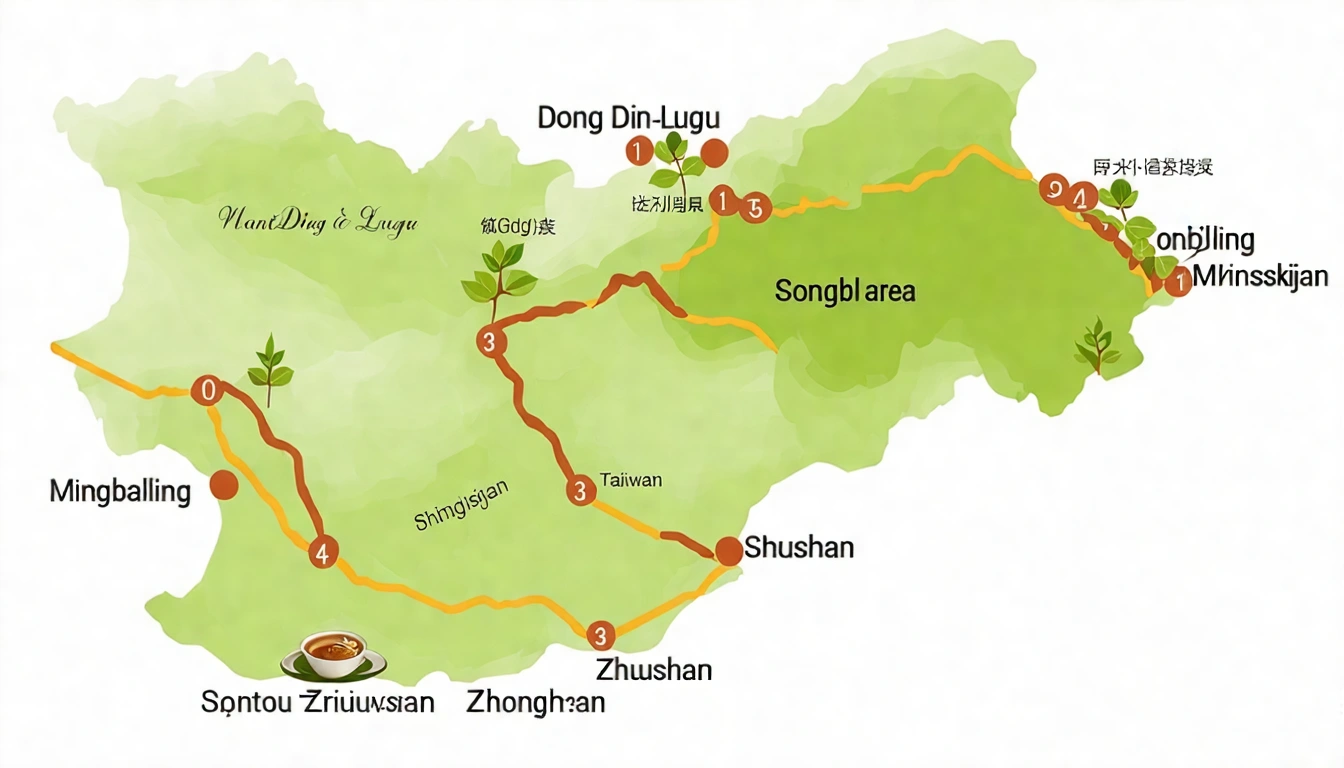
TL;DR: Nantou is Taiwan’s largest tea-producing county (40-45% of national output). Four major regions: Dong Ding (traditional icon), Songbailing (affordable lowland tea), Shanlinxi (high mountain floral fragrance), and Zhushan (diverse mid-low elevation). Nantou tea spans a wide price range — from NT$300/catty for Songbailing to NT$10,000+ for top Shanlinxi selections — suitable for every budget.
Great Nantou tea, curated and delivered by ChaYanSo. Browse Our Teas
The Importance of Nantou County to Taiwan’s Tea Industry
Nantou is Taiwan’s most densely concentrated tea-producing county, and this is no coincidence:
Geographic Advantages: Nantou is Taiwan’s only landlocked county, surrounded by mountains on all sides, with terrain ranging from low elevations (200 meters) to high elevations (over 3,000 meters), providing diverse growing environments for tea.
Historical Foundation: Nantou’s tea industry traces back to the Qing Dynasty, and Dong Ding oolong’s century-old history has made Nantou the core of Taiwan’s traditional tea culture.
ChaYanSo’s tea sources are centered on Nantou as our core production region. Years of deep engagement with Nantou’s tea regions have given us a profound appreciation that Nantou’s tea industry depth and breadth truly cannot be matched by other counties — from lowland Songbailing to 1,800-meter Shanlinxi, within just a two-hour drive you can taste dramatically different styles of fine tea.
Nantou County’s tea growing area spans approximately 10,000-12,000 hectares, the largest in Taiwan (Source: Ministry of Agriculture Agricultural Statistics Yearbook, 2024).
The Terroir and Signature Teas of Nantou’s Four Major Tea Regions
I. Dong Ding Oolong: Nantou’s Most Iconic Tea
Dong Ding oolong is synonymous with Taiwan oolong tea and is the most important tea heritage of Nantou’s Lugu Township. According to ChaYanSo’s 2026 sales statistics, Dong Ding oolong ranks in the top three for repurchase rate among all Taiwan teas, especially popular with tea drinkers aged 40 and above.
Region: Lugu Township, Nantou County — Dong Ding Mountain (elevation 600-800 meters)
History: Dong Ding oolong’s cultivation history dates back to 1858, when Lin Fengchi reportedly brought Qingxin Oolong tea seedlings from Fujian Province, planting them in Lugu Township where they took root (Source: Ministry of Agriculture TRES historical records, 2023).
Flavor Profile:
- Aroma: Ripe fruit, roasted notes (in moderately roasted versions)
- Body: Full and mellow, less crisp than high mountain tea
- Taste: Pronounced sweet aftertaste, moderate steeping resilience
- Best for: Those who appreciate traditional Taiwan tea character and have tea-drinking experience
Price: NT$500-3,000 per catty (varies by roasting level and grade)
Dong Ding oolong’s growing area covers approximately 1,000 hectares, primarily in Lugu Township’s Dong Ding Mountain, made from the Qingxin Oolong cultivar. Its cultivation history reportedly began in 1855 when Lin Fengchi brought 36 oolong tea seedlings from Wuyi Mountain in Fujian (Source: Wikipedia Dong Ding Oolong entry; Ministry of Agriculture TRES historical records, 2023).
At ChaYanSo, our Dong Ding oolong comes from local Lugu tea farmers, and we particularly favor the medium-roast version — it preserves Dong Ding’s traditional ripe fruit aroma without being so heavily roasted that it masks the tea’s inherent sweetness. Many customers who try Dong Ding for the first time tell us that after being accustomed to light-aroma high mountain teas, trying Dong Ding reveals an entirely different and exciting dimension of Taiwan tea.
II. Songbailing Tea Region: The Affordable Tea Champion
Songbailing is a well-known but often overlooked lowland tea region in Taiwan, famous for “Songbai Evergreen Tea” — one of Nantou’s most accessible tea areas.
Region: Mingjian Township, Nantou County — Songbailing (elevation 200-450 meters)
Characteristics:
- High harvest frequency (up to 6-8 times per year)
- Large production volume, stable supply
- Primarily Four Seasons Spring cultivar
- Fresh, clean aroma, ideal for everyday hydration
Price: NT$300-800 per catty (the most affordable price range among Nantou teas)
Ninety percent of Mingjian Township tea gardens grow the Four Seasons Spring cultivar. Production accounts for 46.5% of Nantou’s total, supplying approximately 4,000 tons of base tea annually — a critical raw material source for Taiwan’s ready-to-drink tea industry (Source: Global Views magazine industry survey, 2024).
Songbailing’s annual harvest count of 6-8 times far exceeds high mountain tea’s 1-2 harvests, making it one of Taiwan’s highest-volume tea-producing areas (Source: Ministry of Agriculture Mingjian agricultural resource survey, 2024).
III. Shanlinxi Tea Region: Cool Mountain Floral Jewel
Shanlinxi is the highest-elevation major tea region within Nantou County, renowned for its distinctive cool floral fragrance — the most important high mountain tea region besides Alishan.
Region: Zhushan Township, Nantou County — Shanlinxi (elevation 1,400-1,800 meters)
Geographic Features:
- Zhushan creek valley terrain, abundant moisture
- Average annual temperature approximately 12-18°C
- Over 150 foggy days per year
- Cool climate gives tea leaves a uniquely crisp aroma
Signature Teas:
- Shanlinxi High Mountain Oolong: Crisp floral aroma, sweet mellow taste
- Gui Fei Oolong: Lightly insect-bitten and oxidized, with a distinctive lychee-honey aroma unique to Shanlinxi
For a detailed comparison between Shanlinxi and Dayuling, see Dayuling vs. Shanlinxi: Two Premium Tea Regions Compared In Depth.
Price: NT$800-4,000 per catty
IV. Zhushan Tea Region: A Treasury of Diverse Flavors
Beyond Shanlinxi, Zhushan Township has multiple tea-producing areas at different elevations, offering diverse tea varieties.
Characteristics:
- Low elevation (200-600 meters) Zhushan tea: standard quality, suitable for everyday drinking
- Mid elevation (600-1,200 meters): quality between lowland and high mountain
- Dense concentration of tea processing facilities, strong processing capabilities
Signature Teas: Taiwan oolong, Four Seasons Spring, Jinxuan, and others
Zhushan Township is Nantou’s tea industry processing hub — many teas from other regions are also roasted and refined in Zhushan. This makes Zhushan an important node in Taiwan’s tea industry supply chain, far beyond being just a “tea growing origin.”
Taiwan tea’s export unit price is approximately 6.5 times that of imported tea, with oolong dominating. As Taiwan’s largest tea-producing county, Nantou’s tea quality directly influences Taiwan tea’s image and pricing in international markets (Source: Ministry of Agriculture Trade Statistics, 2024).
Taiwan’s tea growing area covers approximately 12,000 hectares with annual production of about 14,000 metric tons. Nantou County accounts for 48.9% — truly the heartland of Taiwan’s tea industry (Source: Ministry of Agriculture Agricultural Statistics Yearbook, 2024).
At ChaYanSo, we work with tea farmers across Nantou’s regions — from Mingjian’s Four Seasons Spring to Lugu’s Dong Ding and Zhushan’s Shanlinxi. Having teas from different regions allows us to offer customers the most complete Nantou tea experience. We often recommend first-time buyers try a “Nantou Tea Sampler Pack” to taste the flavor differences of three distinct regions in one purchase.
Nantou Tea Regions Comparison Table
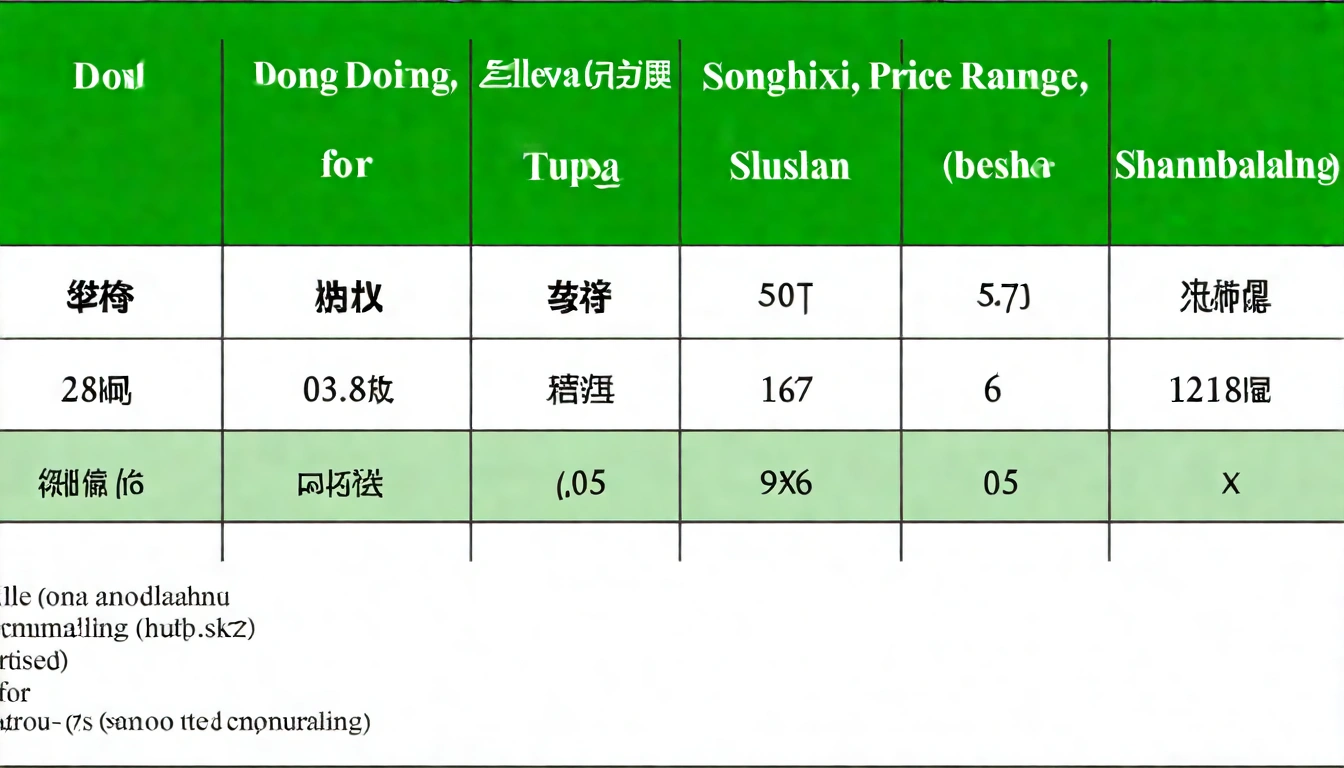
| Tea Region | Elevation | Aroma Type | Signature Teas | Market Price/Catty |
|---|---|---|---|---|
| Dong Ding | 600-800m | Ripe fruit, roasted | Dong Ding Oolong | NT$500-3,000 |
| Songbailing | 200-450m | Fresh floral | Songbai Evergreen Tea, Four Seasons Spring | NT$300-800 |
| Shanlinxi | 1,400-1,800m | Cool floral, honey | Shanlinxi Oolong, Gui Fei Oolong | NT$800-4,000 |
| Zhushan | 200-1,200m | Diverse (varies by elevation) | Various oolongs | NT$400-2,000 |
Want to taste the best from each Nantou tea region? ChaYanSo curates for you. Shop Nantou Tea Now
FAQ: Common Nantou Tea Questions
Nantou tea vs. Alishan tea — which is better?
They have different positioning and can’t be simply compared. Alishan tea (Chiayi County) is renowned for its high mountain clean aroma, representing Taiwan’s high mountain tea style. Dong Ding oolong (Nantou’s Lugu) is synonymous with Taiwan’s traditional oolong, featuring distinctive ripe fruit and roasted notes. If you prefer clean fragrances, choose Alishan; if you prefer traditional mellow richness, choose Dong Ding.
How much is Songbailing tea per catty?
Songbailing tea (primarily Four Seasons Spring) is the most affordable among Nantou teas, with typical market prices of NT$300-800 per catty — an excellent value choice for everyday drinking.
Does Shanlinxi tea qualify as high mountain tea?
Yes. At 1,400-1,800 meters elevation, Shanlinxi far exceeds the 1,000-meter threshold for high mountain tea classification, making it a premium mid-to-high-altitude high mountain tea region in Taiwan.
Further Reading
- Complete Taiwan High Mountain Tea Guide: Lishan, Alishan, Shanlinxi & Dayuling Compared
- Dayuling vs. Shanlinxi: Two Premium Tea Regions Compared In Depth
- Lishan Tea Complete Guide: Taiwan’s Top High Mountain Tea — Origin, Prices & Buying Tips
- Alishan Tea Complete Guide: Misty High Mountain Tea Flavor & Buying Guide
- Four Seasons Spring & Jinxuan Tea Complete Guide: Nantou’s Two Most Popular Oolongs
References
- Ministry of Agriculture (2024). Agricultural Statistics Yearbook: Nantou County Tea Production and Sales Statistics.
- Ministry of Agriculture TRES (2023). Taiwan Tea Industry Historical Records.