Lishan Tea Recommendations 2026 | Complete Guide to Taiwan’s Top High Mountain Tea — Origin, Prices & Buying Tips
In the landscape of Taiwan high mountain tea, Lishan is the name most sought after by connoisseurs.
Not because it’s the most expensive (Dayuling holds that crown), nor because it’s the most well-known (Alishan has broader recognition), but because it strikes the perfect balance between top-tier quality and reasonable scarcity. Lishan tea represents what Taiwan high mountain tea should be: refined floral and fruity aromas, crystal-clear jade-like liquor, enduring sweet aftertaste, and a steeping resilience that makes you not want to stop even after ten infusions.
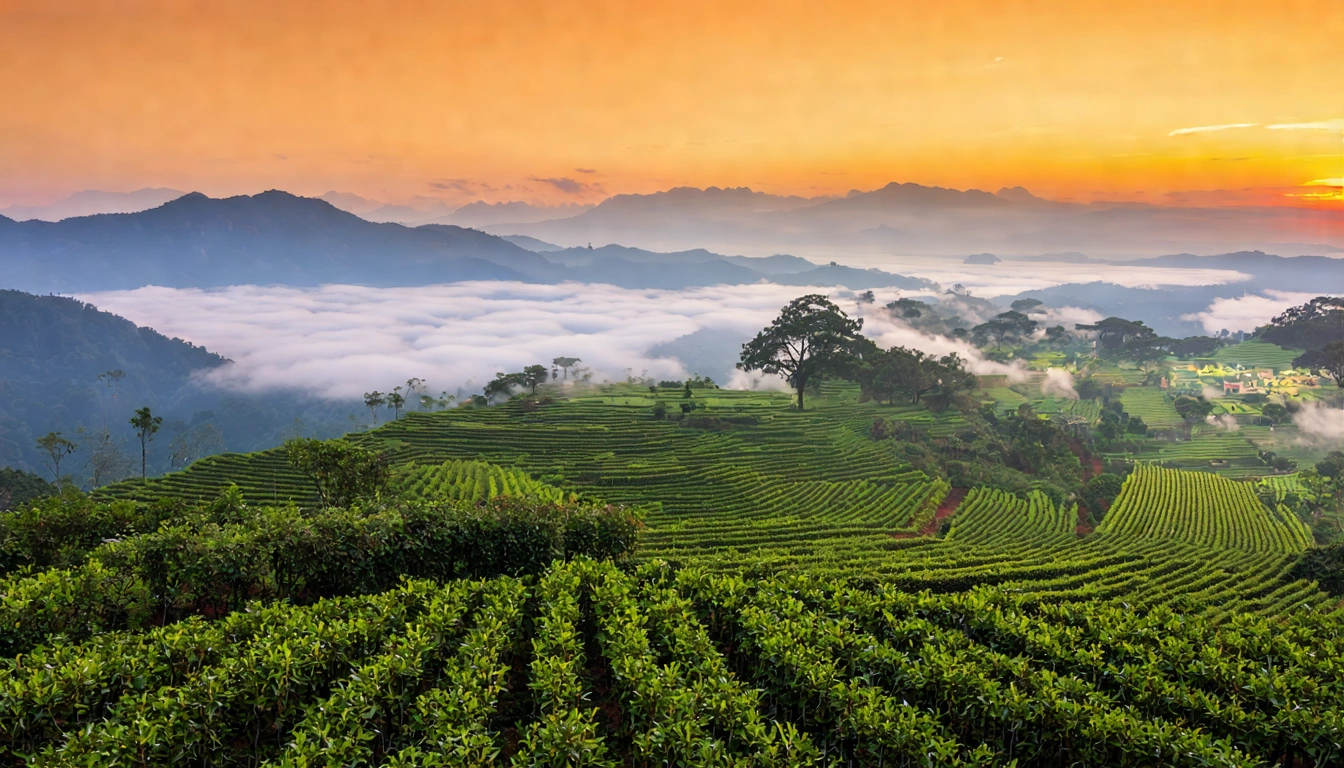
The Lishan tea region is located in Heping District, Taichung City, on the western side of Taiwan’s Central Mountain Range, at elevations of 1,600 to 2,600 meters, with average annual temperatures of 10-18°C and approximately 2,000-2,500mm of annual rainfall. It is one of Taiwan’s most important premium high mountain tea origins (Source: Ministry of Agriculture TRES, 2024).
TL;DR: Lishan tea comes from Heping District, Taichung, at elevations of 1,600-2,600 meters — a quintessential Taiwan premium high mountain tea. Average annual temperature 10-18°C with frequent cloud cover; tea grows slowly (Ministry of Agriculture, 2024). Market price NT$2,000-8,000 per catty, with select grades higher. Key characteristics: refined floral and fruity aromas (peach, pear), enduring sweet aftertaste, 8-10 infusions of steeping resilience.
Taste premium Lishan high mountain tea, curated by ChaYanSo. Browse Our Teas
The Geographic Advantages of the Lishan Tea Region
Lishan tea’s quality has its foundation in innate geographic conditions:
The Significance of 2,000 Meters Elevation
Taiwan’s lowland average annual temperature is approximately 25-28°C, while Lishan at 2,000 meters averages only 10-15°C. This temperature difference slows tea growth to 1/3 to 1/4 of lowland speed, requiring each batch of tea much longer to accumulate aromatic compounds.
The Protection of Cloud Cover
The Lishan area has abundant cloud cover year-round, with strong sunlight scattered by clouds instead of hitting the leaves directly. This allows tea to grow under gentler light conditions, reducing chlorophyll decomposition from excessive sun exposure, keeping young leaves lush and green, and significantly increasing amino acid content.
The Lishan tea region has approximately 180-220 foggy days per year, far exceeding the 60-80 foggy days of lowland tea regions (Source: Central Weather Administration climate statistics, 2024).
The Magic of Day-Night Temperature Variation
High mountain areas have large day-night temperature differences (10-15°C). During the day, tea leaves photosynthesize and accumulate organic compounds; at night, cool temperatures convert these compounds into aroma precursors. This mechanism gives Lishan tea its particularly rich and complex aromatics.
The Heping District Lishan tea growing area covers approximately 457 hectares with annual production of about 276 metric tons. Compared to Taiwan’s total annual tea production of approximately 14,000 metric tons, Lishan tea accounts for only about 2% — yet its quality and pricing are both at the premium level (Source: Taichung City Government Bureau of Agriculture; Ministry of Agriculture Statistics, 2024).
In the Lishan tea region, lowland spring teas can typically be harvested in early April, but due to high elevation and low temperatures, Lishan spring tea requires approximately 40-60 additional days before harvest. This slow growth is precisely what guarantees quality (Source: TRES Lishan Tea Region Survey, 2024).
The Flavor Profile of Lishan Tea
The Lishan tea drinking experience can be summarized in three words: “clean, refined, sweet”:
| Tasting Dimension | Lishan Tea Characteristics |
|---|---|
| Lid aroma | Elegant floral notes, subtle and requiring quiet attention |
| First sip | Sweet and rounded, virtually no bitterness |
| Mid-palate | Floral and fruity notes emerge (peach, pear, orchid) |
| Aftertaste | Enduring sweet finish, lasting several minutes |
| Liquor color | Pale golden, crystal clear |
| Steeping resilience | 8-10 infusions (typical high mountain tea: 5-7) |
I once visited a Lishan tea farmer and brewed the same batch of leaves for 14 consecutive infusions — the aroma was still clearly discernible at the 10th. This steeping resilience makes Lishan tea’s value-per-cup far better than its initial purchase price suggests.
Lishan Tea Price Guide 2026
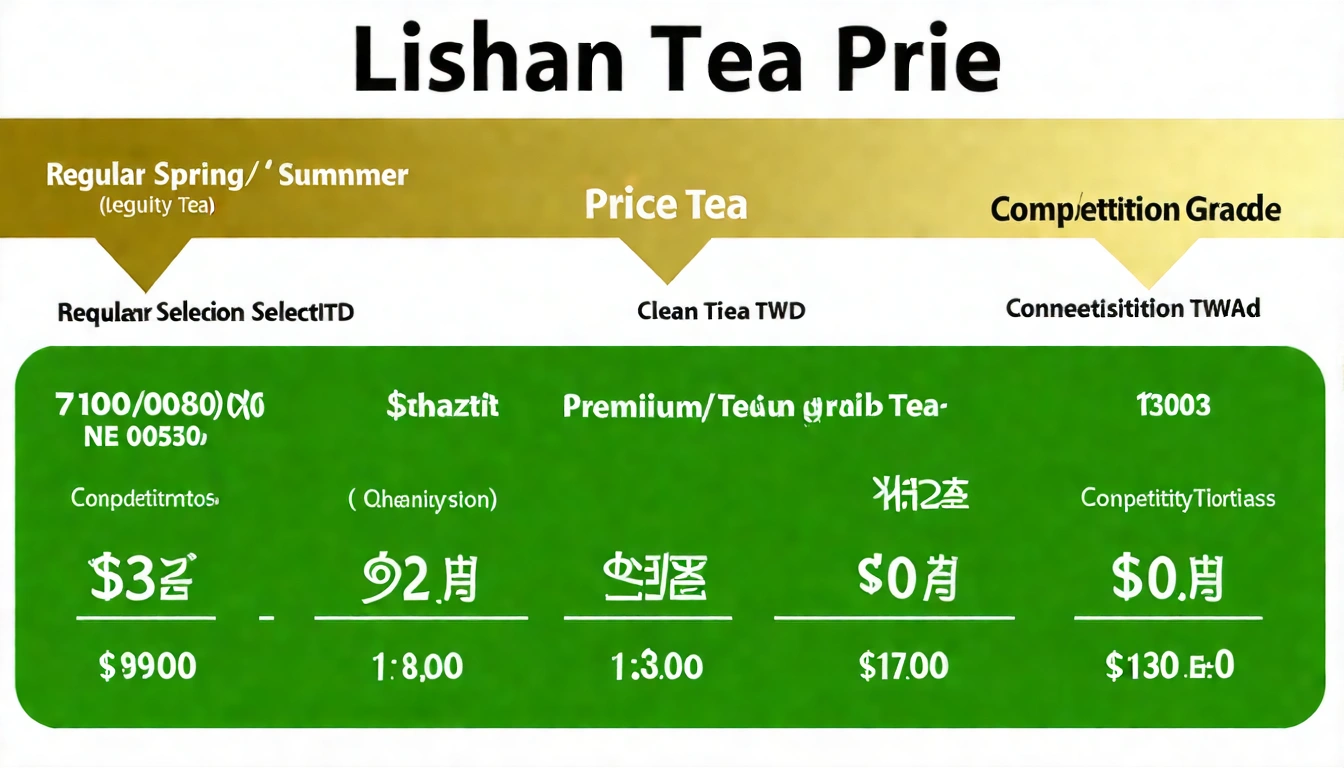
| Grade | Characteristics | Market Price (per catty) | Suitable For |
|---|---|---|---|
| Standard Spring/Summer Tea | Stable aroma, reliable quality | NT$2,000-4,000 | Personal enjoyment, general gifting |
| Select Spring Tea | Complex floral aroma, pronounced sweet finish | NT$4,000-8,000 | Important gifting, tea collection |
| Competition Tea/Special Edition | Exceptional aroma, limited quantity | NT$8,000-20,000 | Collecting, VIP gifts |
Why Is Lishan Tea So Expensive?
The premium pricing reflects genuine costs:
- High mountain tea picking labor costs (remote mountain roads, scarce workers)
- Limited harvests per year due to cold climate (spring and autumn only, twice at most)
- Challenging processing conditions (humidity control at high altitude is difficult)
- Genuinely top-tier quality (consumers willingly pay the premium)
Taiwan tea’s export unit price is approximately 6.5 times that of imported tea, with high mountain tea as the primary driver of export price averages. As a representative top-tier origin, Lishan tea’s pricing reflects Taiwan tea’s quality advantage in the international market (Source: Ministry of Agriculture Trade Statistics, 2024).
At ChaYanSo, every trip up the mountain to source Lishan tea gives us a deep appreciation of the real costs — the drive from Taichung city center to the Lishan tea region alone takes four to five hours of mountain roads, and tea picking workers need to be booked weeks in advance. These practical realities give us a deeper understanding of Lishan tea’s fair pricing.
Be skeptical of suspiciously low “Lishan tea”:
If you see “Lishan tea” priced at NT$800-1,500 per catty, it’s very likely not pure Lishan tea. It may be: (1) blended with lower-elevation tea, (2) autumn/winter harvest (lower quality), (3) a cultivar other than Qingxin Oolong, or (4) from a different region borrowing the Lishan name.
How to Buy Authentic Lishan Tea
Step 1: Verify Origin Labeling
Authentic Lishan tea should show:
- Origin: Heping District, Taichung City (Lishan area or nearby mountain regions)
- Elevation: 1,600-2,600 meters (specific figure)
- Harvest season: Spring tea, Autumn tea
- Processing facility or tea farmer contact information
Step 2: Initial Aroma Assessment
Open the package — authentic Lishan tea’s dry leaves have a subtle, elegant fragrance that is not intense and requires leaning in to detect. If a strong aroma hits you the moment you open the bag, it may be artificially enhanced or lower-quality tea.
Taiwan’s tea growing area covers approximately 12,000 hectares with annual production of about 14,000 metric tons. Nantou accounts for 48.9% and Chiayi for 14.1%. Although the Lishan tea region is in Taichung City’s Heping District, its limited production and top-tier quality make it one of the most representative origins in Taiwan’s high mountain tea market (Source: Ministry of Agriculture Agricultural Statistics Yearbook, 2024).
At ChaYanSo, every batch of Lishan tea includes tea farmer information and origin elevation labeling, so customers can clearly understand the tea’s provenance. We believe that for premium-priced top-tier high mountain tea, transparent traceability is the most basic respect for consumers.
Step 3: Visual Inspection
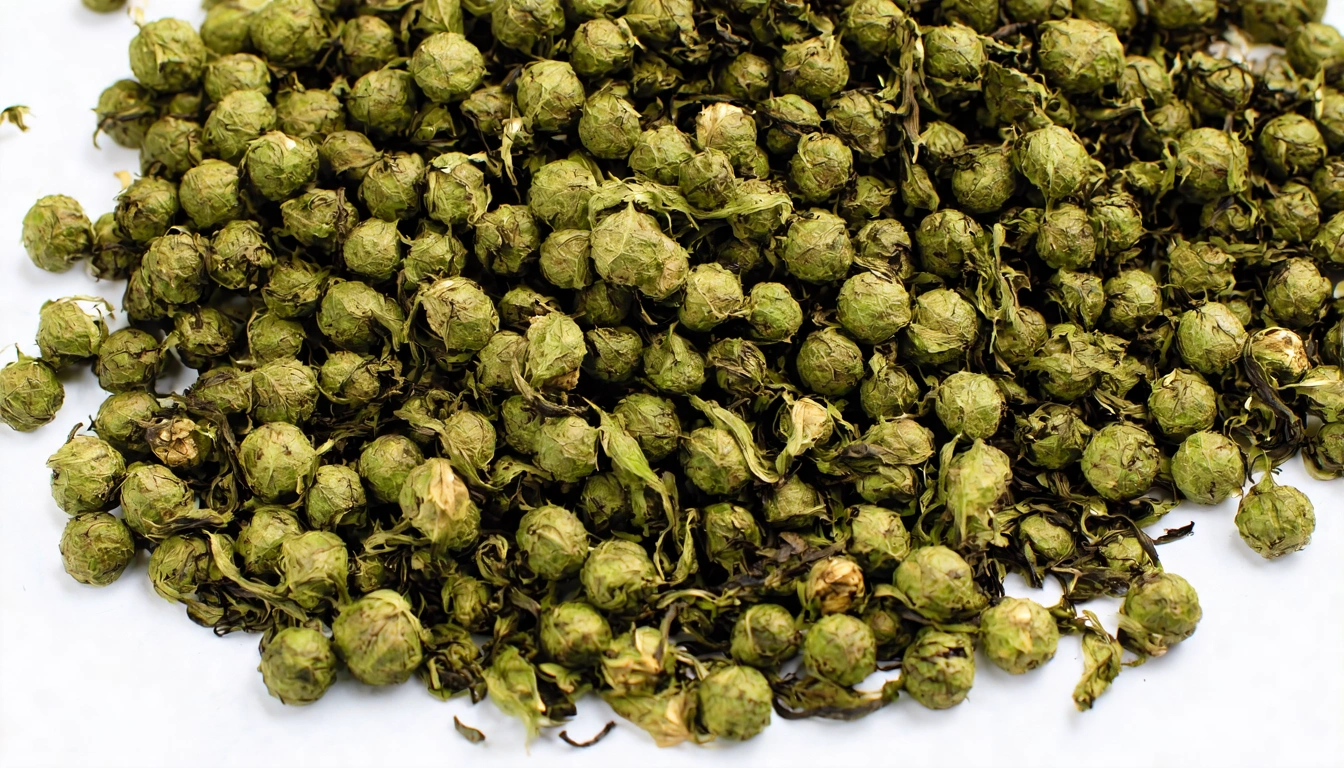
- Good Lishan tea: uniform leaves, jade green with golden edges, tightly rolled ball shape, virtually no broken bits
- Blended tea: uneven leaf sizes, broken bits present, inconsistent color
Step 4: Fair Pricing
Cross-reference with the price table above — Lishan tea under NT$2,000 per catty warrants asking the seller for more details before confirming.
Premium Lishan high mountain tea, delivered to your door by ChaYanSo. ChaYanSo’s Lishan teas come with traceable quality and tea farmer information. Shop Lishan Tea Now
FAQ: Common Lishan Tea Questions
How much does Lishan tea cost per catty?
Depending on quality grade, standard Lishan spring/summer tea runs about NT$2,000-4,000 per catty; select spring tea about NT$4,000-8,000; competition tea or special limited editions can exceed NT$10,000. If you see “Lishan tea” under NT$1,500 per catty, carefully verify the origin.
Lishan tea vs. Dayuling tea — which is better?
Each has its strengths. Dayuling has higher elevation (2,200-2,700 meters), rarer and more refined aromas, smaller production, and higher prices. Lishan’s quality is equally top-tier but relatively more accessible, offering better value compared to Dayuling. For the ultimate rarity, choose Dayuling; for daily enjoyment of premium high mountain tea, Lishan is the more sensible choice.
Further Reading
- Complete Taiwan High Mountain Tea Guide: Lishan, Alishan, Shanlinxi & Dayuling Compared
- Dayuling vs. Shanlinxi: Two Premium Tea Regions Compared In Depth
- Alishan Tea Complete Guide: Taiwan’s Most Accessible Premium High Mountain Tea
- Nantou Tea Complete Guide: Songbailing, Zhushan & Shanlinxi Regional Specialties
- Complete Taiwan Tea Gift Box Guide: How to Choose a Truly Premium Tea Gift
References
- Ministry of Agriculture TRES (2024). Lishan Tea Region Survey Report.
- Central Weather Administration (2024). Lishan Area Climate Statistics.