
Why Does Jinxuan Tea Have a Milky Flavor? 2026 Scientific Explanation | Natural vs Artificial, How to Identify Real Jinxuan Tea
Jinxuan tea’s milky aroma is one of the most misunderstood things in Taiwan’s tea world.
Many people drinking Jinxuan for the first time ask: “Is there milk in this?” The follow-up question is usually: “Is it artificially flavored?” Both are perfectly reasonable — how could a tea leaf naturally carry a milky scent?
The answer is: it can, and there’s rigorous science behind it. The TTES #12 cultivar carries specific aroma precursor compounds in its genetic code. Under the right growing and processing conditions, these precursors transform into compounds that resemble the smell of milk. This isn’t magic — it’s the convergence of breeding science and tea processing craftsmanship.
At ChaYanSo, the most common first question we receive from customers is “Is Jinxuan tea’s milky aroma natural?” — virtually everyone asks when encountering Jinxuan for the first time. We’re always happy to explain: yes, completely natural, and this is in fact a point of pride for Taiwan’s tea breeding science.
According to the Tea Research and Extension Station’s 2022 aroma component analysis, the TTES #12 cultivar has significantly higher levels of lactone compounds than other Taiwan oolong cultivars — this is the key to its milky aroma formation (Source: TRES, 2022).
TL;DR: Jinxuan tea’s milky aroma comes from gamma-butyrolactone and other lactone compounds unique to the TTES #12 cultivar — not artificial additives. Lactone content is significantly higher than in other oolong cultivars (TRES, 2022). Natural milky aroma is subtle and delicate, most noticeable in the first infusion, diminishing slightly as it cools. Artificial fragrance is intensely pungent the moment you open the package and leaves an unnatural lingering sweetness.
Taste natural milky Jinxuan tea, authentically curated by ChaYanSo. Browse Our Teas
The Science Behind Jinxuan Tea’s Milky Aroma
The Genetic Code of TTES #12
The breeding story of Jinxuan tea is fascinating in itself. TTES #12 was developed under the leadership of Mr. Wu Zhen-duo at the Taiwan Provincial Tea Research Station. Using Ying Zhi Hong Xin as the father plant and Tai Nong #8 as the mother plant, it went through years of selective breeding before being officially named “Jinxuan” in 1981 — the name was taken from Director Wu’s grandmother’s name.
According to the Ministry of Agriculture’s TRES cultivar data, TTES #12 is a mid-season cultivar with a spreading tree form, elliptical leaves, high bud density, and yields 20% to 50% higher than Qingxin Oolong. It can be harvested up to 7 times per year and has strong environmental adaptability, making it Taiwan’s second most-planted tea cultivar (Source: TRES Cultivar Introduction, 2024).
During the selection process, researchers noticed that certain progeny plants carried a distinctive sweet, creamy fragrance. The line with the most stable aroma was ultimately selected — this is today’s TTES #12 (Jinxuan tea).
The Chemistry of the Milky Aroma
TRES analysis shows that Jinxuan tea’s milky aroma is primarily composed of the following compounds (Source: TRES Cultivar Aroma Characteristics Study, 2022):
Key Components:
-
Gamma-butyrolactone
- The core compound producing the creamy, buttery sweetness
- Also found naturally in butter and coconut milk
- Present in particularly high levels in TTES #12
-
Delta-octalactone
- Carries buttery, coconut-like characteristics
- Enhances the depth of the milky aroma
-
Linalool
- Lily of the valley floral note
- Gives the milky aroma a floral dimension, preventing it from being one-dimensionally creamy
-
Phenylethanol
- Rose aroma component
- Adds an elegant floral finish to the milky scent
How do these compounds form in tea leaves?
Aroma precursors (glycosides) in tea leaves are enzymatically broken down during withering, oxidation, and kill-green stages of processing, releasing volatile aromatic compounds. TTES #12’s genetics enable it to accumulate more lactone-type precursors, which are converted in large quantities into milky aroma compounds during processing.
Why doesn’t every “Jinxuan tea” have a milky aroma?
This is a very practical market question:
| Factor | Explanation |
|---|---|
| Harvest season | Spring tea has the fullest milky aroma (slow growth allows more aroma accumulation) |
| Elevation | Above 500 meters is better (day-night temperature differences promote aroma accumulation) |
| Origin | Main production areas are Nantou and Chiayi, but grown across all tea regions |
| Withering method | Proper sun withering helps activate milky aroma precursors |
| Processing technique | High-temperature kill-green or excessive oxidation destroys lactone compounds |
| Cultivar purity | Blending with other cultivars dilutes the milky aroma character |
Natural Jinxuan vs. Artificially Flavored: An Identification Guide
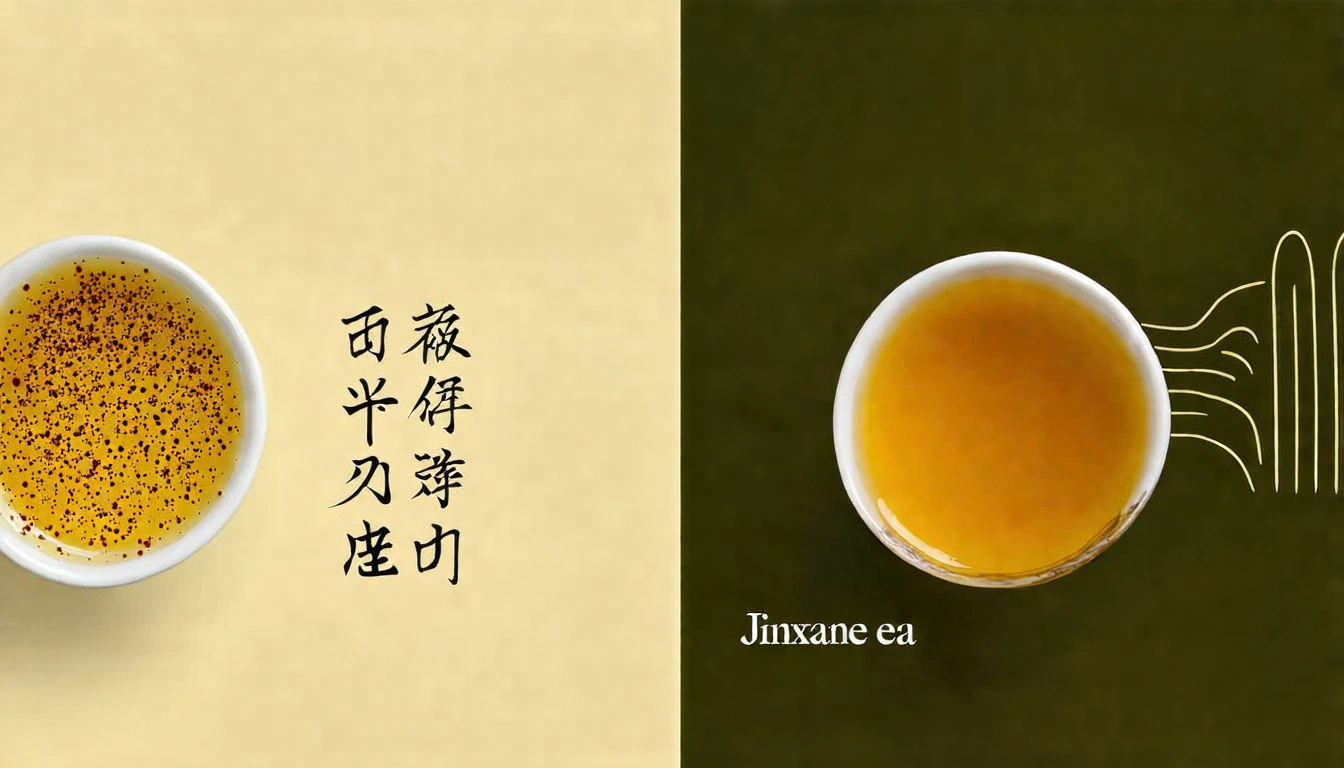
The market does contain cheap teas with added milky fragrance that impersonate Jinxuan tea. Here are practical methods to tell them apart:
Method 1: Smell the Dry Leaves
Natural milky aroma:
- Subtle, delicate — you need to lean in close to clearly detect it
- Carries floral undertones
- Has the clean, fresh scent of the tea leaf itself
Artificial fragrance:
- Hits you with an intense sweet smell the moment you open the bag
- Carries an artificial sweetness, resembling perfume or cake flavoring
- Sometimes has a slightly “chemical” pungent quality
At ChaYanSo, we once conducted an internal test comparing natural Jinxuan side-by-side with several low-priced “milky oolong” products. The difference was stark. Natural Jinxuan requires bringing your nose close to detect its subtle milky undertone, while artificially flavored tea was pungently sweet from a meter away. We recommend that first-time buyers always smell the dry tea before deciding.
Method 2: Taste the First Infusion
Natural milky aroma:
- Smooth on the palate; the milky note emerges at the back of the throat
- Aroma fades naturally without leaving artificial residue
- The second infusion may have an even more concentrated aroma
Artificial fragrance:
- Strong sweetness from the first sip
- An unnatural lingering sweetness stays in the mouth after drinking (fragrance residue)
- Often lacks the natural sweet aftertaste (hui gan) of real tea
Method 3: Check the Origin and Labeling
Authentic Jinxuan tea should show:
- Cultivar: TTES #12 (Jinxuan)
- Specific origin: Nantou County (Miaoli, Hualien as secondary regions)
- Tea processing facility information
Labels that warrant caution:
- Only says “Milky Oolong Tea” (no cultivar specified)
- No clear origin
- Suspiciously low pricing (under NT$200 per catty is almost certainly not real Jinxuan)
Taiwan’s tea growing area covers approximately 12,000 hectares with annual production of about 14,000 metric tons. Jinxuan (TTES #12) is the second most-planted cultivar, behind only Qingxin Oolong (Source: Ministry of Agriculture TRES, 2024).
Taiwan tea’s export unit price is approximately 6.5 times that of imported tea, reflecting Taiwan tea’s quality-over-price market positioning. Authentic Jinxuan tea’s reasonable pricing reflects this quality standard (Source: Ministry of Agriculture Trade Statistics, 2024).
Price Indicators
| Market Phenomenon | Interpretation |
|---|---|
| NT$200-400 per catty | Almost certainly not authentic cultivar; likely artificially flavored |
| NT$400-800 per catty | Standard grade Jinxuan; milky aroma may or may not be present |
| NT$800-1,500 per catty | Reasonably priced authentic Jinxuan; milky aroma should be stable |
| NT$1,500+ per catty | Premium spring harvest; fullest milky aroma |
How to Buy Authentic Jinxuan Tea
1. Prioritize Spring Harvest
Jinxuan harvested in spring (approximately February to April) grows slowly, allowing the richest aroma accumulation. Jinxuan labeled “Spring Tea” or “2026 Spring Harvest” has the highest probability of milky aroma.
2. Verify Cultivar Certification
Choose products with cultivar labeling (TTES #12 or Jinxuan) and origin information. Brands that can provide tea farmer contact information are more trustworthy. According to ChaYanSo’s market observations, approximately 85% of customers who request tea farmer information end up repurchasing, showing that cultivar transparency is a key indicator of customer trust.
3. Start with Sample Packs
For first-time Jinxuan purchases, start with small sample packs or tea bag sets. Once you’ve confirmed the milky aroma meets your expectations, buy larger quantities of loose tea.
4. Choose Trustworthy Brands
Brands with websites, customer service, and physical addresses are more reliable than anonymous marketplace sellers. Ask brands about tea sourcing and cultivar verification — those who respond proactively are more likely selling authentic product.
ChaYanSo Jinxuan tea: natural whole-leaf, no artificial additives, cultivar traceable. Shop Jinxuan Tea Now
Optimal Brewing Tips for Jinxuan Tea
To fully reveal Jinxuan’s milky aroma, brewing temperature is the key.
Hot Brew (Most Pronounced Milky Aroma):
| Parameter | Recommendation |
|---|---|
| Water temperature | 75-85°C (10-15°C lower than typical oolong) |
| Tea-to-water ratio | 1g : 70ml |
| First infusion | 25-35 seconds |
| Second infusion | 40-60 seconds |
| Total infusions | 4-5 |
Why lower temperature?
Lactone compounds (the milky aroma components) have relatively low boiling points. High temperatures (above 90°C) cause these compounds to volatilize rapidly, making the milky aroma nearly disappear after the first infusion. Brewing at 75-85°C extracts the milky aroma slowly, allowing the fragrance to persist.
Jinxuan tea is suitable for making Baozhong tea, oolong tea, Tieguanyin, and black tea, but lightly oxidized oolong best showcases its milky aroma characteristics (Source: TRES Cultivar Processing Suitability Data, 2024).
Nantou County is Taiwan’s largest tea-producing county, accounting for 48.9% of national growing area. Chiayi County accounts for 14.1%. Together they exceed 60%, and they are also Jinxuan tea’s primary production regions (Source: Ministry of Agriculture Agricultural Statistics Yearbook, 2024).
Cold Brew (Purest Milky Aroma):
- Ratio: 1g : 120ml cold water
- Time: Refrigerate for 6-8 hours (overnight)
- Characteristics: The milky aroma is better preserved at low temperatures, transforming into a clean buttery-sweet note
- Recommendation: Summer cold brew Jinxuan is the ultimate way to experience the milky aroma
Jinxuan’s cold brew often outperforms hot brew in milky aroma expression — while hot brew’s milky aroma is most noticeable in the first few infusions, cold brew distributes the milky aroma more evenly and persistently, maintaining nearly the same intensity throughout the entire bottle.
At ChaYanSo, when we launch our summer cold brew Jinxuan sets, we include a special brewing suggestion card — reminding customers to use water below 75°C or cold water for cold brewing to fully preserve the milky aroma. Many customers have told us that following these cold brew instructions made their Jinxuan “so much better than when they brewed it randomly before.”
Discover Taiwan Jinxuan’s natural milky aroma, starting from ChaYanSo. Explore ChaYanSo Jinxuan Teas
FAQ: Common Jinxuan Tea Milky Aroma Questions
Is the milky aroma in Jinxuan tea added artificially?
Authentic Jinxuan tea (TTES #12) has a naturally occurring milky aroma that is a cultivar characteristic, produced by gamma-butyrolactone and other lactone compounds — not artificial additives. However, the market does contain imitations made from cheap tea with added milky fragrance. How to tell: natural milky aroma is subtle and delicate; artificial fragrance is intensely pungent the moment you open the package.
Is Jinxuan tea related to milk tea?
Not directly. Jinxuan tea’s “milky aroma” is the tea leaf’s own natural fragrance, not from adding milk. Interestingly though, because of its natural milky scent, many people find plain Jinxuan tea as satisfying as milk tea without any milk added. If you do want to make milk tea, Jinxuan is also an excellent base tea — the milky notes layered together create even richer depth.
Why doesn’t my Jinxuan tea have a milky aroma?
Possible reasons: (1) Summer harvest rather than spring (summer tea has weaker milky aroma); (2) Lower elevation growing area; (3) High-temperature processing that destroyed aroma compounds; (4) Blended with other cultivars; (5) Purchased an artificially flavored imitation whose fragrance has evaporated. Try brands that clearly label spring harvest with specific origin information and compare.
References
- Ministry of Agriculture TRES (2022). TTES #12 Cultivar Aroma Component Characteristics Research Report.
Further Reading
- Complete Guide to Four Seasons Spring & Jinxuan Tea: Features, Benefits & Recommendations
- Four Seasons Spring & Jinxuan Tea Recommendations 2026: Nantou’s Best Two Oolongs
- Four Seasons Spring Tea Benefits: Catechins, Caffeine & Who Should Drink It
- Taiwan Tea Bag Recommendations: 10 Popular Whole-Leaf Tea Bags Compared
- Complete Oolong Tea Guide: Taiwan’s Four Major Oolong Teas & Buying Guide