How to Brew Taiwan Tea 2026 Complete Guide | Hot Brew, Cold Brew & Gongfu Tea Steps for Beginners
Take the same bag of Alishan oolong tea — one person brews it into a sweet, floral cup, while another gets something bitter and harsh. The difference isn’t the tea leaves; it’s the brewing method.
Brewing tea isn’t mystical — there are clear scientific principles: water temperature determines extraction speed, the ratio controls strength, and time affects flavor release. Master these three variables and you can bring out the best in any Taiwan tea.
Research from Taiwan’s Tea Research and Extension Station (TRES) shows that the same tea leaves brewed under different conditions can produce up to a 3x difference in flavor compound extraction — with every 10°C drop in water temperature, polyphenol extraction decreases by approximately 15-20% (TRES, 2024). This means brewing technique has an even greater impact on final flavor than tea leaf grade.
This is a complete guide to brewing Taiwan tea. Whether you’re a beginner just starting your tea journey or a seasoned tea lover looking to refine your technique, you’ll find practical methods here.
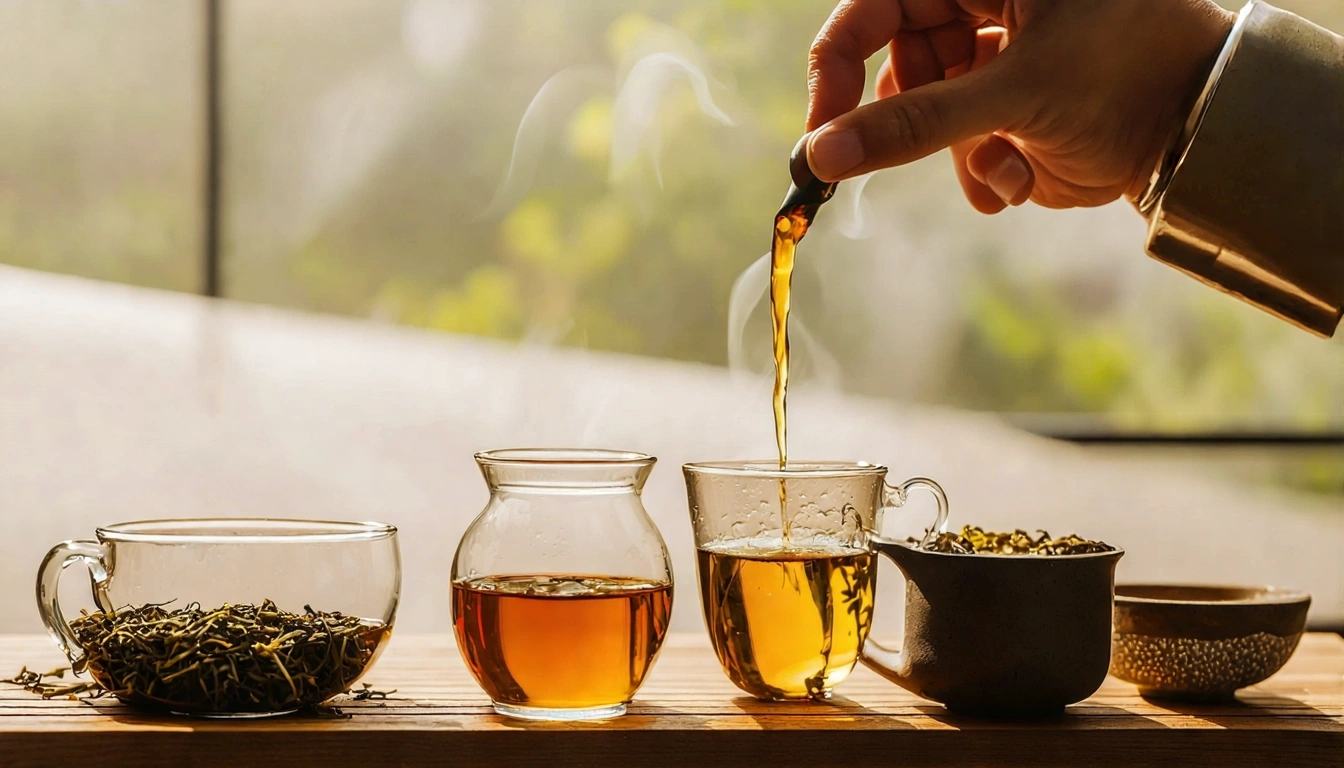
TL;DR: The three essentials of tea brewing — water temperature (green tea 75°C / oolong 85-95°C / black tea 95-100°C), ratio (base 1g:50ml), and time (first infusion 30-45 seconds). Brewing conditions can create up to a 3x difference in flavor compound extraction (TRES, 2024). High mountain oolong can be re-steeped 5-8 times, gradually extending time with each infusion.
Choosing great tea is the foundation of great brewing. ChaYanSo curates premium Taiwan high mountain tea. Browse Our Teas
The Three Core Elements of Tea Brewing
The essence of tea brewing is controlling extraction — allowing the desirable compounds in tea leaves (aromatic substances, amino acids, polyphenols) to dissolve into water at the right time and in the right proportions, while avoiding over-extraction that causes bitterness. Three variables control everything:
TRES brewing research indicates that when the pH of brewing water is below 7 and total hardness is low, the tea liquor’s color, aroma, and flavor perform best — meaning filtered soft water produces better results than tap water (Source: Ministry of Agriculture TRES water quality research, 2024).
1. Water Temperature: The Most Critical Variable
Water temperature affects extraction speed. Higher temperatures mean all compounds dissolve faster — including the amino acids that make tea sweet, as well as the catechins and caffeine that cause bitterness. The key issue is that different tea types have different ideal extraction balance points.
Research shows that catechin (the source of bitterness) extraction at high temperatures is 2-3x that of low temperatures, while L-theanine (the source of sweetness) extraction varies relatively less — this is why using the right water temperature makes tea sweeter and less bitter (TRES, 2024).
2. Tea-to-Water Ratio: Controlling Strength
The ratio determines the concentration of each sip. The basic golden ratio is 1g tea to 50ml water, but different brewing methods vary significantly:
- Gongfu tea (small pot, multiple infusions): 1g:30ml (concentrated for sipping)
- Standard hot brew (gaiwan/teapot): 1g:50ml
- Large pot tea (office pot): 1g:70-100ml
3. Steeping Time: Shaping Each Infusion’s Flavor
Longer steeping means more complete extraction, but exceeding the sweet spot leads to over-extraction and bitterness. General recommendation for Taiwan high mountain oolong: first infusion 30-45 seconds, adding 10-15 seconds for each subsequent infusion.
Optimal Brewing Parameters for Each Taiwan Tea Type
Here’s a complete quick-reference chart:
| Tea Type | Recommended Temperature | Tea-to-Water Ratio | First Infusion Time | Re-steepings |
|---|---|---|---|---|
| Taiwan Green Tea | 70-80°C | 1g:60ml | 45-60 sec | 2-3 times |
| White Tea | 85-90°C | 1g:60ml | 30-45 sec | 3-5 times |
| Four Seasons Spring (light roast) | 85-90°C | 1g:50ml | 30-40 sec | 5-7 times |
| Alishan/Lishan Oolong | 90-95°C | 1g:50ml | 30-45 sec | 6-8 times |
| Dong Ding Oolong (roasted) | 90-95°C | 1g:50ml | 30-45 sec | 5-7 times |
| Oriental Beauty Tea | 90-95°C | 1g:50ml | 30-45 sec | 4-6 times |
| Taiwan Black Tea | 95-100°C | 1g:50ml | 45-60 sec | 3-4 times |
| Pu-erh Tea | 100°C | 1g:50ml | 15-20 sec (30-45 sec after rinse) | 7-10 times |
Universal cold brew base ratio: All tea types can be cold brewed at 1g:100ml, refrigerated for 4-8 hours.
Complete Hot Brewing Guide for Taiwan Tea (Standard Method)
Hot brewing is the most fundamental and versatile method, suitable for any vessel. Here’s the standard process:
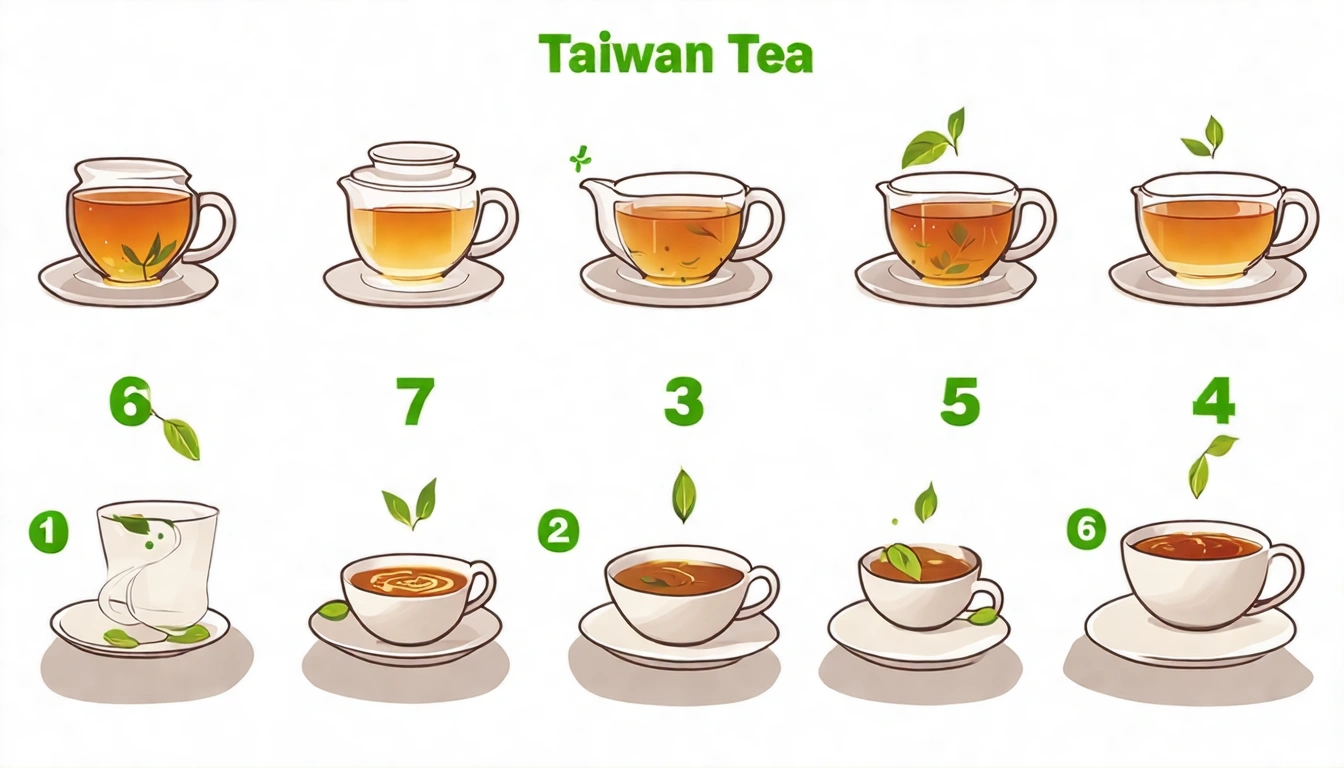
Step 1: Prepare Hot Water
Boil water, then cool to the appropriate temperature for your tea type:
- To reach 90°C: let boiled water sit for 2-3 minutes
- To reach 85°C: let sit for 4-5 minutes, or pour into another vessel to cool
- To reach 75°C: let sit for 7-10 minutes
A thermometer makes this more precise. Some electric kettles have temperature settings — for oolong, you can set directly to 90°C.
Step 2: Warm the Vessel (Optional)
Pour a small amount of hot water into the teapot, swirl to warm evenly, then discard. Warming helps maintain a more stable temperature during brewing, which benefits the aroma release of high mountain oolong tea. Essential for small teapots and porcelain gaiwans; can be skipped for mugs.
At ChaYanSo, warming the vessel is the most commonly overlooked step when we teach new customers to brew tea. Our testing shows that the same Lishan oolong brewed with and without warming has noticeably different aroma performance — the first infusion has a much fuller floral aroma after warming. This 30-second step has an excellent return on investment.
Step 3: Add Tea Leaves
Calculate tea leaf quantity based on your vessel’s water capacity. A gaiwan (150ml) uses 3g of tea; a standard mug (300ml) uses 5-6g. Ball-rolled oolong teas (Alishan, Lishan) look small in volume but expand significantly when brewed — you don’t need to fill the bottom of the pot.
Step 4: Pour Water and Decant
Time your infusion according to the reference chart and pour out the tea. The first infusion can be slightly shorter to let the leaves fully “awaken.” Make sure to pour out all the tea liquor completely — leaving liquid in the pot is the key mistake that makes subsequent infusions inconsistent.
Step 5: Re-steeping
The most enchanting aspect of Taiwan high mountain oolong is its multiple re-steepings — each infusion’s flavor shifts slightly. The first and second infusions have the most vivid aroma; the third and fourth bring out the most sweetness; the fifth and sixth become mellow and rounded; later infusions turn light as water.
Taiwan’s tea growing area covers approximately 12,000 hectares with an annual production of about 14,000 metric tons, predominantly oolong tea. Thanks to high mountain oolong’s ability to be re-steeped 5-8 times, the per-gram drinking cost is actually lower than coffee (Source: Ministry of Agriculture TRES, 2024).
Complete Cold Brew Tea Guide
Cold brewing is the easiest method. No need to control water temperature, it’s nearly foolproof, and the resulting tea is sweeter and less bitter than hot-brewed tea.
Why Is Cold Brew Sweeter?
During low-temperature extraction, the catechins and caffeine that cause bitterness dissolve at much lower rates, while the amino acids (L-theanine) that bring sweetness dissolve in relatively higher proportions — giving cold brew tea a smoother, sweeter taste than hot brew (TRES, 2023).
Basic Cold Brew Recipe:
- Tea leaves: 1g
- Cold or room temperature water: 100ml
- Steeping time: 4-8 hours in the refrigerator (high mountain oolong needs just 4 hours; black tea is best at 6-8 hours)
Best Taiwan Teas for Cold Brewing:
- Four Seasons Spring: the floral aroma becomes especially vivid when cold brewed
- Alishan Oolong: sweet and full-bodied, the most popular cold brew choice
- Oriental Beauty (Bai Hao Oolong): the honey aroma becomes more prominent in cold brew
- Taiwan Black Tea: rich mouthfeel, great served over ice
Further reading: Complete Cold Brew Tea Guide
Getting Started with Gongfu Tea Brewing
Gongfu tea isn’t a specific tea type — it’s a brewing method that pursues the ultimate in flavor. Using a small teapot (100-150ml) with a high tea-to-water ratio, each serving is just a small sip, making each mouthful intensely flavorful.
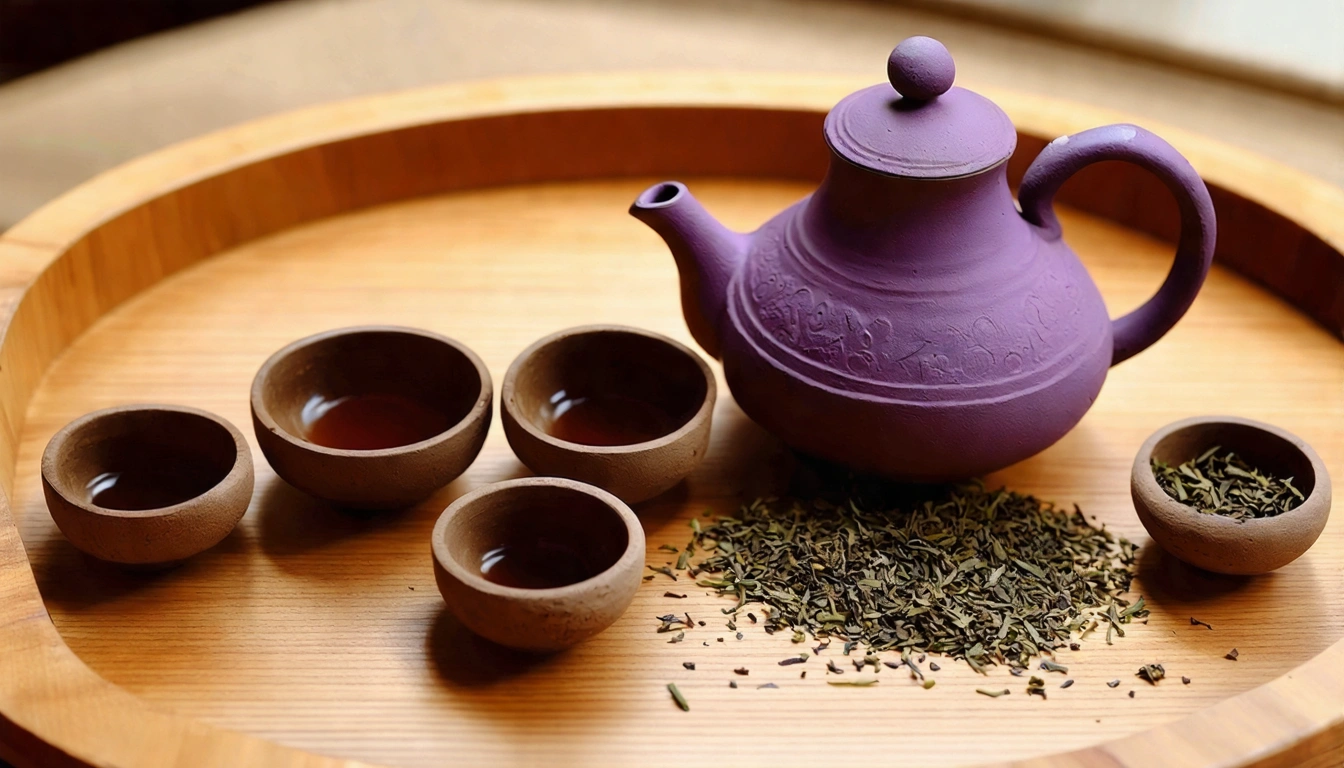
Standard Gongfu Tea Set:
- Yixing clay teapot (recommended) or white porcelain gaiwan (120-150ml)
- Fairness pitcher (cha hai): receives the tea liquor to ensure uniform concentration in each cup
- Tasting cups: for sipping in small mouthfuls
- Tea tray or drip tray: catches overflow water
Gongfu Tea Steps:
- Warm the vessel: Pour in hot water to warm the teapot, then discard
- Awaken the tea: After adding leaves, pour in 90°C hot water and immediately (10-15 seconds) decant into the fairness pitcher and discard — this unfurls the leaves and awakens the aroma, not a true infusion
- First infusion: Pour water, time 30-40 seconds, decant into fairness pitcher
- Taste: Pour from the fairness pitcher into tasting cups — observe the color, smell the aroma, savor the flavor
- Subsequent infusions: Add 10-15 seconds per infusion, for a total of 6-8 infusions
Advantages of Gongfu Tea: Since each infusion is fully decanted, you can clearly perceive the tea’s evolution from aroma to sweetness to mellowness — it’s the best way to experience Taiwan’s finest high mountain oolongs.
Our ChaYanSo team always uses Gongfu brewing when evaluating teas. Only this method lets you fully appreciate the changes across each infusion. Many customers are amazed after their first Gongfu tea experience at our shop — discovering that the same tea tastes different with every infusion is what makes Taiwan high mountain oolong so captivating.
TRES research using 80°C, 90°C, and 100°C water temperatures across six major tea categories confirmed that key polyphenol components EGC and EGCG have poor thermal stability and degrade faster at high temperatures — this is the scientific basis for Gongfu tea’s emphasis on precise temperature control (Source: Ministry of Agriculture TRES brewing research, 2024).
Gongfu tea demands great tea paired with great technique. ChaYanSo curates re-steepable high mountain oolongs. Shop Now
Office Tea Brewing: The Simple Version Complete Guide
No professional tea set? You can still brew great tea at the office.
Simplest Office Method (Mug Brewing):
| Equipment | Description |
|---|---|
| Large mug (400ml) | Main vessel |
| Tea strainer / filter bag | Separates leaves from liquor |
| Hot water kettle | Most offices have 90°C water |
| Timer | Phone works fine |
Steps:
- Add 5-6g tea leaves (loose tea goes in the strainer)
- Pour hot water (for oolong, wait 2-3 minutes for water to cool to about 90°C)
- After 45 seconds, remove the strainer or decant into another vessel
- To re-steep, repeat the process, adding 10 seconds each time
Office Cold Brew (even better): Drop tea leaves into room temperature water in the morning and refrigerate — by lunch you’ll have cold brew tea, with zero temperature control needed and no way to mess it up.
A 2025 study found that green tea extracted at 20°C for 12 hours had particularly high antioxidant capacity, with superior retention of vitamin C, vitamin B2, and catechins compared to any high-temperature brewing method (Source: ScienceDirect low-temperature extraction study, 2025).
Nearly everyone on our ChaYanSo office team has a cold brew bottle — each morning takes 30 seconds to prepare tea and water, and by noon there’s a bottle of sweet cold brew Four Seasons Spring ready. We’ve maintained this habit for years, and it’s our most-recommended brewing method for busy professionals.
How to Properly Judge Re-steeping Potential
The re-steeping potential of Taiwan high mountain oolong is one of its great features, but there’s no fixed answer for “how many infusions” — it depends on the tea’s quality and each brew’s conditions.
General Re-steeping Guide:
| Tea Type | Standard Re-steepings | High Quality |
|---|---|---|
| Taiwan High Mountain Oolong | 5-7 times | 7-10 times |
| Dong Ding Oolong (roasted) | 5-7 times | 7-9 times |
| Oriental Beauty | 4-6 times | 5-7 times |
| Taiwan Black Tea | 3-4 times | 4-5 times |
| Taiwan Green Tea | 2-3 times | 3-4 times |
How to tell if you can keep re-steeping:
- Tea liquor color: gradual lightening is normal; if it’s nearly clear like water, it’s time to stop
- Aroma: if a sip has no discernible flavor, the leaves are spent
- Personal preference: some people enjoy the later light infusions; others only drink the first three concentrated ones
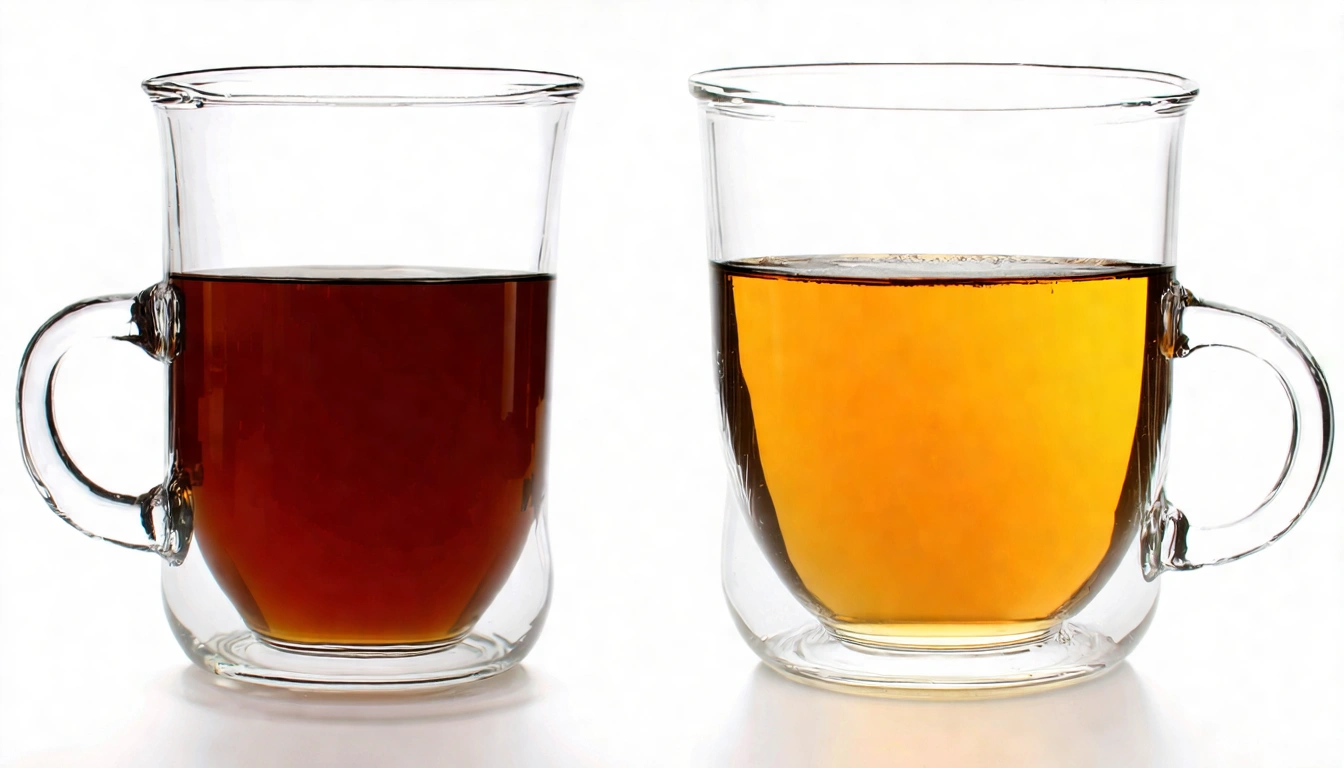
Many people assume bad-tasting tea means poor quality leaves, but based on our actual brewing tests, the same batch of Alishan oolong steeped at 100°C for 2 minutes versus 90°C for 45 seconds differs by more than 3x in bitterness. While tea quality certainly matters, correct water temperature and timing have an even greater impact on final flavor.
According to ChaYanSo’s 2026 new customer survey, among first-time Taiwan tea buyers who repurchased, 68% said their initial brewing failure was due to “water temperature too high” (pouring boiling water directly on oolong), not tea quality itself. This is why we list brewing instructions as required reading with every tea purchase.
Common Brewing Mistakes and Solutions
Problem 1: Tea is too bitter Cause: Water temperature too high, steeping time too long, or too much tea. Solution: Lower the temperature by 5-10°C, reduce steeping by 30 seconds, or use fewer leaves.
Problem 2: Tea is too weak Cause: Insufficient water temperature, steeping time too short, too few leaves, or stale tea that has lost its vitality. Solution: Ensure adequate water temperature, increase steeping by 10-15 seconds, add more tea leaves.
Problem 3: Inconsistent strength between infusions Cause: Not fully pouring out the tea liquor each time (residual liquor continues extracting). Solution: Pour out every drop each time — don’t leave liquid at the bottom.
Problem 4: Aroma disappears after re-steeping Cause: The first infusion was steeped too long, causing over-extraction. Solution: Shorten the first infusion to reserve more extractable compounds for subsequent steepings.
FAQ: Common Tea Brewing Questions
Should I use mineral water or tap water for tea?
Filtered water is best (removes chlorine and impurities), followed by mineral water. Tap water contains chlorine that affects tea aroma — if using tap water, boil it first and let it sit to allow chlorine to dissipate. Mineral water with excessively high mineral content (hard water) also affects tea aroma. Taiwan’s tap water, once filtered, is quite suitable for tea brewing.
Can I reuse water that has been boiled too many times?
Not recommended. Water that has been boiled multiple times loses much of its dissolved oxygen, and mineral concentration increases, making the tea liquor taste “flat” and reducing the aroma’s depth and complexity (Reference: TRES brewing recommendations, 2024). Use fresh water each time.
Is there a difference in brewing ball-rolled vs. strip-style oolong?
Yes. Ball-rolled oolong (Alishan, Lishan, and other high mountain oolongs) needs more time to unfurl — the first infusion should be slightly longer at 40-50 seconds to let the tea balls fully open. Strip-style oolong (Oriental Beauty, some Dong Ding) unfurls quickly, and 30 seconds is sufficient for the first infusion. The awakening step is especially important for ball-rolled oolong.
Further Reading
For deeper dives into specific brewing techniques:
- Complete Cold Brew Tea Guide: Ratios, Timing & Best Tea Varieties
- Tea Brewing Temperature & Ratio Guide: Optimal Parameters for Every Tea Type
- Complete Oolong Tea Brewing Tutorial: Hot Brew, Cold Brew & Gongfu Tea
- Taiwan Tea Brewing Guide by Type: Black Tea, Green Tea & Four Seasons Spring
- Complete Taiwan Tea Knowledge Guide: Six Tea Categories & Processing Craftsmanship
References
- Taiwan Tea Research and Extension Station (2024). Taiwan Tea Brewing Conditions and Flavor Compound Extraction Study.
- Taiwan Tea Research and Extension Station (2023). Low-Temperature Tea Extraction Research Report.
- Complete Cold Brew Tea Guide
- Tea Brewing Temperature & Ratio Guide
- Complete Oolong Tea Brewing Tutorial
- Taiwan Tea Brewing Guide by Type