
Green Tea Complete Guide | EGCG, Cultivars & Brewing Science
Green tea has the simplest processing path among the six tea types, and its chemistry is the easiest to describe clearly: plucked fresh leaves are fixed (kill-green) at high temperature, rolled, and dried — with no oxidation step (fermentation degree 0%). That’s why green tea retains the highest levels of catechins and polyphenols.
This article breaks green tea down through four lenses: composition, processing, cultivar, and brewing.
At ChaYanSo, we’ve found many customers buy green tea by “origin” or “brand” alone, without realising that the cultivar — Chin Shin Kan Tsai, Si Ji Chun, Jin Xuan, or Longjing #43 — produces very different catechin and amino-acid ratios, which directly shapes the cup.
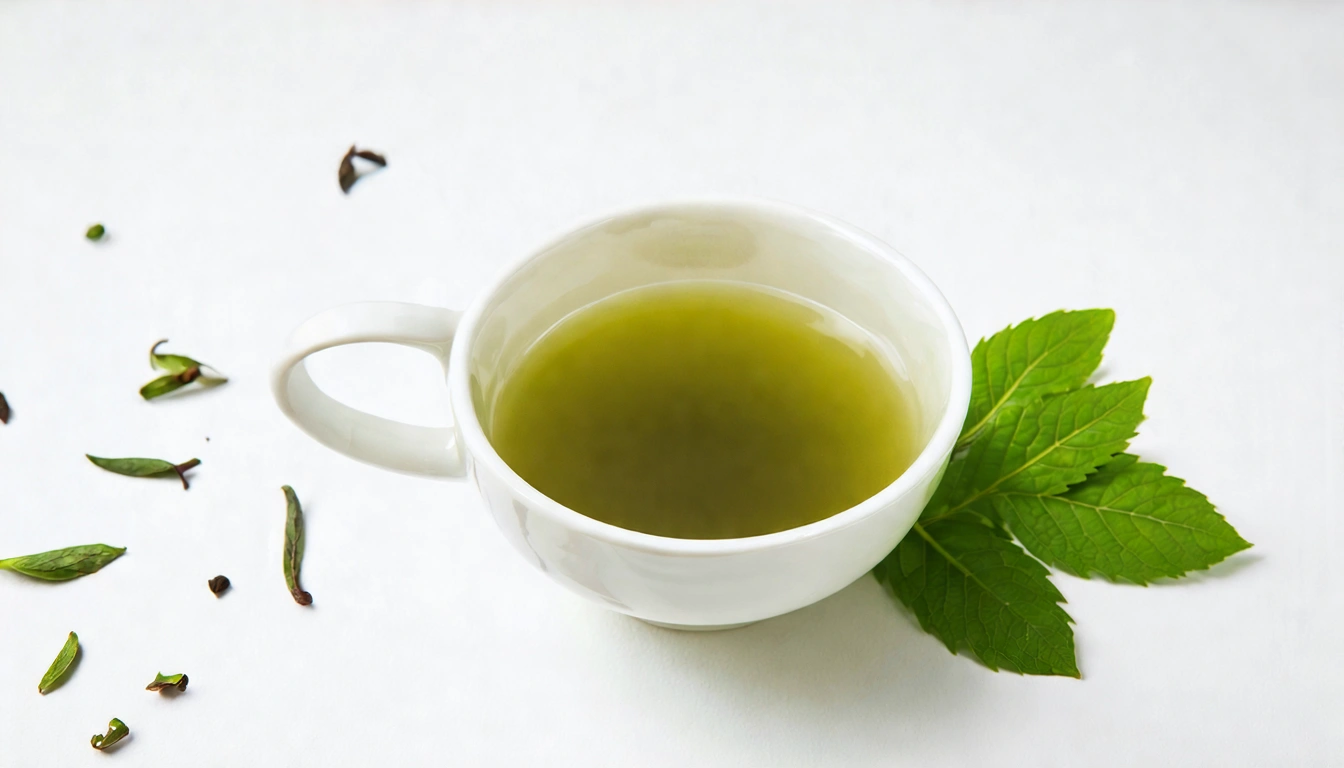
TL;DR: Green tea is an unoxidized tea type (0% fermentation). Catechins make up 30–40% of dry weight; a 200ml cup contains roughly 100–300mg EGCG, 20–30mg caffeine, and 10–20mg L-theanine. Taiwan’s signature cultivar is Sanxia Bi Luo Chun (Chin Shin Kan Tsai, ~88 hectares). Recommended brewing: 70–80°C, 1g:80ml, steeping under 60 seconds.
Great-tasting green tea — curated by ChaYanSo. Browse Our Teas
Six Composition & Cultivar Dimensions of Green Tea
1. The Core Compound: EGCG (Epigallocatechin Gallate)
EGCG is the most abundant catechin polyphenol in green tea — roughly 100–300mg per 200ml cup. Together with other catechins (EGC, ECG, EC), the catechin family accounts for about 30–40% of dry-leaf weight (Tea Research and Extension Station, Taiwan, 2024).
Green tea retains more EGCG than any other tea type because the “kill-green” step in processing uses high heat to deactivate polyphenol oxidase (PPO) enzymes, halting oxidation. In black tea, those same polyphenols oxidise during withering and rolling into theaflavins and thearubigins — which is why green tea tops the six tea types in EGCG retention, and black tea sits at the bottom.
2. Caffeine-to-L-Theanine Ratio
A cup of green tea contains roughly 20–30mg caffeine — notably less than a cup of black coffee (80–120mg). L-theanine, an amino acid unique to the tea plant, comes in at 10–20mg per cup; shade-grown cultivation (as used for gyokuro or matcha base) pushes L-theanine levels higher still.
The caffeine-to-L-theanine ratio shapes the cup: L-theanine delivers umami and sweetness that balance the astringency of catechins and the bitterness of caffeine.
3. Unoxidized Processing (0% Fermentation)
Standard green tea flow: plucking → kill-green (pan-firing or steaming) → rolling → drying. Kill-green temperatures typically sit between 200–300°C, high enough to deactivate polyphenol oxidase (PPO). Most Taiwanese green teas are pan-fired; Japanese green teas (sencha, gyokuro) are steamed. The results diverge clearly: steamed teas produce a jade-green liquor with seaweed and marine notes, while pan-fired teas yield a yellow-green liquor with chestnut and roasted notes.
4. Sanxia Bi Luo Chun & the Chin Shin Kan Tsai Cultivar
Sanxia is Taiwan’s sole green-tea production area of note, built around the rare cultivar “Chin Shin Kan Tsai” (青心柑仔). According to the Tea and Beverage Research Station, total cultivation area nationwide is only about 88 hectares, concentrated in Sanxia District, New Taipei City.
Chin Shin Kan Tsai has small leaves and abundant pekoe (white hairs). Finished as green tea, it rolls into curled strips with visible white tips; the liquor is pale yellow-green with citrus-and-floral aromatics — aromatic characteristics that come from the cultivar itself, not from brewing technique.
5. Other Cultivars: Longjing, Japanese Steamed Sencha, Gyokuro
| Cultivar / Style | Origin | Processing | Flavour profile |
|---|---|---|---|
| Sanxia Bi Luo Chun | Sanxia, New Taipei, Taiwan | Pan-fired, curled with pekoe | Floral, fruity, sweet |
| West Lake Longjing | Zhejiang, China | Pan-fired, flat and smooth | Bean and chestnut notes |
| Japanese Sencha | Shizuoka, Kagoshima, etc. | Steamed, needle-shaped | Seaweed, strong umami |
| Japanese Gyokuro | Uji, Kyoto, etc. | Shade-grown, steamed | Very strong umami, sweet |
6. Annual Output & Harvest Season
Taiwanese green tea is predominantly a spring crop. Sanxia Bi Luo Chun is produced 3–4 times a year, with the highest-quality harvest centred on the Qingming period (late March to mid April). According to Ministry of Agriculture statistics, Sanxia Bi Luo Chun annual output totals tens of metric tons — a small, artisan-scale producing area.
Green Tea Brewing Science: Temperature, Ratio, Time
Parameter 1: Water temperature 70–80°C
Water that is too hot over-extracts catechins (especially EGCG and ECG), producing an astringent cup that coats the throat. High temperatures also evaporate volatile aromatics quickly, flattening the nose. The 70–80°C range balances aroma release and astringency control.
High-grade Japanese steamed green teas such as gyokuro are brewed even lower — 50–60°C — to emphasise L-theanine’s savoury sweetness while keeping catechin extraction minimal.
Parameter 2: Leaf-to-water ratio 1g:80ml
The standard ratio is 1 gram of leaf per 80ml of water. For a common 200ml mug, that works out to about 2.5 grams of leaf. This ratio puts catechin, caffeine, and L-theanine extraction into a comfortable drinking range.
Parameter 3: Steeping time under 60 seconds
Aim for 40–60 seconds on the first infusion. Catechins extract quickly, and astringency rises sharply past 90 seconds. The same leaves can be re-steeped 2–3 times with progressively longer soaks (roughly 60–80 seconds for the second, 90–120 seconds for the third).
Parameter 4: Vessel choice
Green tea pairs best with porcelain or glass — porcelain doesn’t absorb aromatics, and glass lets you watch the liquor develop. Yixing clay pots (zisha) are generally not recommended for green tea because they absorb aromatics and hold heat too strongly.
At our ChaYanSo tasting events, we routinely brew the same Sanxia Bi Luo Chun side-by-side at 70°C and 95°C for visitors. Almost everyone can spot the difference immediately — the low-temperature cup shows clean floral-fruity notes with a sweet finish; the high-temperature cup turns astringent and collapses the aromatics.
Storage: Keep Out Light, Moisture, Oxygen, and Odours
Because green tea is unoxidized, both the catechins and the chlorophyll are chemically unstable, so storage conditions are more demanding than for other tea types.
Four storage principles:
| Principle | Why it matters | Practical approach |
|---|---|---|
| Block light | Light accelerates breakdown of chlorophyll and catechins | Opaque foil bags or ceramic caddies |
| Exclude moisture | Moisture content over 7% triggers spoilage | Dry location; refrigerate after opening |
| Limit oxygen | Oxidation dulls aroma and turns liquor yellow | Vacuum packaging or oxygen absorbers |
| Isolate odours | Green tea readily absorbs smells | Keep away from coffee, spices, detergent |
After opening, aim to drink within three months. For long-term storage (six months or more), store at 0–5°C refrigerated, and bring sealed packages back to room temperature before opening to prevent condensation inside.
Want green tea with real depth of flavour? ChaYanSo curates the best Taiwan teas. Shop Now
Cultivar-Driven Flavour Differences: Know What You’re Drinking
Many people assume “green tea all tastes similar” — but the chemistry varies widely across cultivars.
According to ChaYanSo’s 2026 green tea customer inquiries, the most common question is “why does my green tea taste different from last time?” — on follow-up, 47% of cases came down to cultivar differences (Chin Shin Kan Tsai vs. TTES No.12 vs. Chin Shin Oolong) and 18% to seasonal differences (spring vs. summer harvest). Understanding cultivar and processing is the core skill for selecting green tea.
FAQ: Green Tea Composition, Cultivars & Brewing
What are the main components of green tea?
Catechin polyphenols account for about 30–40% of dry leaf, with EGCG as the dominant compound. Caffeine makes up roughly 2–4% of dry weight, and L-theanine about 1–3%. Once brewed, a 200ml cup contains approximately 100–300mg EGCG, 20–30mg caffeine, and 10–20mg L-theanine (Tea Research and Extension Station, Taiwan, 2024).
How is Sanxia Bi Luo Chun different from other green teas?
Sanxia Bi Luo Chun uses the Chin Shin Kan Tsai cultivar, grown on only ~88 hectares nationwide, concentrated in Sanxia District, New Taipei City. Leaves carry visible pekoe (white hairs) and curl tightly; the liquor is pale yellow-green with citrus-and-floral aromatics that come from the cultivar itself. Longjing uses Longjing #43, sencha typically uses Yabukita — each cultivar defines its own flavour direction.
How should I brew green tea without bitterness?
Use 70–80°C water, a 1g:80ml leaf-to-water ratio, and steep under 60 seconds. Higher temperatures over-extract EGCG and other catechins, producing astringency. Porcelain or glass vessels are recommended; Yixing clay pots are not ideal for green tea.
How long does green tea keep after opening?
Aim to finish within three months. Keep it away from light, moisture, oxygen, and odours. For longer storage, refrigerate at 0–5°C and let sealed packaging return to room temperature before opening.
Further Reading
- Green Tea & Flower Tea Complete Guide: Cultivars, Recommendations & Buying Tips
- Taiwan Green Tea Recommendations: Sanxia Bi Luo Chun, Longjing Buying Guide
- Tea Recommendations by Lifestyle: Seniors, Pregnant Women, Fitness Enthusiasts
- Common Tea Questions: Six Tea Types & Daily Drinking Guide
- Tea Safety Guide for Pregnant Women: Which Teas Are Safe and Which to Avoid
References
- Tea and Beverage Research Station, Ministry of Agriculture, Taiwan (2024). Green Tea Polyphenol Composition and Processing Research.
- Ministry of Agriculture Statistics (2024). Sanxia Bi Luo Chun Production Area and Chin Shin Kan Tsai Cultivation Area.