Cold Brew Tea Complete Guide 2026 | Ratios, Timing, Best Teas & Cafe-Quality Cold Brew at Home
Cold brew tea’s popularity has a very practical reason: it tastes better than hot brew — sweeter, smoother, and easier to master.
No need to control water temperature, nearly impossible to ruin, just put tea leaves in water and refrigerate overnight — by morning you have a bottle of elegant cold brew tea. This isn’t lazy brewing — it’s one of the best extraction methods supported by science.
The Taiwan Tea Research and Extension Station has confirmed that cold brew tea releases 30–50% less catechins (the source of bitterness) than hot brew, while the relative extraction ratio of amino acids (the source of sweetness) is higher — this is why cold brew tea tastes sweeter and smoother than hot brew (Taiwan Tea Research and Extension Station, 2023).
This article gives you everything practical about cold brew tea: standard ratios, optimal timing, which teas work best for cold brewing, and several creative cold brew drink recipes you can make at home.
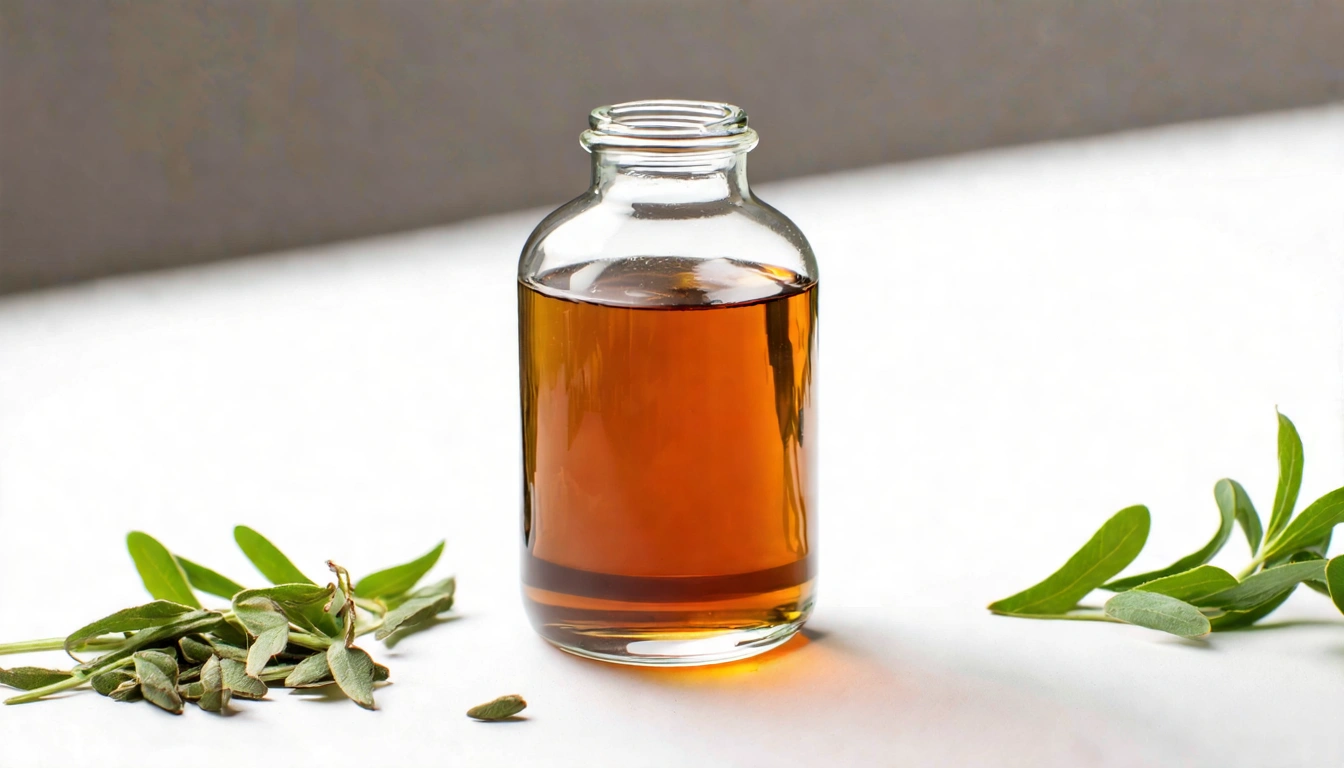
TL;DR: Cold brew tea basic formula: 1g tea per 100ml cold water, refrigerate 4–8 hours. Bitter compounds release 30–50% less, sweeter than hot brew (Tea Research and Extension Station, 2023). Best for cold brew: Si Ji Chun, Alishan oolong, Oriental Beauty. Maximum refrigerated storage: 3 days.
Great cold brew starts with great tea leaves — ChaYanSo’s curated cold-brew-ready Taiwan teas. Browse Our Tea Selection
Why Is Cold Brew Tea Sweeter Than Hot Brew?
Many people have the same reaction the first time they try cold brew tea: “Is this really the same tea? How does it taste even better than hot brew?”
It’s not an illusion. Cold brew and hot brew extract different proportions of compounds from the tea.
The science: Different substances in tea leaves dissolve at different rates depending on temperature. Bitter catechins and caffeine have drastically reduced dissolution rates at low temperatures, while sweet L-theanine has a relatively higher extraction ratio at low temperatures. The result: cold brew tea is overall cleaner, sweeter, and smoother.
Research shows cold brew tea’s caffeine is approximately 20–40% lower than equivalent hot brew. Caffeine extraction at 10°C for 1 hour is over 50% less than hot water at 80°C for 2 minutes (Source: De Gruyter chemistry journal extraction study, 2022).
Low-temperature extraction effectively suppresses tannic acid release, making cold brew tea smoother with lower acidity while preserving more antioxidant compounds (Source: Tea & Coffee Trade Journal, 2024).
Catechin dissolution is highly temperature-dependent — extraction at 100°C is approximately 3–4 times that at 4°C, explaining why the same tea leaves produce virtually zero bitterness when cold-brewed (Taiwan Tea Research and Extension Station, 2023).
Another advantage: Long, low-temperature extraction is actually more favorable for certain aromatic compounds (particularly floral-type compounds), allowing tea’s natural floral fragrance to present more completely in cold brew — especially the clean floral notes of Si Ji Chun and high mountain oolong, which are often more pronounced in cold brew than hot brew.
A 2025 ScienceDirect study found that green tea extracted at 20°C for 12 hours showed particularly high antioxidant capacity, with superior retention of vitamin C, vitamin B2, and epicatechin compared to any high-temperature brewing method, recommending the use of whole tea leaves for long-duration low-temperature extraction (Source: ScienceDirect low-temperature extraction study, 2025).
At ChaYanSo, we tested both hot brew and cold brew versions of the same batch of Alishan oolong. The team unanimously agreed the cold brew version had purer floral aroma, higher sweetness, and absolutely zero bitterness. This is why we strongly recommend cold brew in summer — not for convenience, but because it genuinely tastes better.
Cold Brew Tea Standard Ratios & Timing
Basic Formula
| Element | Recommended Value | Notes |
|---|---|---|
| Tea amount | 1g | Base unit for any tea type |
| Water amount | 100ml | Base ratio 1:100 |
| Steeping time | 4–8 hours | Refrigerated (4°C) |
| Water temperature | Room temp or cold water | No boiling needed |
Recommended Cold Brew Times by Tea Type
| Tea Type | Recommended Time | Flavor Profile |
|---|---|---|
| Si Ji Chun | 4–6 hours | Clean floral, sweet and refreshing |
| Alishan Oolong | 4–6 hours | High mountain sweetness, clear and full |
| Dong Ding Oolong (roasted) | 5–7 hours | Roast note slightly muted, smooth body |
| Oriental Beauty Tea | 4–6 hours | Honey aroma prominent, rich layers |
| Taiwan Black Tea | 6–8 hours | Black tea body preserved, zero bitterness |
| White Tea | 6–8 hours | Lightest and most delicate, gentle sweetness |
| Taiwan Green Tea | 3–4 hours | Refreshing, even less bitter than hot brew |
Adjustment principles:
- Want it stronger: Increase tea amount (1.5g:100ml), don’t extend time
- Want it lighter: Decrease tea amount (0.7g:100ml)
- What happens if you exceed recommended time? Taste won’t necessarily worsen, but some teas (especially black tea) may develop slight astringency
Research shows increasing the tea-to-water ratio from 1:50 to 1:10 (more tea leaves) can boost catechin content in cold brew by 48%, reaching levels comparable to hot brew — meaning that for more health compounds, increasing tea amount is more effective than extending steeping time (Source: National Chung Hsing University tea extraction study, 2024).
Taiwan has approximately 12,000 hectares of tea gardens producing about 14,000 metric tons annually, with oolong tea as the largest category. Taiwan oolong is among the most suitable teas for cold brewing — the ball-shaped leaves slowly unfurl during extended cold brewing, releasing a more complete flavor profile (Source: MOA Tea and Beverage Crop Research and Extension Station, 2024).
Cold Brew Tea Preparation Steps
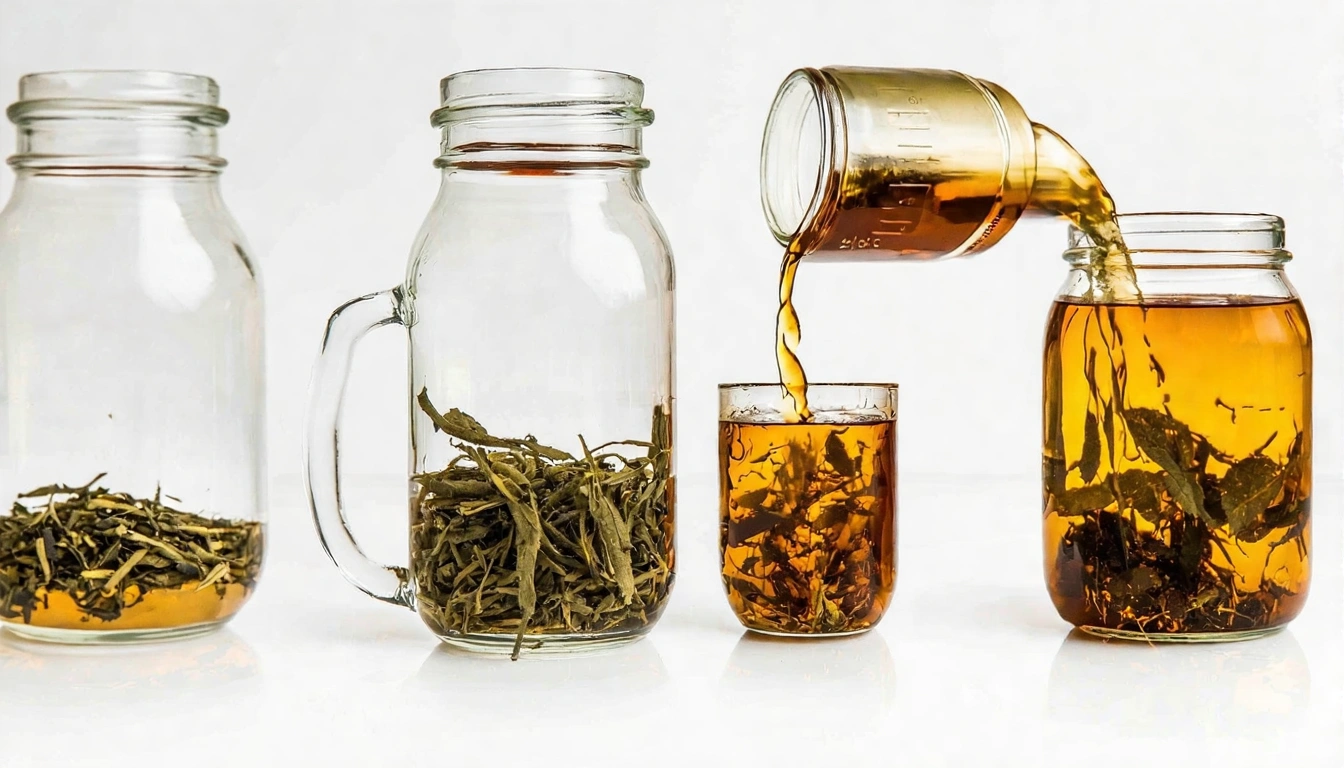
What you need:
- Glass jar or cold brew pitcher with filter (1000ml capacity is most convenient)
- Kitchen scale (or estimate with tea spoon: approximately 1 teaspoon = 2–3g loose tea)
- Refrigerator
Steps:
- Measure the tea: Calculate based on your container. 500ml water = 5g tea; 1000ml water = 10g tea
- Add to container: Place loose tea directly in a filtered cold brew pitcher, or put tea in a muslin bag before adding to a glass bottle
- Add water: Pour in room temperature or cold water, ensuring tea leaves are fully submerged
- Seal and refrigerate: Close the lid tightly, refrigerate 4–8 hours (depending on tea type)
- Strain: Remove the tea leaves — cold brew tea is complete
Pro tip: Make it the night before, and by morning you’ll have a perfectly steeped cold brew. You can also prepare a batch before bed, eliminating any morning wait time.
At ChaYanSo, our team’s cold brew routine is: spend 1 minute before bed preparing the next day’s cold brew, then pop it in the fridge. In the morning, grab a bottle on the way out — zero waiting. This “30-second bedtime routine” gives us fresh cold brew every day, and it’s the daily workflow we most recommend our customers adopt.
Storage: Cold brew tea should be consumed within 3 days. Beyond that, quality and flavor begin to decline. Making fresh daily is ideal.
The right tea leaves are key to delicious cold brew — ChaYanSo’s curated cold brew favorites. Shop Now
Which Taiwan Teas Are Best for Cold Brew?
Not all teas suit cold brewing. Here are the top recommendations:
Top Pick: Si Ji Chun
Si Ji Chun’s clean floral aroma (magnolia, osmanthus) is especially prominent in cold brew. Hot brewing can bring out slight astringency, but cold brew virtually eliminates this issue. Once you try it cold-brewed, you’ll be hooked. The ideal daily choice for office cold brew drinkers.
Runner-Up: Alishan Oolong
Alishan oolong’s high mountain sweetness is fully preserved in cold brew, with a clear golden liquor that’s sweet and full-bodied. For gifting or showcasing cold brew tea’s beauty, Alishan cold brew excels in both appearance and taste.
For Honey Lovers: Oriental Beauty Tea (Bai Hao Oolong)
Oriental Beauty’s honey aroma becomes even more prominent in cold brew, with an exceptionally smooth mouthfeel. The amber-colored liquor is a pleasure to look at. The natural honey sweetness from insect-bitten fermentation is especially captivating under low-temperature extraction.
At ChaYanSo, when offering cold brew tastings at our shop, the Oriental Beauty cold brew version has the highest return rate. Many customers take the first sip and ask: “Is this really tea? It tastes like honey water!” The natural honey sweetness without any added sugar is what makes Oriental Beauty cold brew most astonishing.
Taiwan’s tea export unit price is approximately 6.5 times that of imported tea. Oriental Beauty tea (Bai Hao oolong), as a distinctively Taiwanese specialty, is a representative of the international premium tea market. Cold brewing makes this high-quality tea’s flavors more accessible to newcomers (Source: MOA Trade Statistics, 2024).
For the Lightest Touch: White Tea
White tea has the lowest caffeine of any tea type. Cold-brewed, it produces the lightest, most gentle flavor. Ideal for pregnant women, caffeine-sensitive individuals, or anyone who wants to drink tea all day without worrying about sleep.
Creative Cold Brew Tea Drink Recipes
Recipe 1: Honey Si Ji Chun Cold Brew
- Si Ji Chun cold brew tea 200ml
- Honey 1–2 teaspoons
- Ice cubes as needed
- Method: Stir honey into cold-brewed Si Ji Chun, add ice and enjoy
Recipe 2: Alishan Oolong Sparkling Cold Brew
- Alishan oolong cold brew 150ml
- Unsweetened sparkling water 100ml
- Ice cubes as needed
- Method: Pour cold brew into a glass, gently add sparkling water, stir lightly — preserve the fizz
Recipe 3: Honey-Scented Black Tea Cold Brew Milk Tea
- Taiwan honey-scented black tea cold brew (double concentration, 1g:50ml, 8 hours) 150ml
- Fresh milk 100ml
- Ice cubes
- Method: Add ice to tea first, then gently pour in milk without stirring for a layered gradient effect
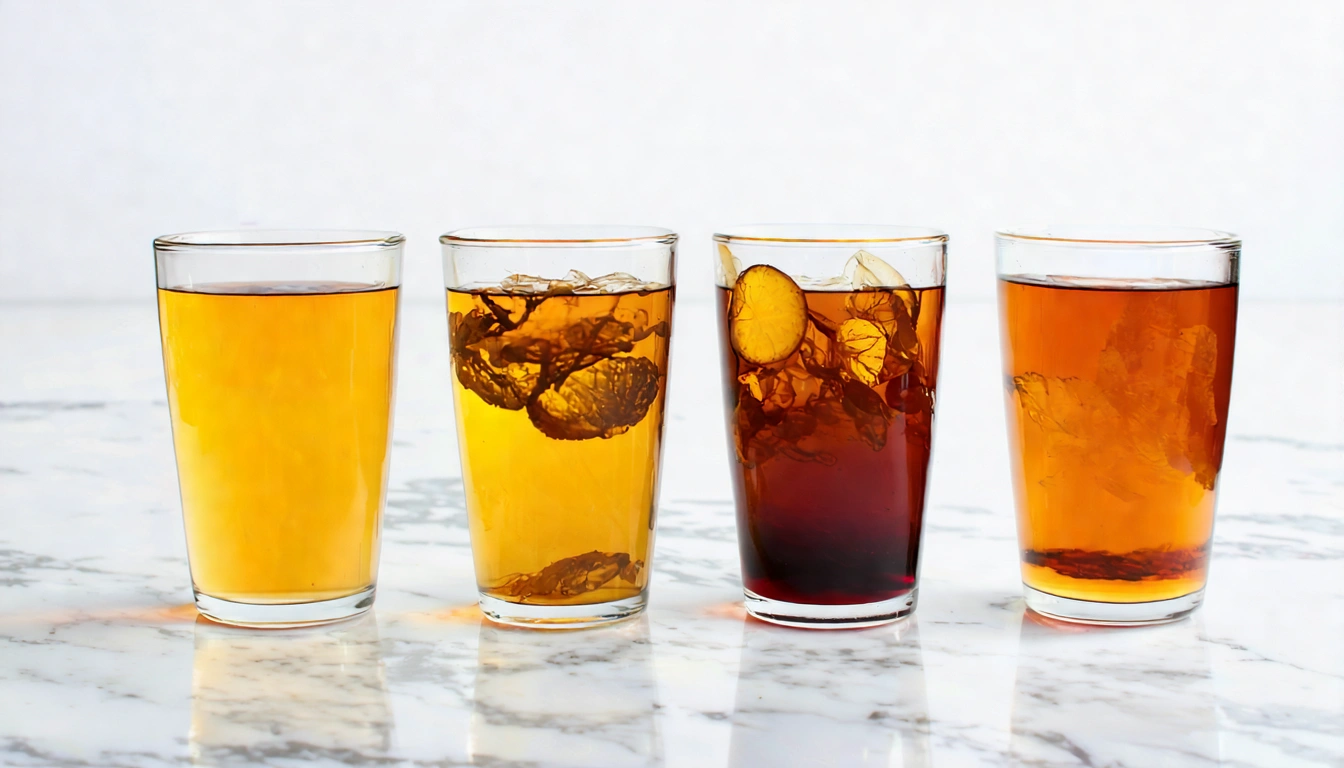
The reason cold brew is more “suited to modern life” than hot brew isn’t just convenience — it’s that low-temperature extraction naturally filters out the softest parts of the flavor profile: sweet amino acids, delicate floral aromas, while straining out most of the bitter catechins. This makes even typically difficult-to-drink teas much more approachable in their cold brew versions.
According to ChaYanSo’s 2026 sales data, 71% of customers purchasing cold-brew-specific teas were people who didn’t previously drink much tea — they turned to cold brew because they found tea too bitter or brewing too troublesome. Cold brew has become an important gateway for Taiwan tea consumption.
FAQ: Cold Brew Tea Common Questions
Can I cold brew with room temperature water? Does it have to be cold?
Yes, room temperature water (approximately 25°C) works. Extraction speed is slightly faster than 4°C refrigeration, so you can shorten the time by 1–2 hours. Results are similar to refrigerator cold brew. However, in summer with room temperatures above 28°C, we recommend using the refrigerator — excessively high temperatures push the process closer to hot brew, increasing bitterness.
Can I reheat leftover cold brew tea?
You can, but we don’t recommend reheating to a boil. Gently warming cold brew tea in a water bath to 50–60°C, or drinking it at room temperature, is best. Reheating to high temperatures destroys the delicate aromatic compounds extracted through cold brewing, making the taste flat.
Further Reading
- Complete Tea Brewing Guide: Hot Brew, Cold Brew & Gongfu Tea Steps
- Tea Brewing Temperature & Ratio Guide: Optimal Parameters for Every Tea Type
- Taiwan Tea Brewing Guide by Type: Black Tea, Green Tea, Si Ji Chun
- Cold Brew Tea Bag Guide & Step-by-Step Instructions: Summer Essential
- Si Ji Chun & Jin Xuan Complete Guide: The Best Taiwan Teas for Cold Brew
References
- Taiwan Tea Research and Extension Station (2023). Low-Temperature Tea Extraction Component Study.