Budget Taiwan Tea Recommendations 2026 | Great Tea Under 100 NTD! Best Value Taiwan Teas
Drinking great tea doesn’t have to cost a fortune.
Taiwan tea’s price range is very broad — from 300 NTD to 15,000 NTD per jin. But if your goal is “enjoying a cup of refreshingly aromatic tea every day” rather than “collecting top-tier teas,” then budget is simply not a barrier.
In Taiwan’s tea market, lowland teas with wholesale prices under 1,000 NTD per kilogram (approximately 500 NTD per jin) account for about 55% of total national tea production, forming the most stable supply of mainstream teas (Source: MOA Agricultural Statistics Yearbook, 2024).
Taiwan has approximately 16,255 hectares of tea gardens producing about 17,502 metric tons annually, with Nantou County accounting for 48.9% and Chiayi County for 14.1% of national production (Source: MOA, 2024). The abundant output from lowland tea regions is the primary source of affordable quality tea.
The question isn’t “are there affordable good teas” but rather “how to pick the truly outstanding ones from the affordable options.”
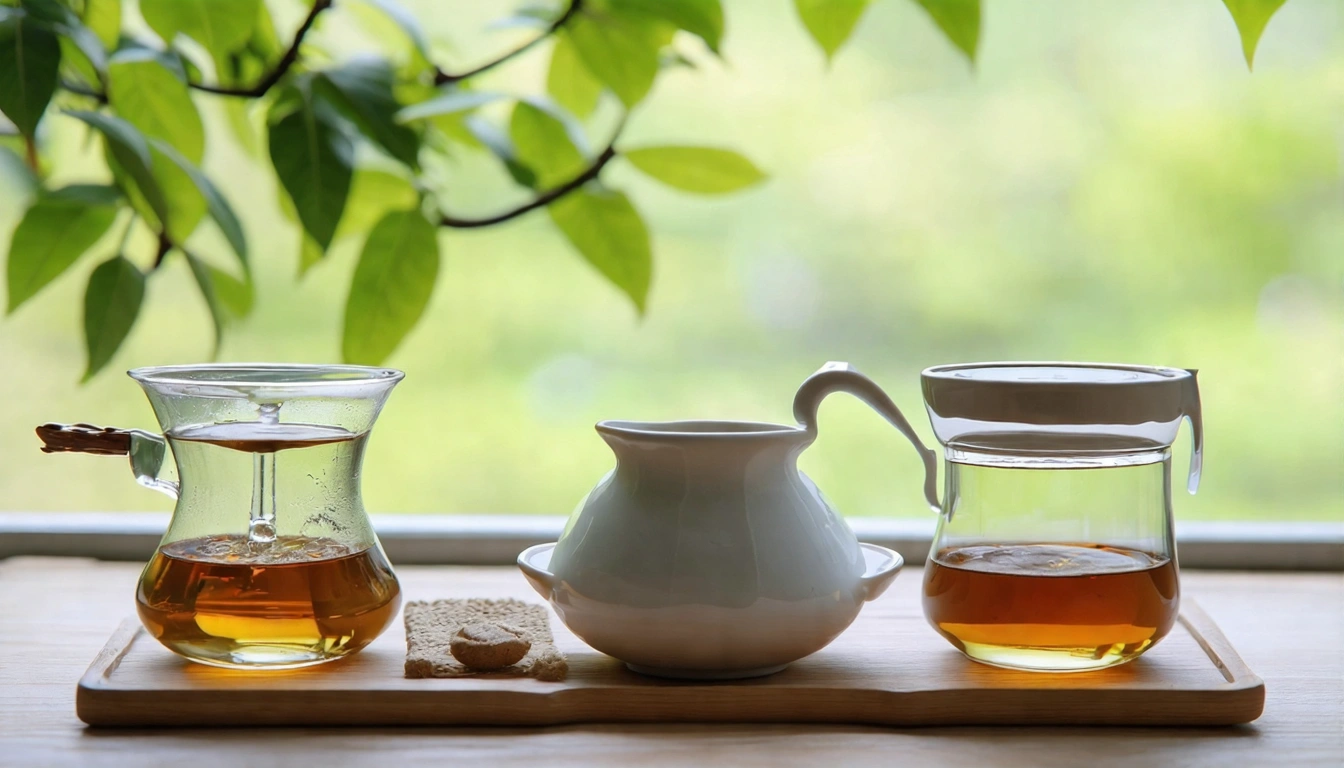
TL;DR: Best budget picks are Si Ji Chun (300–500 NTD/jin) and Jin Xuan (400–700 NTD/jin), harvested 5–6 times per year with stable supply — the best daily drinking value. Lowland teas account for 55% of Taiwan’s tea production (MOA, 2024). Smart strategies: buy loose leaf to save 30–40%, choose spring or autumn tea over summer tea.
Not sure where to start? ChaYanSo’s entry-level teas offer outstanding value. Browse Our Tea Selection
Affordable Tea Does Not Mean Low Quality
This is a common misconception: cheap tea is inferior, and only expensive tea is good. The truth is more nuanced.
The Logic Behind Tea Pricing
Taiwan tea prices are primarily determined by the following factors, each contributing differently to price:
| Factor | Explanation | Price Impact |
|---|---|---|
| Elevation | High mountain tea (1,000m+) grows slower, fewer harvests | Largest: 3–10x difference |
| Harvest season | Spring tea is best quality, summer is most affordable | Medium: 2–3x difference |
| Picking method | Hand-picked vs. machine-harvested | Medium: 2–3x difference |
| Variety rarity | Qingxin Oolong vs. Si Ji Chun | Medium: 1.5–2x difference |
| Competition certification | Award-winning vs. commercial grade | Small to medium: 1.5–3x difference |
| Packaging design | Premium gift box vs. bulk packaging | Small: 1.2–2x difference |
Key insight: Elevation is the single largest factor determining Taiwan tea prices. Lowland teas (such as Si Ji Chun and Songboling tea) grow at lower elevations (200–450 meters), are harvested 5–6 times per year, and have lower per-harvest costs due to cost amortization, hence the accessible pricing. But this doesn’t mean “poor quality” — lowland teas have their own character: refreshing, floral, and perfect for high-volume daily drinking.
One of the most common questions we get at ChaYanSo is: “Is there something cheap but tasty?” Our standard answer is Si Ji Chun. It’s also what we brew for customers to sample at our shop every day — because its refreshing floral aroma and zero bitterness means almost nobody dislikes it. Many customers start with Si Ji Chun and gradually explore Jin Xuan, then Alishan — we’ve witnessed this “upgrade path” countless times.
Top 3 High-Value Taiwan Teas (100–300 NTD Range)
(Prices below are calculated as per-serving cost from tea bags or small packages)
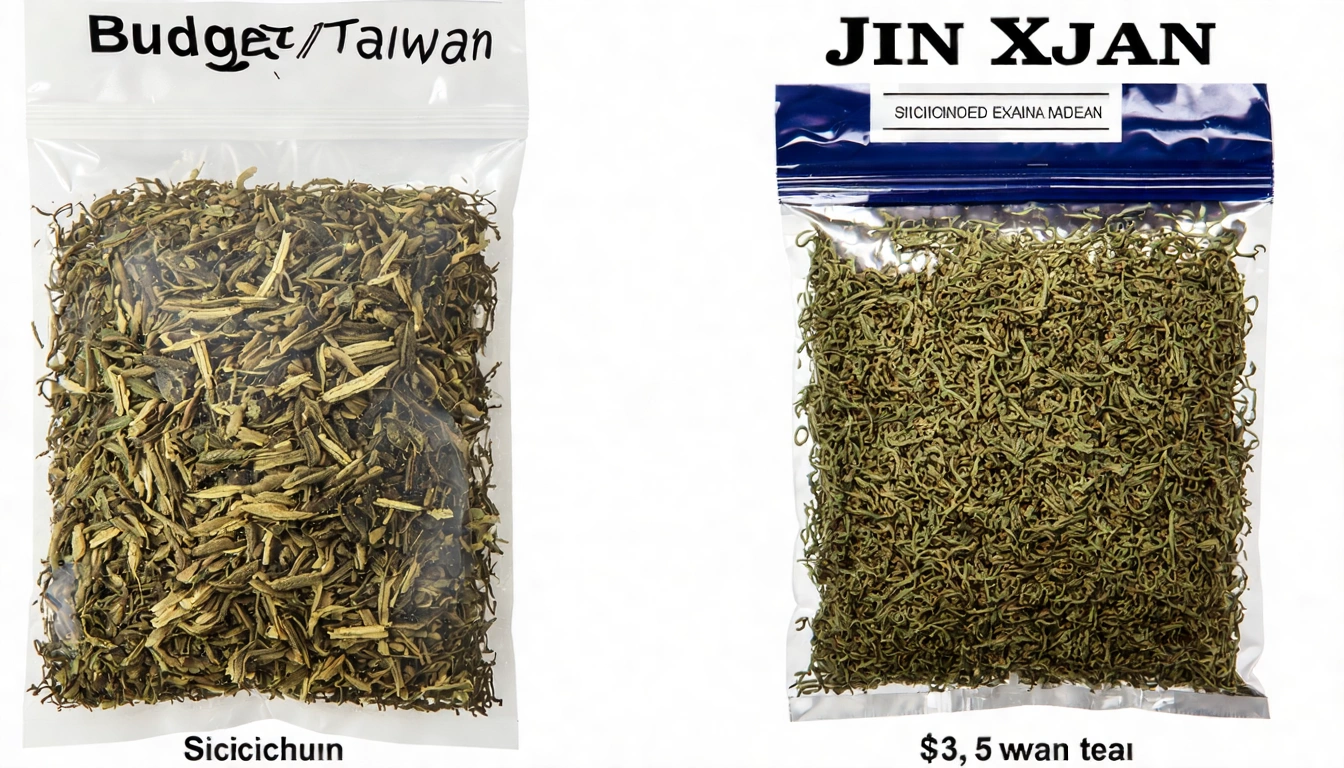
Our 3 Best-Value Taiwan Tea Picks:
1. Si Ji Chun Tea (Approximately 10–15 NTD per serving)
Si Ji Chun is one of Taiwan’s most widely planted tea varieties. Mingjian Township in Nantou once had 2,700 hectares of tea gardens, currently producing approximately 4,000 metric tons of Si Ji Chun annually (Source: Global Views Monthly / Mingjian Township Farmers’ Association, 2024). Its ability to be harvested 5–6 times per year means abundant supply and stable pricing.
- Aroma: Fresh floral, with subtle orchid notes
- Taste: Light, no astringency, perfect for high-volume daily drinking
- Loose leaf: 300–500 NTD/jin (makes approximately 60–80 cups, 3–5 NTD per cup)
- Tea bags: Box of 25 for approximately 150–250 NTD (6–10 NTD per bag)
- Best brewing: 85–90°C, excellent for both cold and hot brew
- Best for: Everyone — the ideal daily hydration choice
2. Jin Xuan Tea (Approximately 15–20 NTD per serving)
Jin Xuan (TTES No. 12), bred by the Tea Research and Extension Station in 1981, is famous for its natural milky aroma. Currently planted on approximately 2,000 hectares nationwide, it is Taiwan’s second most cultivated tea variety (Source: Tea Research and Extension Station Variety Data, 2024) and the most broadly appealing Taiwan tea.
- Aroma: Natural milky (from gamma-butyrolactone, not artificially added)
- Taste: Round, sweet, extremely low astringency
- Loose leaf: 400–700 NTD/jin (makes approximately 60–80 cups, 5–10 NTD per cup)
- Tea bags: Box of 25 for approximately 180–300 NTD
- Best brewing: 75–85°C; avoid overly hot water to preserve the milky aroma
- Best for: Those who dislike tea astringency, milk tea lovers
3. Taiwan Black Tea Bags (Approximately 8–12 NTD per serving)
Taiwan lowland black tea (not premium Sun Moon Lake Ruby) is a great-value daily drinking option for breakfast or afternoon tea.
- Aroma: Clean tea fragrance, pairs well with milk
- Taste: Mellow with mild astringency, suitable for adding sugar or milk
- Tea bags: Box of 25 for approximately 120–200 NTD
- Best for: Habitual black tea drinkers, or those wanting to make their own milk tea
Smart Strategies for Buying Affordable Tea
With the same budget, the right approach can get you 30–40% more good tea.
Strategy 1: Choose Loose Leaf Over Tea Bags
For the same quality tea, loose leaf typically costs 30–40% less than tea bags, because the packaging, bags, and sealing labor all add to the tea bag cost. If you’re willing to use a teapot or tea infuser, switching to loose leaf is the most direct way to save.
| Comparison | Loose Leaf | Tea Bags |
|---|---|---|
| Cost per kg | 600–1,000 NTD | 900–1,500 NTD |
| Aroma | Fully preserved, richer | Slightly diminished (bag interference) |
| Convenience | Needs brewing equipment | Instant, disposable |
| Best setting | Daily home drinking | Office, travel |
Strategy 2: Choose Spring or Autumn Tea, Avoid Summer Tea
For the same tea variety, spring tea (March–April) and autumn tea (October–November) offer the best quality, while summer tea (May–August) has reduced quality due to high temperatures but is also cheaper. If budget is limited, autumn tea is a better deal than summer tea. Taiwan’s export tea unit price is approximately 6.5 times that of imported tea (Source: MOA Trade Statistics, 2024) — even affordable Taiwan tea far surpasses imported tea in quality.
Strategy 3: Buy Larger Packages or in Bulk
For the same tea, larger packages (300g or 600g) typically cost 15–20% less than small packages. Once you’ve confirmed you like a particular tea, buying the large package saves more. Oolong tea accounts for the largest share of Taiwan’s tea production (Source: MOA, 2024), with abundant affordable oolong options and greater price advantages in bulk purchases.
When Is It Worth Spending More?
Budget teas are ideal for daily personal consumption. But in these situations, investing in higher-quality teas makes sense:
- Giving a gift to someone important
- Learning about tea (understanding Taiwan’s finest flavors)
- Special occasions or ceremonies
According to our ChaYanSo customer surveys, approximately 70% of repeat customers use a “daily affordable + special occasion premium” mixed strategy — the most rational Taiwan tea consumption approach. We encourage new customers to do the same: develop a tea habit with Si Ji Chun or Jin Xuan, and once your palate is established, explore Alishan or Lishan high mountain teas. This way you don’t waste budget while gradually developing your tasting ability.
Found your ideal budget Taiwan tea? Shop ChaYanSo Now
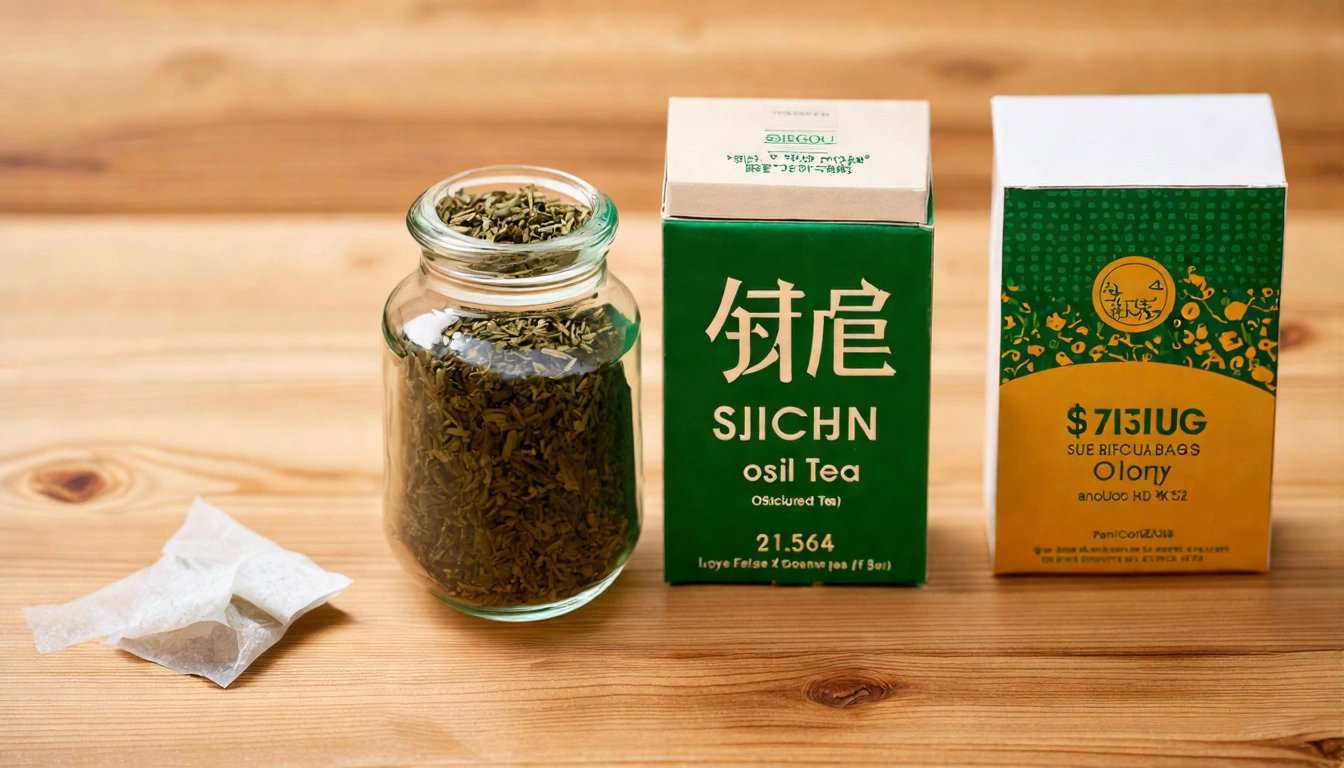
In our ChaYanSo tasting experiments, we’ve found that the best strategy for budget Taiwan tea isn’t “buying the cheapest tea,” but rather “brewing the right tea with the right vessel and method.” The same 300 NTD/jin Si Ji Chun brewed in a glass teapot at 85°C for 3 minutes versus boiling water steeped for 5 minutes shows a 30–40% difference in aroma and sweetness. When budget is limited, investing in proper brewing technique delivers better returns than the tea price itself. We include recommended brewing temperature and timing with every shipment, so every customer can bring out the best flavor.
FAQ: Budget Taiwan Tea Common Questions
Can you buy good Taiwan tea for under 100 NTD?
Yes, in tea bag format. A box of 25 high-quality Si Ji Chun or Jin Xuan tea bags for 100–150 NTD brings the cost per cup to just 4–6 NTD — with aroma and quality far superior to convenience store bottled tea. For loose leaf, 100 NTD only buys about 50–80g (roughly half a jin), enough for about 10–15 pots. That’s barely adequate, so we recommend a minimum budget of 300–500 NTD per jin for consistently quality loose leaf.
What are the popular budget picks on forums?
Based on frequently mentioned affordable teas in Taiwan tea discussion forums, Si Ji Chun tea bags (refreshing daily drinking) and Jin Xuan tea bags (natural milky aroma, zero bitterness) appear most frequently. ChaYanSo’s versions of these two teas have been repeatedly recommended as value benchmarks in tea discussions.
Why do some very cheap “Taiwan teas” claim to be high mountain tea?
The market has a significant volume of low-elevation tea (or imported tea) falsely labeled as “high mountain tea,” especially common on online shopping platforms. Genuine high mountain tea (1,000+ meters) has fewer harvests per year (1–2 times) and high labor costs, making market prices impossible below 800–1,000 NTD per jin. If you see “Alishan High Mountain Tea” or “Lishan Tea” under 600 NTD per jin, exercise extreme caution in verifying the source.
Further Reading
- Tea Buying Beginner’s Complete Guide: From Reading Labels to Choosing Good Tea
- Si Ji Chun & Jin Xuan Complete Comparison Guide: Taiwan’s Two Most Popular Affordable Teas
- Tea Grades & Competition Tea Guide: Understanding Taiwan Tea Quality Differences
- Taiwan Tea Beginner’s Recommendations: Top 5 Taiwan Teas for Ages 25–35
- Tea Storage Complete Guide: Proper Moisture and Light Protection to Extend Tea Freshness
References
- MOA (2024). Agricultural Statistics Yearbook: Taiwan Tea Production and Sales Statistics.
- MOA (2024). Mingjian Township Agricultural Resource Survey (Si Ji Chun Variety Characteristics).
- Tea Buying Beginner’s Guide
- Taiwan Tea Beginner’s Recommendations
- Tea Grades & Competition Tea Guide