Alishan Tea Guide 2026 | The Taste of Misty High Mountain Tea — Terroir & Complete Buying Guide
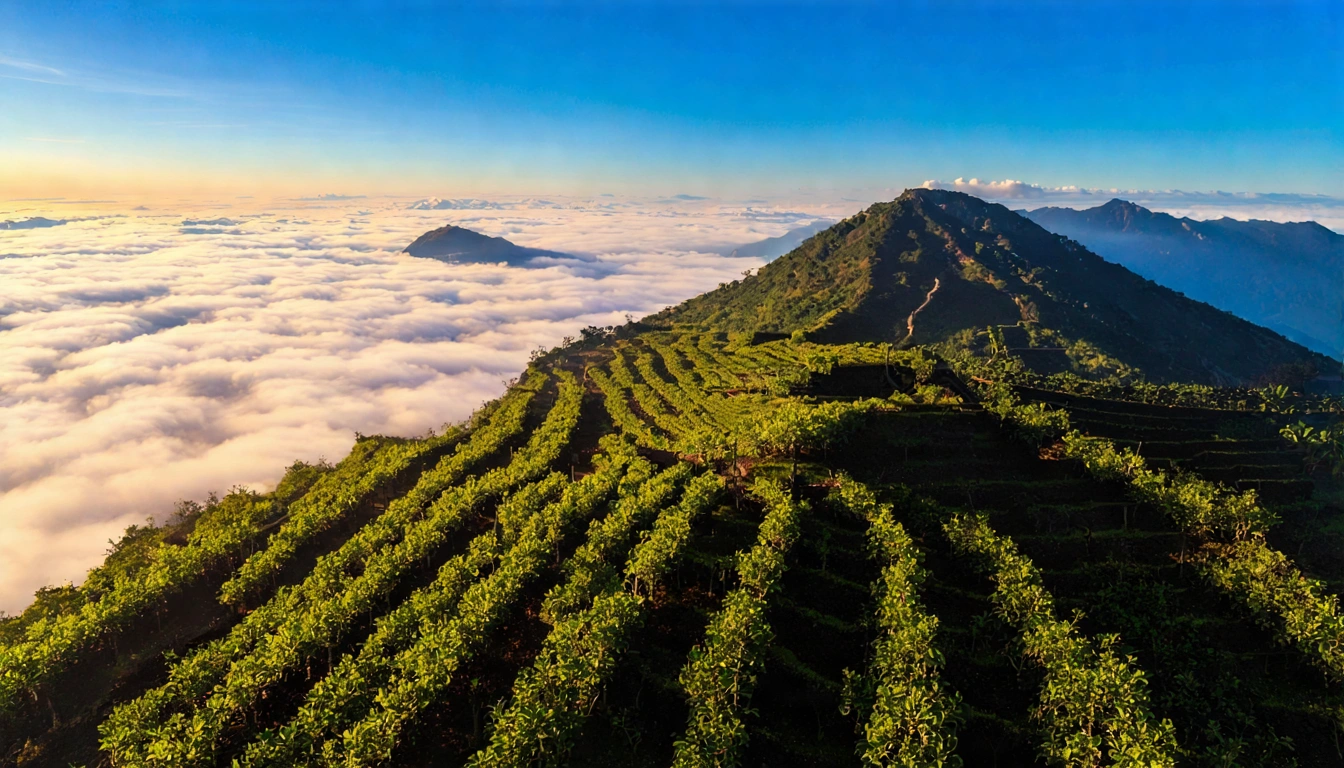
For Taiwanese people, Alishan conjures two images: sunrise above a sea of clouds, and a cup of fragrant high mountain tea.
These two images are no coincidence. Alishan’s sea of clouds is precisely the key to its tea quality — the mist blocks intense sunlight, allowing tea leaves to grow slowly in diffused light, accumulating that signature sweet floral fragrance. Alishan tea is the most recognized and highest-volume high mountain tea region in Taiwan, and is often the first premium high mountain tea that newcomers encounter.
The Alishan tea region is located in Alishan Township, Chiayi County, at elevations of 1,000 to 1,600 meters. It is Taiwan’s largest high mountain tea-producing area, with average annual temperatures of 15–20°C and over 200 foggy days per year (Source: MOA Chiayi Agricultural Research and Extension Station, 2024).
TL;DR: The Alishan tea region (1,000–1,600m) is Taiwan’s largest high mountain tea-producing area. Signature teas are Jin Xuan oolong (natural milky aroma) and Qingxin oolong (clean, sweet, and mellow). Over 200 foggy days per year, annual temperature 15–20°C (Chiayi Agricultural Research and Extension Station, 2024). Market price ranges from 800–3,000 NTD per jin, making it the best value among Taiwan’s high mountain teas.
Misty Alishan tea, brought to you by ChaYanSo. Browse Our Tea Selection
The Terroir Charm of the Alishan Tea Region
What makes Alishan tea so delicious? Geography provides the most fundamental answer:
Birthplace of Cloud-and-Mist Tea
Alishan sits at 1,000–1,600 meters elevation, with over 200 days of cloud and mist each year. These clouds bring more than poetry — they are the key to tea quality:
- Cloud-diffused sunlight → No over-exposure → Chlorophyll preserved
- High humidity → Well-hydrated leaves → Round, smooth mouthfeel
- Low temperature (annual avg. 15–20°C) → Slow growth → Rich aroma accumulation
Research shows that under equivalent varietal conditions, tea from cloud-shrouded regions contains 20–35% more L-theanine (the key amino acid responsible for sweet, smooth flavor) than lowland tea (Source: Taiwan Tea Research and Extension Station, 2023).
Tsou Indigenous Tea Tradition
The Alishan tea region overlaps with traditional Tsou indigenous territory, and some tea gardens are operated by indigenous farming families, adding unique cultural depth. Tea travelers visiting Alishan are not just drinking tea — they are connecting with Taiwan’s indigenous agricultural heritage.
The Alishan tea region covers over 2,000 hectares of planted tea area, mainly distributed across Meishan Township (approximately 1,000 hectares), Zhuqi Township (Shizhuo tea area, approximately 400 hectares), and Alishan Township, making it Taiwan’s largest high mountain tea-producing region (Source: Chiayi County township agricultural statistics; MOA Chiayi Agricultural Research and Extension Station, 2024).
Taiwan’s total tea garden area is approximately 12,000 hectares, producing about 14,000 metric tons annually, with Chiayi County accounting for 14.1% of the national total, the vast majority concentrated in the Alishan tea region (Source: MOA Agricultural Statistics Yearbook, 2024).
At ChaYanSo, we maintain long-term partnerships with Alishan tea farmers. Before each spring tea season, we receive raw tea samples from farmers for trial brewing, carefully selecting the batches that best meet our quality standards from dozens of samples. Good Alishan tea isn’t hard to find, but consistently delivering the same quality requires long-term relationships with the producing regions.
Alishan Signature Tea Comparison
| Tea | Variety | Aroma Type | Characteristics | Best For |
|---|---|---|---|---|
| Alishan Jin Xuan | TTES No. 12 | Natural milky aroma | Round, sweet, low bitterness | First-time high mountain tea drinkers, milky aroma lovers |
| Alishan Qingxin Oolong | Qingxin Oolong | Clean floral | Mellow, rich, long-lasting finish | Tea enthusiasts, advanced drinkers |
| Alishan Si Ji Chun | Si Ji Chun | Fresh floral | Light, refreshing, great value | Daily drinking, bulk purchases |
How to choose between Jin Xuan and Qingxin Oolong:
- First time trying Alishan tea → Choose Jin Xuan (the natural milky aroma is instantly approachable)
- Want to experience the full character of Alishan tea → Choose Qingxin Oolong (best represents Alishan terroir)
- High-volume daily drinking → Choose Si Ji Chun (best value for money)
Alishan Jin Xuan is the ideal gateway into high mountain tea in Taiwan — its milky aroma is immediate, bitterness is minimal, and it’s very forgiving to brew, allowing virtually anyone to easily make a delicious cup.
At ChaYanSo, we recommend that first-time high mountain tea customers start with Alishan Jin Xuan, and it’s consistently one of our highest-repurchase teas. Many customers begin with Alishan Jin Xuan, then gradually explore Qingxin Oolong, eventually becoming devoted high mountain tea enthusiasts.
Taiwan’s tea export unit price is approximately 6.5 times that of imported tea. As Taiwan’s most internationally recognized high mountain tea region, Alishan tea plays a vital role in representing Taiwan tea’s quality image (Source: MOA Trade Statistics, 2024).
Alishan Tea Buying Guide 2026
5 Ways to Identify Authentic Alishan Tea:
- Confirm the origin: Packaging should state “Alishan Township, Chiayi County” (or specific villages such as Taihe Village, Lijia Village, etc.)
- Confirm the elevation: Should indicate 1,000–1,600 meters elevation (with specific numbers)
- Confirm the variety: Jin Xuan (TTES No. 12), Qingxin Oolong (the mainstream Alishan variety)
- Reasonable pricing: 800–3,000 NTD per jin is the fair range (below 800 NTD requires caution)
- Vendor transparency: Those who can provide farmer information or production records are more trustworthy
Alishan Tea Prices by Grade:
| Grade | Characteristics | Market Price (per jin) |
|---|---|---|
| Standard summer tea | Clean, stable flavor, everyday quality | 800–1,500 NTD |
| Standard spring tea | Pronounced floral aroma, good quality | 1,500–2,500 NTD |
| Premium spring tea | Complex aroma, excellent finish | 2,500–4,000 NTD |
| Competition tea / Special select | Top-tier quality, limited supply | 4,000+ NTD |
Alishan Tea Travel Information
Alishan is one of Taiwan’s most popular tourist destinations, and combining tea culture experiences makes the trip even richer:
Recommended Activities:
- Tea factory tours: Learn the complete process from picking to finished tea
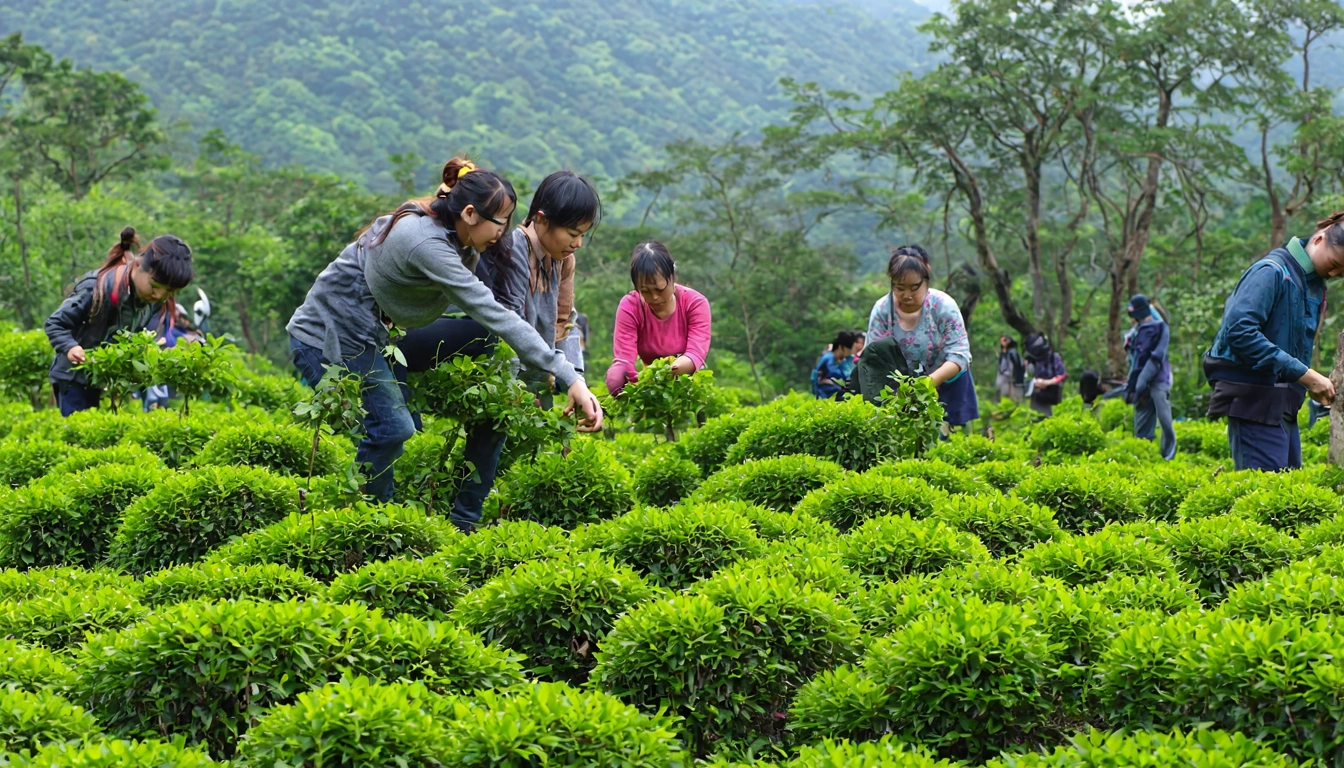
- Tea picking experience: During spring and autumn harvest seasons (approximately March–April, October–November), some farmers offer hands-on experiences
- Tea region hiking trails: Hike while admiring tea garden scenery and experiencing the growing environment of high mountain tea
Tips:
It’s best to contact tea farmers or factories with visitor services in advance. Unannounced visits may not yield a complete experience. The spring picking season (March–April) is the best time to visit, when you can enjoy both fresh tea buds and Alishan’s tung blossoms or mountain scenery.
Oolong tea dominates Taiwan’s tea production, and the Alishan tea region primarily grows Qingxin Oolong and Jin Xuan (TTES No. 12), both processed primarily as semi-oxidized oolong (Source: MOA Tea Research and Extension Station, 2024).
Our ChaYanSo team once visited the Alishan Shizhuo tea area during spring tea season, witnessing the entire process from early morning picking to evening processing. That experience deepened our understanding of why Alishan tea farmers insist on hand-picking — machine harvesting is more efficient, but it cannot match the precision of hand-selecting one bud and two leaves.
Alishan high mountain tea, delivered to your door by ChaYanSo. No need to climb the mountain yourself — ChaYanSo brings the misty aroma of Alishan to your home. Shop Alishan Tea Now
Discover the taste of Alishan’s mist — enjoy it at home. Browse ChaYanSo’s Alishan Tea Selection
FAQ: Common Questions About Alishan Tea
What kind of tea is Alishan tea?
Alishan tea is primarily oolong, with main varieties including Jin Xuan (TTES No. 12, natural milky aroma), Qingxin Oolong (clean and mellow traditional variety), and Si Ji Chun. Occasionally there are also black tea offerings (Alishan black tea), though these are less common. The Alishan tea region qualifies as high mountain tea (1,000–1,600 meters elevation), with semi-oxidized oolong processing as the mainstream method.
How much does Alishan tea cost per jin?
Depending on quality and harvest season, Alishan tea ranges from approximately 800–4,000 NTD per jin. Spring tea (harvested March–April) has the best quality and highest price; summer tea (May–August) is more affordable; autumn tea (October–November) falls in between. According to ChaYanSo’s 2026 market survey, Alishan spring tea demand peaks around Qingming Festival (early April), and we recommend pre-ordering 2–3 weeks in advance to ensure quality.
Further Reading
- Complete Taiwan High Mountain Tea Guide: Lishan, Alishan, Shanlinxi, Dayuling Compared
- Lishan Tea Complete Guide: Taiwan’s Premier High Mountain Tea Origin, Prices & Buying Tips
- Dayuling vs. Shanlinxi: In-Depth Flavor Comparison of Two Top Tea Regions
- Nantou Tea Complete Guide: Songboling, Zhushan, Shanlinxi Regional Characteristics
- Si Ji Chun & Jin Xuan Complete Guide: Taiwan’s Two Most Popular Oolongs
References
- MOA Chiayi Agricultural Research and Extension Station (2024). Alishan Tea Region Status and Variety Survey.
- Taiwan Tea Research and Extension Station (2023). Amino Acid Content Study of High Mountain Cloud-and-Mist Tea.